

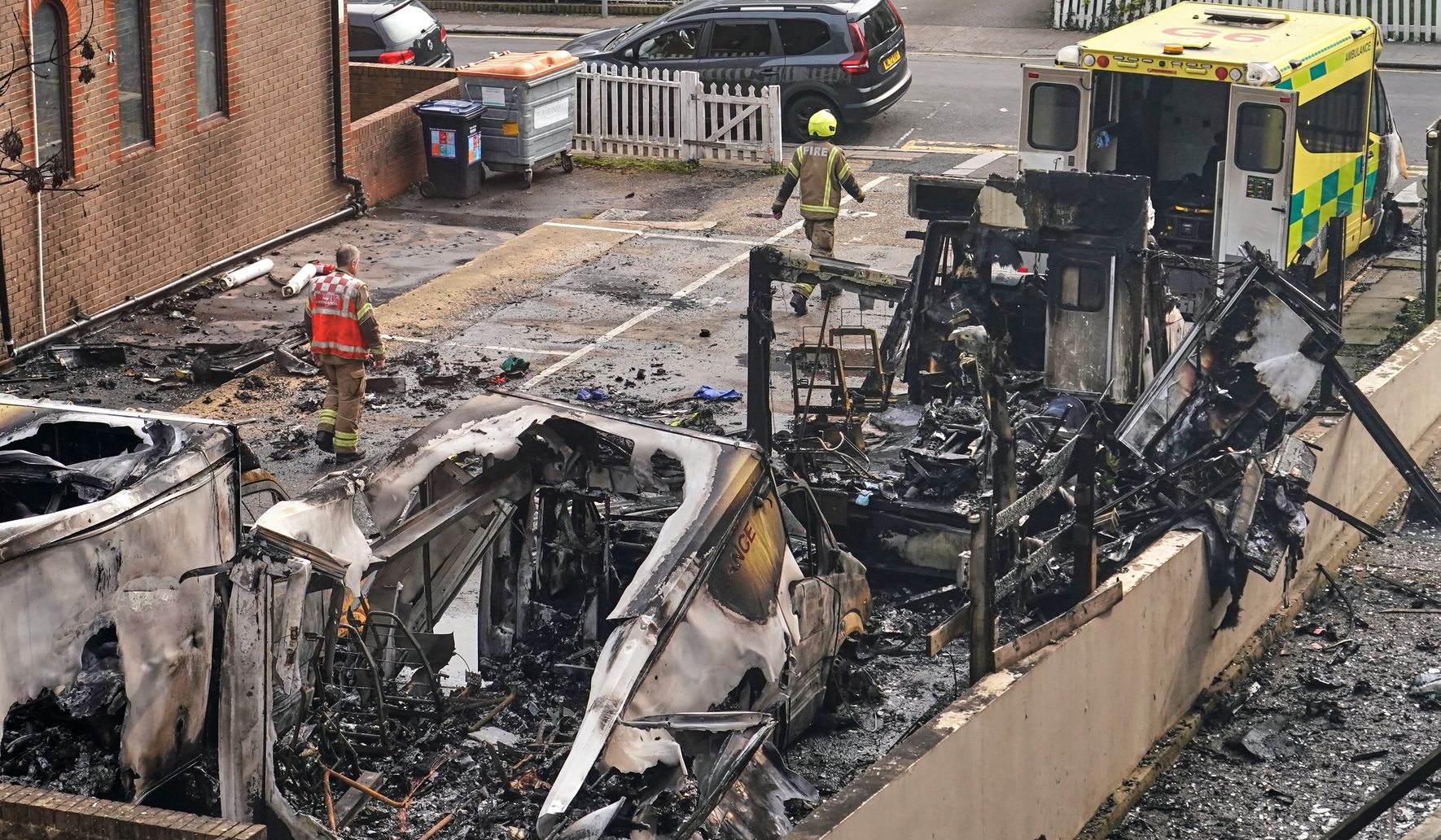
British police arrested two men on Wednesday after an arson attack damaged four ambulances belonging to a Jewish charity, and authorities are treating the incident as an antisemitic hate crime.
Two arrests were made on Wednesday after an arson attack targeted four ambulances that serve a Jewish charity, according to official reports. Police said the incident is being investigated as an antisemitic hate crime, and detectives have opened inquiries to determine motive and responsibility. Local officers moved quickly to secure the scene and begin collecting evidence, aiming to establish how the attack was planned and executed. The charity’s emergency vehicles were central to the case because they serve community health needs.
The attack hit at more than property damage; it touched a service relied on by people who need urgent care and transport. Ambulances are not just vehicles, they are often the difference between getting timely help and facing delays in serious situations. When those assets are targeted, the consequences ripple through the charity, volunteers, staff, and the families who depend on them for support. The physical damage is visible, but the broader impact on community trust and reassurance is harder to measure.
Police statements described arresting two men in connection with the arson, and officers said forensic and fire investigators were working the scene. Evidence-gathering in arson cases typically includes forensic examination of burn patterns, accelerant testing and reviewing nearby surveillance footage when available. Investigators also speak with witnesses and charity staff to reconstruct events and timelines, while searches and interviews can follow once probable cause is established. Authorities will consider all leads as they pursue legal avenues and determine appropriate charges.
Local leaders and community groups expressed deep concern about the incident because it appears to single out a religiously affiliated organization. Attacks that carry potential bias motives tend to heighten fear among targeted populations and can prompt broader calls for protection and solidarity. Community organizations often respond by increasing outreach, offering support to staff and volunteers affected by the attack, and coordinating with local officials to boost security. Those responses aim to reassure service users and signal that targeted violence will not be tolerated.
The charity whose ambulances were hit will face immediate operational challenges while vehicles are assessed and the damage is repaired. Ambulance fleets, even small ones, are expensive to replace and require regulatory checks before returning to service. That process can take days or weeks depending on the extent of the damage and insurance arrangements. Meanwhile, charities often need to reallocate resources, rely on partner organizations or call for temporary help to maintain critical services.
Legal outcomes in cases where hate motivation is suspected can carry more serious consequences because of the aggravating factor tied to targeting a protected group. Prosecutors must prove both the criminal act and, where applicable, the bias element that elevates the offense to a hate crime. That can involve establishing intent or demonstrating a pattern of behavior that points to prejudice. Courts take such allegations seriously because they affect not just the immediate victims but the wider community’s sense of safety.
Security reviews typically follow attacks on community services, with charities reassessing vehicle storage, signage, and access controls. Increasing lighting, installing cameras and revising parking arrangements are common measures groups consider to reduce vulnerability. Police may also increase patrols in affected areas and work with local authorities to recommend improvements that make public-facing services harder to target. Those steps are practical ways to rebuild confidence while investigations continue.
Beyond the immediate response, the incident raises questions about how communities and law enforcement prevent and respond to bias-motivated crimes. Effective prevention involves both visible policing and grassroots engagement, encouraging people to report suspicious behavior and to support protected groups. Investigations into motive help inform policy and resource allocation, showing whether the event was isolated or part of a wider pattern that needs broader attention. The current probe remains active as detectives sort through evidence and pursue the appropriate charges.
Authorities stressed that the inquiry is ongoing and that anyone with information should come forward to assist investigators. The arrests mark an early milestone in the case, but further work will be needed to present a full picture and move the matter through the legal system. Community leaders and the charity itself are now focused on recovery, restoring services and ensuring those who rely on the ambulances continue to receive care. Officials have emphasized that bias-based attacks will be addressed with the full force of the law to protect public safety and community cohesion.

