

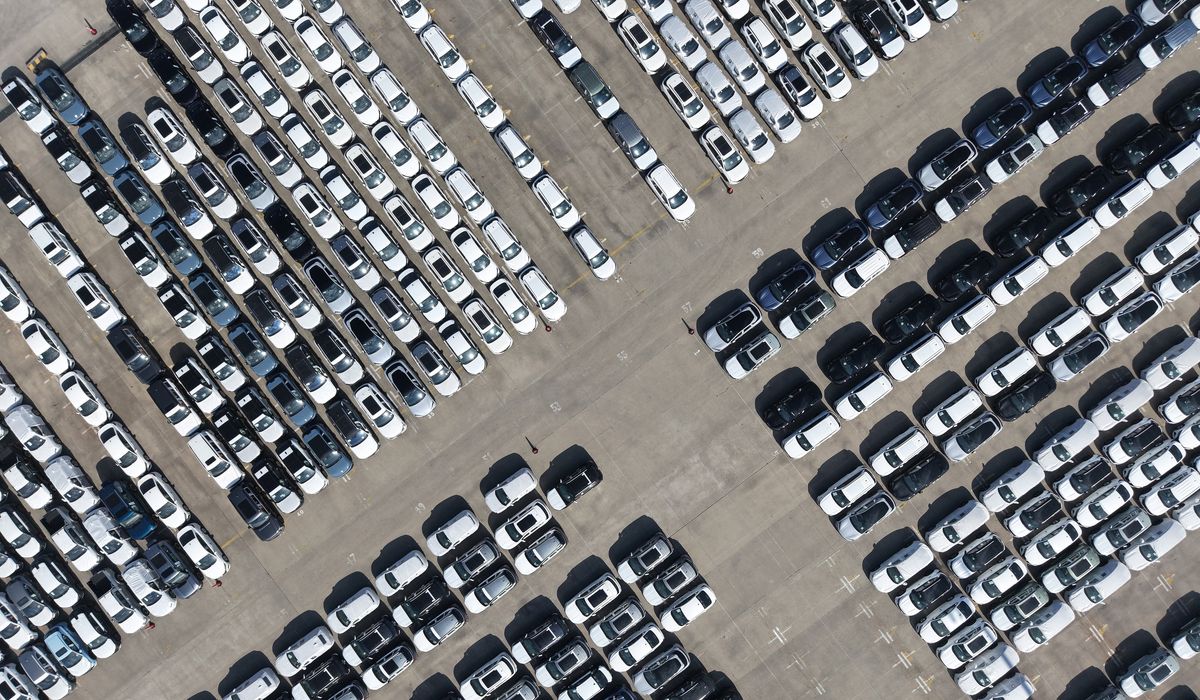
China’s passenger car sector is sending a strong signal abroad while its home market cools, with exports and electric vehicles powering headline growth even as domestic demand slips.
China’s passenger car exports surged 80% in June from a year earlier, mainly due to strong demand for electric vehicles, though domestic sales fell 26%. The numbers show a stark divergence: factories are finding buyers overseas even as local showrooms report softer traffic. That split is reshaping industry strategy from production planning to marketing focus.
Export growth is concentrated in electric and plug-in hybrids, where competitive pricing and improving quality give Chinese brands an edge. Manufacturers like BYD, Geely and SAIC have pushed aggressively into international markets with models priced below many Western rivals. That combination of cost and feature set is making Chinese EVs attractive across multiple regions.
European nations have emerged as key markets, but demand is also strong in Southeast Asia, Latin America and parts of the Middle East. Local dealers and governments are responding to cheaper, well-equipped EVs with faster adoption cycles. For consumers in those markets, value per dollar and access to modern battery tech often outweigh brand familiarity.
Behind the scenes, China’s battery industry and supply chain scale are crucial to the export push. Domestic battery makers supply cells at competitive costs and manufacturers integrate those batteries into cars efficiently. That vertical integration shortens time-to-market and supports aggressive pricing without eroding margin as much as it would in less developed supply ecosystems.
Meanwhile, the domestic slump reflects several pressures coming together at once. Consumer confidence has been uneven and stimulus measures that supported earlier sales have been tapered in many places. At the same time, many buyers are delaying purchases to await new product waves or price cuts, which pulls short-term figures downward.
Policy shifts also matter: reductions in purchase subsidies and tighter registration rules in some cities have cooled demand for lower-end models. Automakers that had relied on domestic stimulus now need to balance inventory and factory output against weaker home consumption. That dynamic helps explain why exports are being used to soak up capacity.
Trade and regulatory hurdles remain real constraints on long-term expansion overseas. Some countries could impose tariffs or stricter safety and emissions testing, and aftersales networks must be built to win buyer trust. Chinese brands will have to invest in local service, parts distribution and compliance to sustain growth beyond initial price-driven gains.
Quality perception is improving but not uniform across segments, so brand positioning will vary by market and model. Premium and mid-range models face a tougher path than entry-level offerings, which sell primarily on price and equipment. Investing in warranty programs and localized customer service will determine which automakers convert early export success into durable market share.
For competitors in Europe and North America, the rise of Chinese exports increases pricing pressure and forces quicker innovation cycles. That pressure could lead to faster adoption of new EV platforms and a renewed focus on efficiencies in manufacturing and supply. The end result may be a faster global transition to electric mobility, driven in part by competitive pricing from Chinese producers.
Analysts watching these trends note that export spikes can be volatile, tied to seasonal orders, fleet purchases and short-term incentives. Sustained performance will depend on factors like product differentiation, regulatory access and the strength of aftersales presence. Companies that navigate those hurdles can leverage scale to lower costs further and expand their global footprint.
Investors and policymakers will track how automakers manage the balance between foreign demand and a cooling domestic market, because that decision affects plant utilization, employment and future investment. With export momentum in EVs and shrinking local sales, Chinese auto firms face a clear strategic choice: double down on global expansion or refocus on reigniting home-market demand through new incentives and product launches.

