

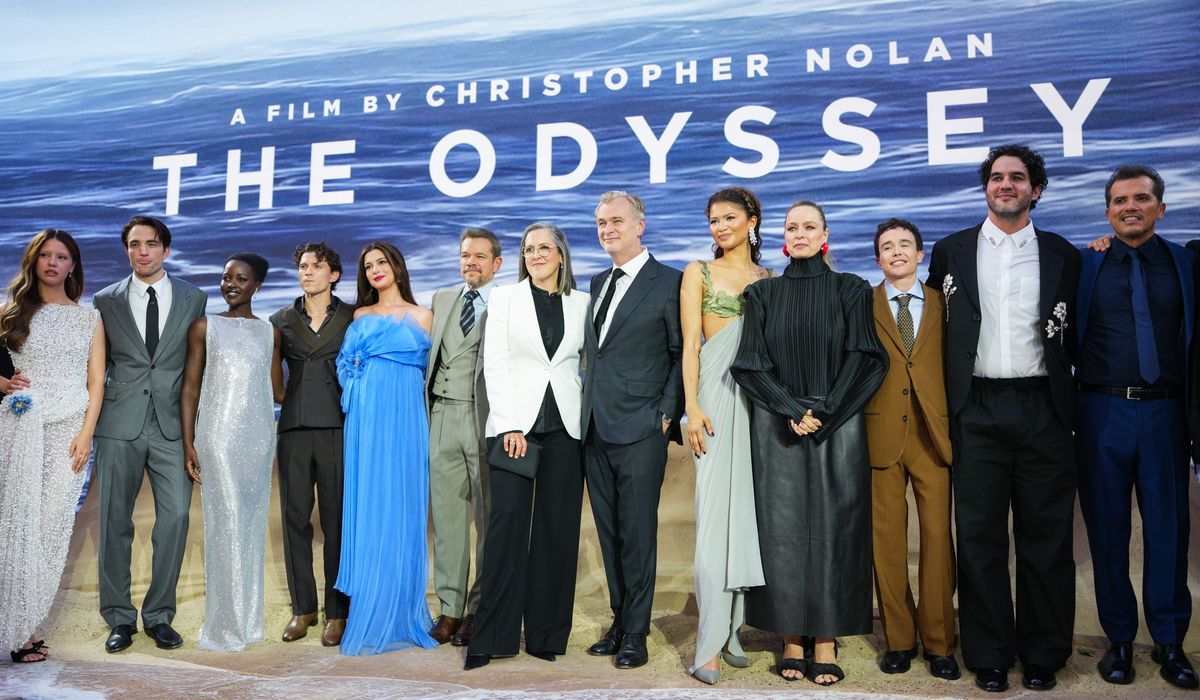
Christopher Nolan responds to early blowback over Odyssey, arguing that pre-release chatter rarely matters and that the film should be judged on what audiences see in theaters.
Christopher Nolan has been in the spotlight again after early backlash to his film Odyssey started circulating online. He pushed back on the noise, saying plainly, “These conversations that happen before people see the film, they’re always irrelevant.” That line has become a talking point for fans and critics debating how much context should shape expectations.
Nolan’s remark lands in a familiar place for a director known for ambitious, often polarizing work. People argued about style, narrative choices, and marketing long before most viewers had a chance to sit in a dark theater. For Nolan, though, the film is an experience that belongs to the audience once the lights go down.
The backlash itself followed a pattern: early takes, hot takes, and social media verdicts that spread faster than any thoughtful critique. In that environment, a single blurb or clip can shape headlines but not necessarily gut a film’s impact. Nolan’s point is that reactions formed without the whole picture tend to miss context and intent.
Beyond the online noise, the conversation really touches on what we expect from cinema today. Some viewers want clear answers and tidy conclusions, while others are happy to wrestle with ambiguity and complexity. Nolan’s films often invite that second camp to stay with the questions rather than hand them off a neat resolution.
Technically, Odyssey follows the director’s long habit of prioritizing craft and scale; the visuals, sound design, and score are built to be felt as much as watched. That approach can frustrate those who prefer a dialogue-heavy or plot-driven style, but it also rewards viewers who prioritize atmosphere and immersive structure. The split between camps fuels the debates that start before many have actually seen the film.
Criticism has ranged from concerns about pacing to debates over narrative clarity, and some of that comes from legitimate aesthetic differences. But other objections have the hallmarks of reaction rather than reflection: short attention spans, viral frames taken out of context, and previews that promise more than the final cut. Nolan’s comment aims to recalibrate that dynamic by reminding audiences that a film must be experienced whole.
Marketing and early press cycles play a huge role in shaping the story around any release, and Odyssey was no exception. Trailers, interviews, and festival chatter created a backdrop that sometimes felt louder than the film itself. Nolan’s stance is a counterweight to that, asking critics and viewers to prioritize seeing the work before letting secondhand impressions stick.
For cinephiles who follow director-driven pictures, this episode is familiar territory: bold choices invite scrutiny and conversation, and the ripple effects can last long after opening weekend. For general audiences, the controversy may be a hook or a deterrent, depending on where a person stands on spoilers and early assessment. Either way, Nolan’s line about the irrelevance of pre-screen conversations is now a filter through which many are choosing to view the debate.
In practical terms, the healthiest response may be simple: watch, then weigh in. Films are multi-layered, and split reactions are part of their life cycle. Nolan’s reminder that the first-hand viewing matters most underlines how easily discourse can become untethered from the actual work.

