

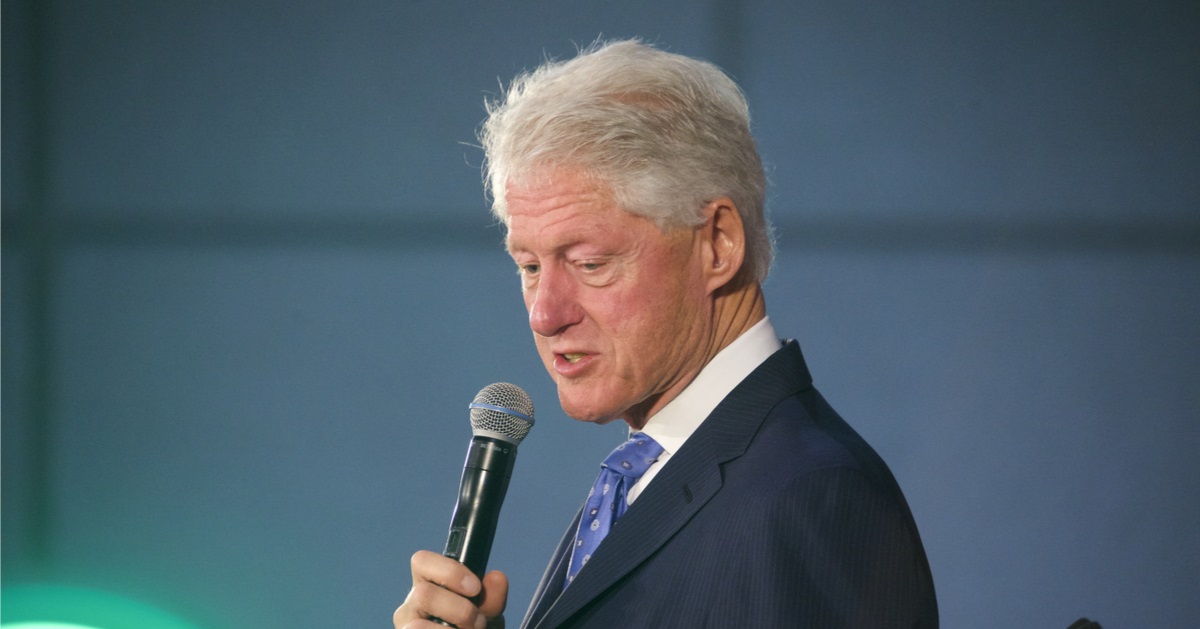
Rep. Anna Paulina Luna led a closed-door deposition of former President Bill Clinton as part of the House Oversight Committee’s probe into Jeffrey Epstein’s network, with Luna stressing cooperation from Clinton, pressing on plea deals for alleged co-conspirators, and raising alarming questions about possible intelligence and national security implications.
Former President Bill Clinton sat for the deposition amid an ongoing probe into the Epstein network. Rep. Anna Paulina Luna briefly left the session to speak with reporters and described Clinton as cooperative during questioning. Her comments set a tone of firmness without theatricalism, and she emphasized accountability over headlines.
“As of right now, [he is] cooperative and answering all of our questions.” Luna said this to indicate the session was productive and that the committee was getting responses from a high-profile witness.
Luna declined to offer explicit play-by-play of Clinton’s testimony, but she said the inquiry is beginning to produce a clearer picture of who was involved in the operation. That clarity matters because Epstein’s ties crossed politics, business, and academia, and Americans deserve to know how deep those connections ran. The committee’s task is to turn those threads into a factual record.
Luna named four associates she says played roles in trafficking minors: Lesley Groff, Sarah Kellen, Nadia Marcinkova, and Adriana Ross. She alleges all four participated in trafficking and later received plea deals that reduced or avoided harsh consequences. For Republicans focused on law and order, those deals read like a failure of the system more than a sign the case was resolved.
“All of these women engaged in the trafficking of minors as adults. In my opinion, they are not to be given victim status because they did partake in harming young girls.” Luna used blunt language to insist these individuals should not be treated primarily as victims when they allegedly enabled abuse.
She said she will push the Oversight Committee to bring those people in for questioning and to examine how those plea agreements were offered. Some of the victims were reportedly as young as 10 or 11, a detail that demands rigorous scrutiny rather than quiet plea bargaining. Republicans pushing for accountability view plea deals that protect enablers as a betrayal of true victims.
When adults who allegedly helped deliver children to a predator walk away with limited consequences, the justice system has failed those who had the least power. That reality fuels public anger and suspicion, and it’s why Luna framed the inquiry as about real consequences, not optics. The committee’s next steps will test whether oversight means anything in practice.
Luna also raised a more ominous possibility: that Epstein’s network bore “telltale signs of an intelligence gathering operation,” potentially involving foreign actors seeking leverage over powerful Americans. If true, this shifts the matter from criminal inquiry into national security territory and demands coordination with intelligence and counterintelligence authorities.
If elements of the Epstein operation operated as a blackmail apparatus, the responsibility to investigate and to share findings with relevant agencies becomes urgent. This isn’t tabloid fodder when national security and the vulnerability of leaders are at stake. Republicans have long warned that soft handling of influential cases can leave the country exposed.
Ghislaine Maxwell received a significant sentence and is the only major figure so far to face extended incarceration for recruiting and grooming underage girls. Epstein himself died in custody before standing trial, leaving a gap that prosecutors and committees are still trying to explain. That gap is the source of legitimate skepticism across the political spectrum.
The committee needs to ask whether plea bargains, prosecutorial choices, and unexplained outcomes were consistent with equal justice or were influenced by status and connections. Luna signaled she won’t let this become a partisan exercise of pointing fingers for political gain. Her posture was clear: this should be about victims and accountability, not politics as usual.
“If there is a request to bring in an individual who has made false allegations against President Clinton, I will be voting that down in committee — just as I will be voting down any individuals that have made false claims against President Trump.” Luna promised nonpartisan standards for who gets called before the committee.
That commitment matters because the Epstein scandal has been used as a political weapon by both sides while leaving victims in the background. Luna emphasized the committee’s focus on perpetrators and enablers rather than on scoring cable-news points. For reform-minded Republicans, that’s the only acceptable approach to a case of this scale.
“Our focus is bringing justice to the victims. There is no justice when traffickers are given plea deals.” Luna framed the investigation plainly, anchoring the committee’s work in the interests of those harmed.
The real test will be whether the committee compels testimony from the named associates and subjects the plea agreements to real scrutiny. Will the intelligence angle be pursued with the seriousness it deserves, or will investigations stall once again in Washington? For citizens watching, answers can’t come slowly or selectively; they must be thorough and public.
Girls as young as ten were allegedly fed into this operation, and every adult who facilitated that abuse owes the public a full accounting. The deposition of a former president is a serious step, but it’s only a step. If oversight means anything, it will be followed by subpoenas, document review, and a willingness to confront uncomfortable truths wherever they lead.

