

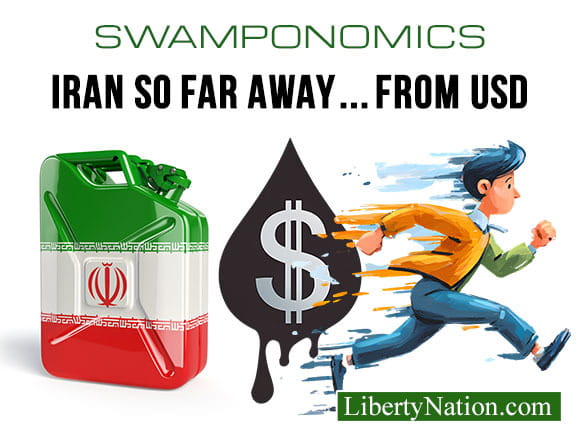
This piece examines how a widening conflict with Iran could strain the dollar’s global dominance, why foreign actors are already hedging away from U.S. currency risk, and how American policy choices will determine whether the dollar keeps its crown or slowly loses ground to rival currencies and hard assets.
The Iran war could threaten the dollar hegemony.
For decades the dollar has been the world’s reserve currency because of the size and openness of U.S. markets, deep capital pools, and Washington’s ability to enforce sanctions. That system gives American policymakers enormous leverage, from freezing assets to cutting access to global payments. When push comes to shove, the international financial plumbing has favored the United States.
Now, a broader Middle East conflict centered on Iran is putting that advantage under stress. Energy disruptions, targeted sanctions busting, and the weaponization of payments are forcing countries to rethink how they store value and settle trade. Tehran and its partners are accelerating moves that had been simmering for years—swapping dollars for other currencies, routing trade through alternative systems, and building bilateral arrangements that sidestep U.S. control.
Those moves are rational for countries that fear secondary sanctions or want to protect their oil and gas revenues from seizure. We are already seeing increased use of gold, local currencies, and payment platforms outside SWIFT for certain corridors. When big exporters begin to price energy in non-dollar currencies, even a sliver of global trade shifting away from the greenback can compound into meaningful market changes over time.
At the same time, major central banks are quietly diversifying reserves. This is not some overnight revolution; reserve diversification is slow and deliberate because financial systems are sticky. Still, a war that damages trust in U.S. policy or makes market access risky could speed that process, prompting faster allocation to gold, euros, yuan, and commodity-backed instruments.
Republican policymakers should watch two dangers closely: mismanagement and signaling. If Washington applies sanctions clumsily, freezes foreign-held assets arbitrarily, or appears to use financial power for transient political goals, partners will pursue credible insurance. The message matters as much as the action. Strength that looks chaotic invites partnerships built to avoid that strength.
There are practical limits to de-dollarization. U.S. Treasury markets remain unmatched in liquidity and safety, and global investors prize the rule of law that underpins U.S. debt. Banking, hedging, and derivatives markets are deeply dollar-centric, which slows any rapid retreat. Moreover, the United States still controls core infrastructure through which global trade flows, giving time and space to reinforce dollar advantages.
That said, this is a strategic contest, not just an economic one. Adversaries are highly motivated to develop parallel systems, deepen energy trade ties priced in alternatives, and promote political blocs that reduce exposure to American sanctions. BRICS expansion, bilateral energy deals settled in local currencies, and swaps for gold are all part of a playbook to dilute U.S. leverage over time.
For conservatives, the right response is straightforward: strengthen deterrence and back it up with predictable, disciplined economic statecraft. Military readiness and secure supply chains protect the physical basis of commerce, while clear, consistent sanction policies preserve credibility without driving allies into the arms of rivals. Diplomacy that pairs resolve with smart economic carrots keeps trade partners aligned with dollar-based systems.
There are also domestic policy levers that matter. Fiscal discipline and a commitment to stable monetary policy keep the dollar attractive. Excessive debt, runaway inflation, or unpredictable intervention can chip away at confidence faster than any foreign central bank can. If we want the dollar to remain king, we have to act like a trustworthy steward of the currency.
Ultimately, a war with Iran raises the odds of a long-term erosion of dollar primacy, but it does not guarantee it. The United States still enjoys structural advantages that are hard to replicate overnight. The deciding factor will be American behavior: competency, consistency, and the willingness to use strength wisely. If Washington blunders, the dollar’s throne could be contested; if it governs well, the greenback will likely retain its commanding role.

