

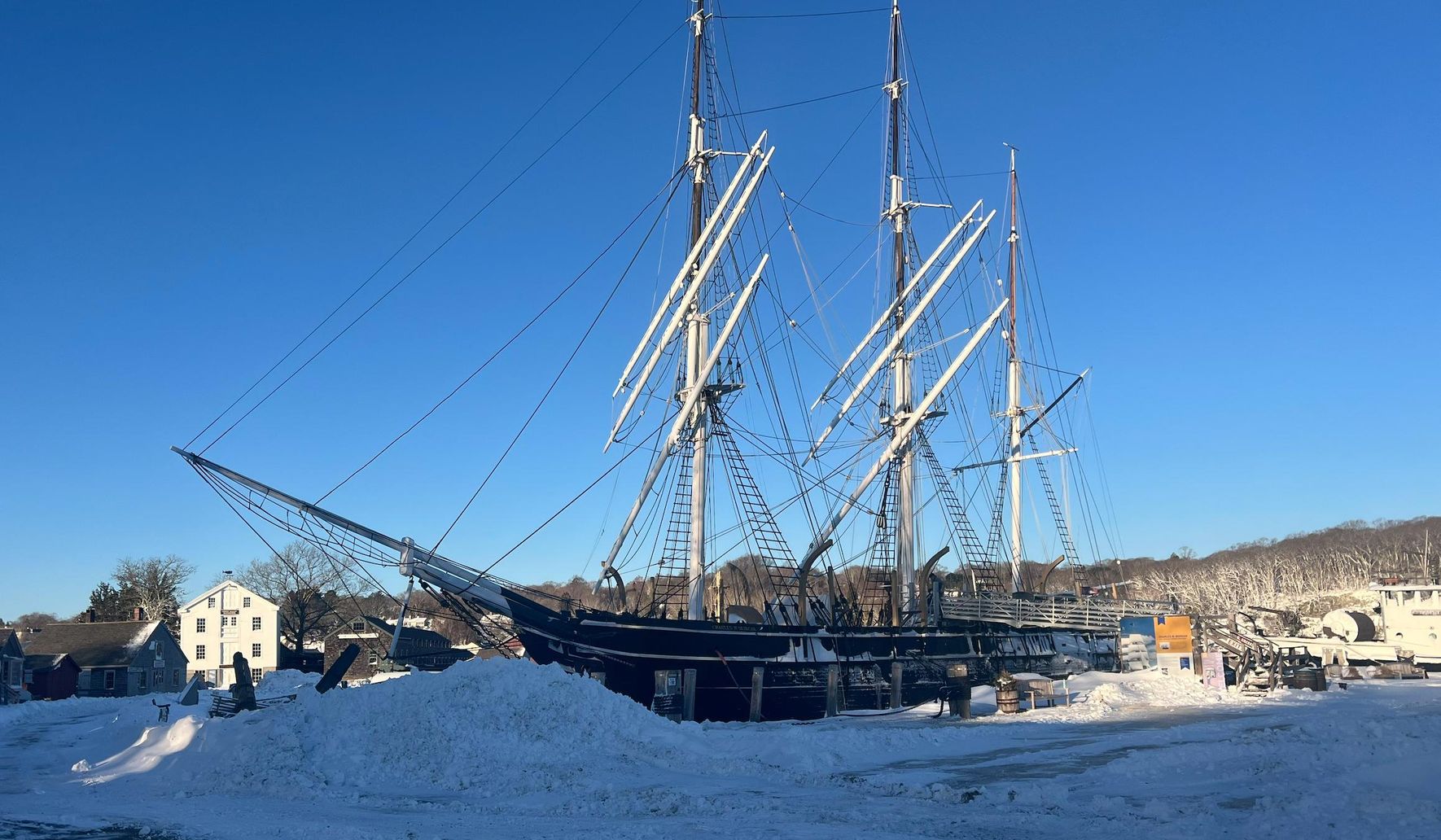
Snow piled two feet deep on a docked 113-foot historic whaling ship demanded careful, hands-on work to protect both the vessel and the people clearing it, and the effort mixed preservation concerns, physical labor, and improvisation by crew and volunteers.
Clearing 2 feet of snow from a driveway is backbreaking enough. Clearing it from a 113-foot-long historic whaling ship docked in the river is something else entirely. The ship’s length, exposed timbers, and riverside location turn an ordinary chore into a preservation challenge.
Snow load matters for old ships because weight and moisture can stress decks, rigging, and hull fittings that weren’t designed for modern loads. Crews must balance removing heavy snow quickly with avoiding damage from shovels, ice scrapers, and runoff. That means softer tools, staged clearing, and constant assessment of where water will go when the snow melts.
Working on a vessel adds slippery surfaces and awkward angles that don’t exist on flat driveways, so safety is a priority from the start. Workers use non-invasive techniques to prevent gouging planks, loosening fastenings, or tearing canvas and tarps. Personal safety equipment — harnesses, non-slip boots, and helmets — keeps the team steady while they move across crow’s nests and narrow decks.
Because the ship is docked in the river, teams also watch for tide, wind, and drifting ice that can suddenly change conditions. Those elements affect both how snow accumulates and how quickly it melts into places that could freeze again. Coordinating timing with the weather reduces the risk of creating new hazards during cleanup.
Preservation-minded crews prioritize the ship’s historic hardware and finishes, deciding which areas can withstand gentle scraping and which require brushing or melting by hand. Salt, sand, and some chemical treatments that help roads are strictly avoided to protect wood and iron from corrosion. That cautious approach can slow the work, but it prevents long-term damage that would be costlier than extra labor.
Teams often improvise protective coverings to channel meltwater away from vulnerable seams and displays, and they use soft brooms instead of metal shovels where possible. Temporary wooden ramps or plywood sheets distribute weight when workers need to cross fragile sections. These simple measures reduce the chance of a cracked plank or a strained joint during the cleanup.
Logistics matter: getting people, ladders, and soft shovels down to a docked ship without creating extra wear on the pier takes planning. Coordinators stage supplies at a safe distance and ferry them carefully, mindful of tides and equipment stability. A small, steady crew usually beats a hasty all-hands effort when the goal is both speed and restraint.
Volunteer groups and museum staff often pair practical know-how with a clear chain of command, so decisions are made quickly when water or wind complicate the job. Keeping tools that won’t mar historic surfaces within easy reach minimizes the time workers spend exposed to the elements. That discipline helps preserve the ship’s original materials and the public’s ability to visit it in better weather.
After the bulk of snow is removed, crews inspect the deck, fastenings, and museum displays for trapped moisture and salt residue that could cause future problems. They set up monitoring for any sections that need further drying or conservation work once temperatures rise. Regular winter plans now include these checks so one big storm won’t slip through unnoticed and cause slow, costly deterioration.
Long-term, the experience of clearing heavy snow from a historic ship feeds into preventive measures like improved drainage, temporary shelters over vulnerable sections, and staff training for extreme weather. Investing time in these steps reduces emergency fixes later and keeps the vessel safe for visitors and researchers. In the short term, though, well-planned, careful shoveling remains the most effective way to protect a 113-foot survivor of maritime history when two feet of snow lands on its deck.

