

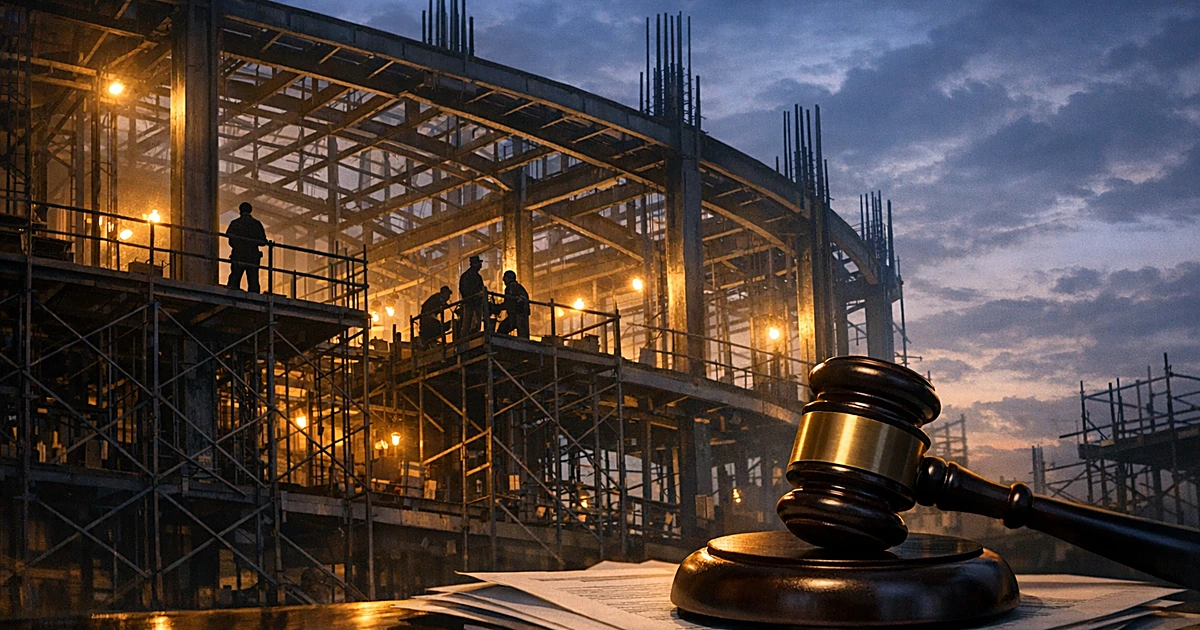
The D.C. Circuit paused a district judge’s block so work on President Trump’s $400 million White House ballroom can proceed temporarily, and crews are expected to keep building until the June 5 hearing.
The appeals court issued its stay late Friday, reversing a lower-court order that had frozen above-ground work at the former East Wing site. The move arrived barely a day after the district judge stepped in, and it cleared a path for construction to resume while the legal fight continues.
The project has been controversial from the start because of its scale and the decision to demolish the East Wing last fall to make room for the ballroom. The White House argues the cost is privately funded and therefore within presidential control, a position that frames this as an internal decision about the executive residence.
A preservation group challenged that view in court, arguing the administration bypassed key approvals and federal process before knocking the old structure down. The district judge responded by halting part of the rebuild, prompting an immediate appeal from the administration and fast action from the D.C. Circuit.
The appeals panel offered no long opinion in the emergency order that readers have seen so far, but its decision to put the lower-court block on hold signals willingness to let construction continue through the scheduled June 5 arguments. That kind of rapid appellate intervention is uncommon and drew attention precisely because it came so quickly.
For the White House, the ruling is a clean procedural victory that keeps work moving and preserves the momentum of a major build. For opponents, the episode is a reminder that temporary win in a district court can be reversed swiftly on appeal, especially when higher courts see immediate questions about process and authority.
The ballroom is a massive project by any measure, listed at $400 million and meant to be a permanent addition to the grounds. The administration frames the renovation as a long-overdue improvement to the executive residence, arguing donors will cover costs and the president has the authority to make changes to his own home.
Opponents counter that federal preservation rules and established review processes exist for a reason, and they contend those rules should have been followed before demolition and construction began. The legal dispute will hinge on whether the National Trust and similar groups can show that allowing the work to proceed will cause irreparable harm that justifies a continued injunction.
Both sides have clear paths ahead at the June 5 hearing: the administration will press the claim that the executive branch exercises broad control over the White House complex and that private funding places the project outside typical congressional scrutiny. The preservation group will press process, seeking to prove the project sidestepped reviews that could have led to different outcomes.
The stakes go beyond a single building because the case touches on executive authority, historical preservation law, and how private money interacts with public properties. Past White House changes, like a modified Rose Garden patio and new flagpoles added last year, show the administration has not been shy about altering the grounds, though none of those moves triggered comparable litigation.
Courts tend to be reluctant to order demolition once construction is well underway, which makes this interim win for the administration significant in practical terms. The appeals court’s stay means more concrete and steel will be in place by the time judges take a deeper look, and that materially affects the remedies a court might consider if the preservation group later prevails.
Legal technicalities will dominate the next phase: which agencies the challengers say should have signed off, what legal standard the appeals panel used to grant the stay, and how a private-donor funding model will fare under existing statutes. Those questions will play out at the hearing and in subsequent briefs as both sides press their interpretations of law and precedent.
The case is moving fast, and the June 5 session will be pivotal for whether the temporary hold becomes permanent or whether the district court’s barrier returns. For now, construction continues and the argument about who controls the executive residence remains very much alive.

