

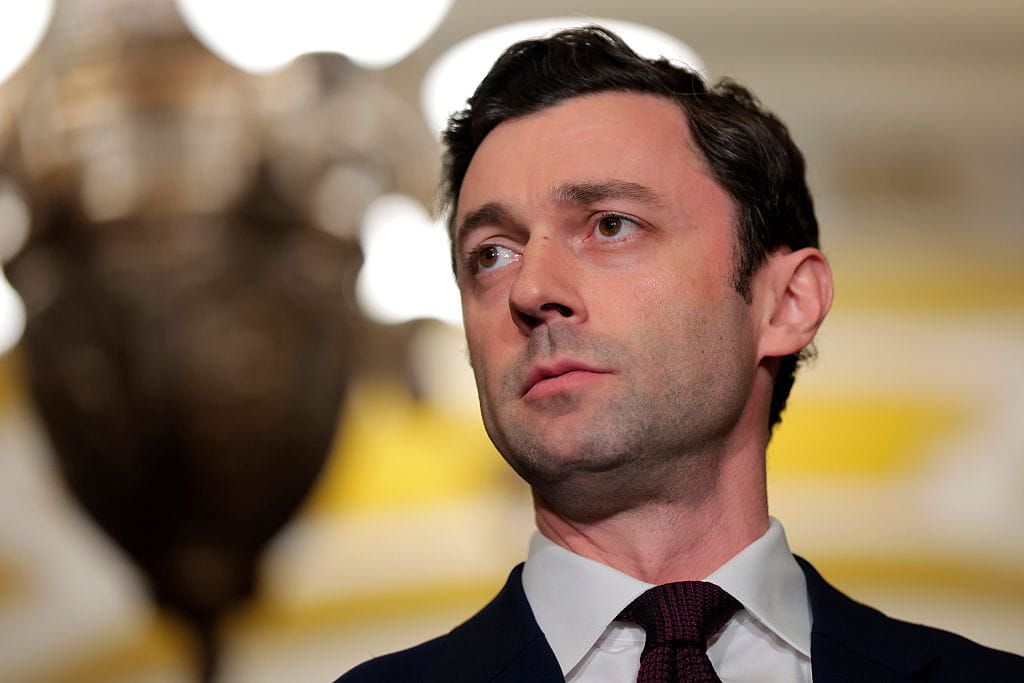
Democrats are pushing U.S. Sen. Jon Ossoff as their next big political prop, promoting him as a fresh face to carry their message even as voters shrug; the pitch reads like a rerun of the same formula, and the payoff keeps coming up short.
Party operatives have made a habit of recycling candidate types, hoping optics will do the heavy lifting when policy and competence fall flat. This current effort around Jon Ossoff feels engineered: heavy media placement, talking points handed down from the campaign shop, and an expectation that narrative alone can manufacture momentum. That approach underestimates how voters judge real results versus staged enthusiasm.
U.S. Sen. Jon Ossoff (Photo by Heather Diehl/Getty Images) has been elevated in headlines and on television, but headlines do not equal votes or lasting credibility. The push relies on presentation more than proof, stressing image and media cycles rather than tangible accomplishments that connect with everyday Americans. When performance matters, spectacle is a weak substitute.
Across elections, the Democratic playbook has often leaned on charismatic framing to paper over policy incoherence, and Ossoff’s current boost fits that pattern. Critics on the right see the strategy as trying to manufacture authenticity where it does not exist, a slick package designed to distract from record and priorities. From a Republican standpoint, that effort is predictable and transparent to voters who value results over hype.
The slogan from the story captures the sentiment plainly: “A strategy that keeps failing because no one is buying it.” That line nails why this sort of recycling of personalities frustrates the electorate; when substance is missing, repetition only deepens skepticism. Voters notice when leaders spend more time on optics than on delivering security, prosperity, and accountability.
Media outlets and party operatives can trumpet a name, but political reality has its own momentum and voters are less forgiving than PR teams imagine. Republicans argue that true leadership is measured by clear outcomes—safer streets, stronger economies, and government that lives within its means—not by carefully curated sound bites. This is why an emphasis on image over record opens political vulnerability.
From a conservative perspective, elevating a candidate like Ossoff as a centerpiece is a weak pivot for Democrats who face skepticism on core issues. The risk for the party is that these manufactured narratives collapse under scrutiny when opponents press on policy differences and leadership failures. If the aim is to win trust, rehearsed hype is a poor place to start and a bad cover for substantive shortcomings.
What voters want is durable leadership that produces concrete improvements in their lives, not a rotating cast of media-friendly figures meant to distract from governing gaps. Republicans will continue to challenge flashy narratives with pragmatic questions about results, responsibility, and priorities. The electoral lesson is simple: staging a comeback with style cannot replace the steady work of delivering measurable gains for ordinary Americans.

