

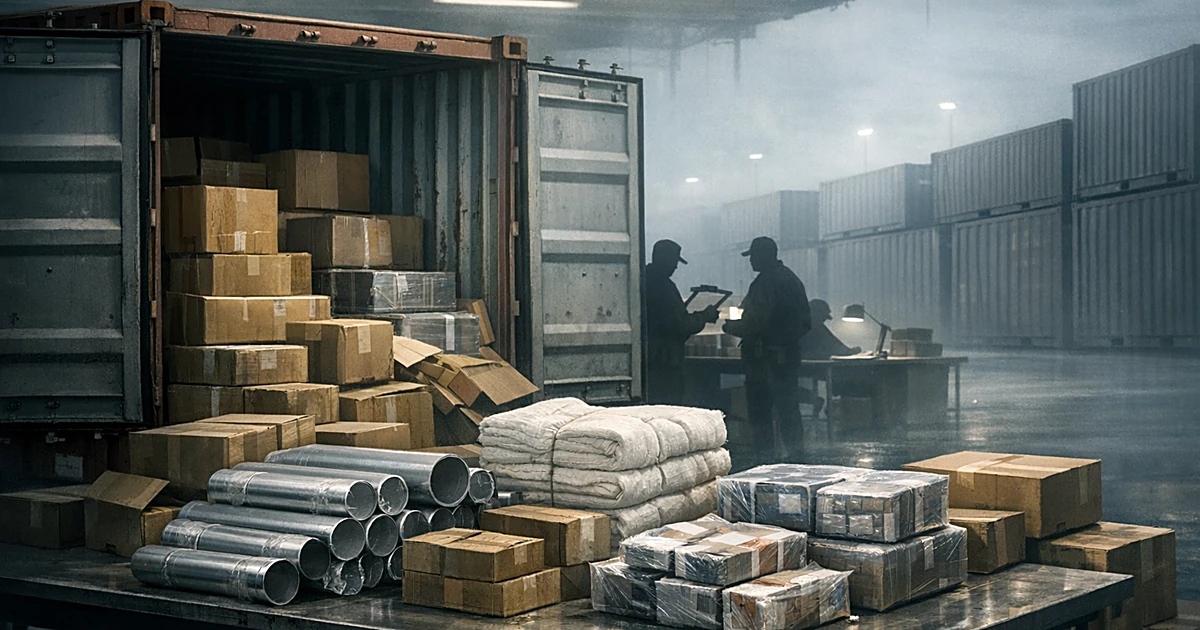
The Department of Homeland Security added 43 Chinese companies to the Uyghur Forced Labor Prevention Act entity list, expanding the blacklist to 187 firms and signaling tougher enforcement at the U.S. border for goods tied to forced labor in Xinjiang.
The latest action by DHS marks the biggest single expansion of the import ban tied to Uyghur forced labor. Customs and Border Protection began enforcing the new designations immediately, treating goods from the newly listed firms as presumed to be made with forced labor unless importers can rebut that presumption. The round covers products in aluminum, apparel, copper, cotton, tomatoes, and related downstream goods, long sectors flagged for links to coerced Uyghur labor.
The 43 new entries amount to roughly a 30 percent jump in the size of the UFLPA Entity List, and two prior listings received technical name updates as part of the same action. The Forced Labor Enforcement Task Force oversees these designations and coordinated the rollout of the expanded list. This move makes clear the administration is prioritizing supply chain scrutiny and trade enforcement in parallel.
Homeland Security Secretary Markwayne Mullin framed the blacklist as both a moral duty and an economic defense for American workers.
“Today we are adding 43 Chinese companies to the UFLPA Entity List, and DHS will ensure their products do not enter our country. The American worker must not be undercut and cheated by foreign companies that use slave labor. Our job is to defend the Homeland, and that includes protecting our citizens from unfair competition that not only disadvantages Americans, but harms human dignity.”
That combination of human rights and fair competition was echoed by other trade officials. U.S. Trade Representative Jamieson Greer spoke to the same themes on national television, tying forced labor restrictions to broader efforts to keep American industry competitive.
“We are taking action to make sure that our workers and companies compete on a level playing field.”
Enforcement has already had measurable results. Since the UFLPA took effect, CBP has denied entry to more than 24,300 shipments, collectively valued at nearly $1 billion, and the new designations extend that posture to dozens more companies. Those statistics show the policy has teeth and that agencies are willing to act at the border to block suspect goods.
Beyond seizures, joint law enforcement work has produced additional penalties and recoveries tied to illicit imports. The DHS-DOJ Trade Fraud Task Force has been active in pursuing cases and financial remedies related to forced labor and trade fraud.
“The DHS-DOJ Trade Fraud Task Force brings a new energy to our enforcement against illicit imports and our broader efforts to end the human suffering caused by forced labor. Importers should know that those who attempt to circumvent today’s action and knowingly import goods produced with forced labor will be prosecuted to the fullest extent of the law.”
The mention of prosecution “to the fullest extent of the law” signals a harder line than civil penalties alone, and it warns that deliberate evasion could prompt criminal referrals. That shift raises the stakes for importers who might try to paper over problematic sourcing or re-route shipments to evade scrutiny.
This administration has shown a pattern of pairing strong rhetoric with enforcement, and CBP data reflect a sustained focus on trade compliance. The trade enforcement approach mirrors the administration’s broader posture on economic security and border integrity, with agencies under pressure to produce actionable results.
Rob Law, who chairs the interagency task force that identifies entities for the list, emphasized the national security dimensions of the expansion.
“The Trump Administration remains steadfast in its commitment to remove forced labor from U.S. supply chains and to holding foreign companies accountable for their exploitation. We are uncompromising in the continued prevention of unfair practices that undermine American businesses, expansion of the UFLPA Entity List is a tool by which DHS can ensure both our economic and national security.”
DHS said it coordinates with industry groups, nonprofits, and international partners to help firms comply and to clean supply chains, though the department did not specify the organizations involved. That collaboration is meant to give importers a path to demonstrate compliance while tightening the noose on companies that rely on forced labor inputs.
The UFLPA passed with bipartisan support, and the Senate Foreign Relations Committee approved it back in June 2021 with lawmakers stressing the need for accountability. At the time the committee said, “the U.S. cannot be complicit in these atrocities” and that Congress “must hold Beijing accountable.”
Public officials across the aisle have at times expressed concern over Uyghur repatriations and forced labor. One recent post said officials were “alarmed” after a foreign government returned Uyghurs to China, urging more scrutiny of those moves. Still, the pace of adding entities to the list has accelerated under the current leadership, suggesting a backlog of designations that are now being addressed.
The administration has also demonstrated willingness to intervene directly when enforcement felt slow, including overruling agencies when deemed necessary to speed action. That mix of pressure from the top and aggressive agency work has produced a rapidly growing enforcement apparatus focused on trade and economic security.
DHS did not release the full roster of the 43 newly blacklisted companies in its public announcement, leaving details and the evidence behind each designation to be reflected in official channels over time. Importers sourcing products linked to Xinjiang now face a tougher compliance burden and clearer consequences for failing to substantiate their supply chains.
Goods tied to 187 entities enter U.S. ports carrying a rebuttable presumption of forced labor, meaning evidence is required to clear shipments for entry. If importers cannot meet that standard, shipments will be denied, and deliberate attempts to move tainted goods could trigger referrals to the Department of Justice.

