

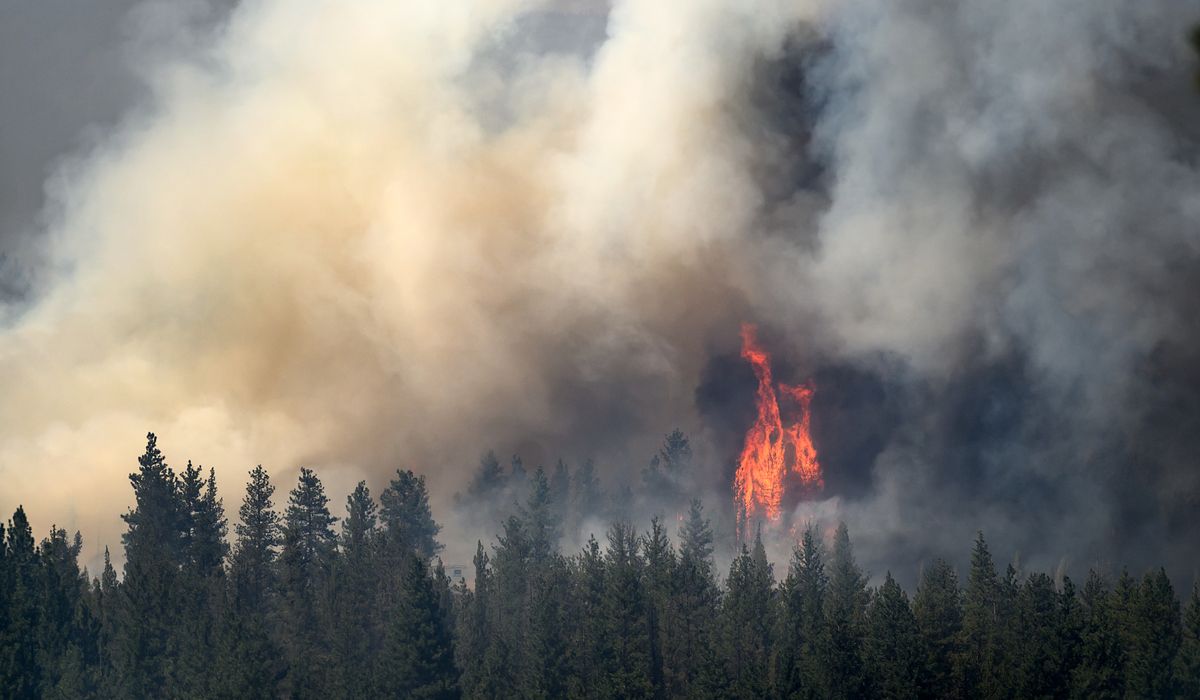
Dry, gusty conditions pushed a large wildfire near a city in central Oregon, and officials reported that a fourth firefighter died after he and several colleagues were overcome by a fast-moving wildfire near Colorado last month.
Winds and low humidity helped a blaze expand quickly near a populated area in central Oregon, forcing hurried responses from local and state crews. Fire behavior turned active in the afternoon, sending flames into open timber and brush where crews were already stretched thin. The weather gave little mercy, and the wildfire grew into a serious threat to nearby homes and infrastructure.
Fire managers committed engines, hand crews and aerial resources to slow the fire’s edge and protect structures where possible. Aircraft worked to drop water and retardant when conditions allowed, and ground teams focused on building containment lines between vulnerable neighborhoods and the fire’s path. Coordination between agencies aimed to keep people and firefighters out of immediate danger while buying time for more robust suppression efforts.
Local leaders issued evacuation notices and opened temporary reception centers for families leaving threatened neighborhoods. Authorities emphasized the need to move quickly when evacuation warnings changed to orders, and residents were urged to have go-bags and plans ready. Shelters and community organizations stepped in to help people who had to leave homes with little notice.
A grim reminder of wildfire danger arrived in the form of a separate recent fatality: a fourth firefighter has died after he and several colleagues were overcome by a fast-moving wildfire near Colorado last month. That incident is under review, and it has weighed heavily on crews working the Oregon fire, who carry the memory of lost colleagues into every shift. Departments are balancing the emotional toll with the technical work of keeping themselves and the public safe.
Investigators are looking into the circumstances of last month’s Colorado burnover to determine what went wrong and what lessons can be applied across the nation. Those findings could change procedures, equipment priorities or tactics when crews face similar fast-moving conditions. In the meantime, agencies are reminding teams about situational awareness and escape routes in the field.
The strain of simultaneous incidents highlights the limited pool of trained wildland firefighters and specialized equipment during peak season. When multiple large fires flare up at once, mutual-aid systems activate but resources can still be thin in the first critical hours. Communities and agencies are increasingly conscious of how quickly a single ignition can become a crisis when conditions are extreme.
Beyond immediate suppression, officials are focused on safety protocols, rest cycles and mental health support for crews working long shifts under stressful conditions. Peer support and counseling services are being made available to help firefighters process losses and fatigue, and leadership is stressing the value of enforced rest to reduce mistakes. Maintaining a resilient workforce is now part of the operational plan every day on the line.
Weather forecasts continue to shape tactics as the fire evolves, with crews adjusting holding strategies based on wind shifts and fuel dryness. Road closures and access restrictions remain in effect around the incident perimeter to protect the public and allow safe movement of response vehicles. Officials say community updates will come as containment efforts progress and more information from the Colorado investigation is released.

