

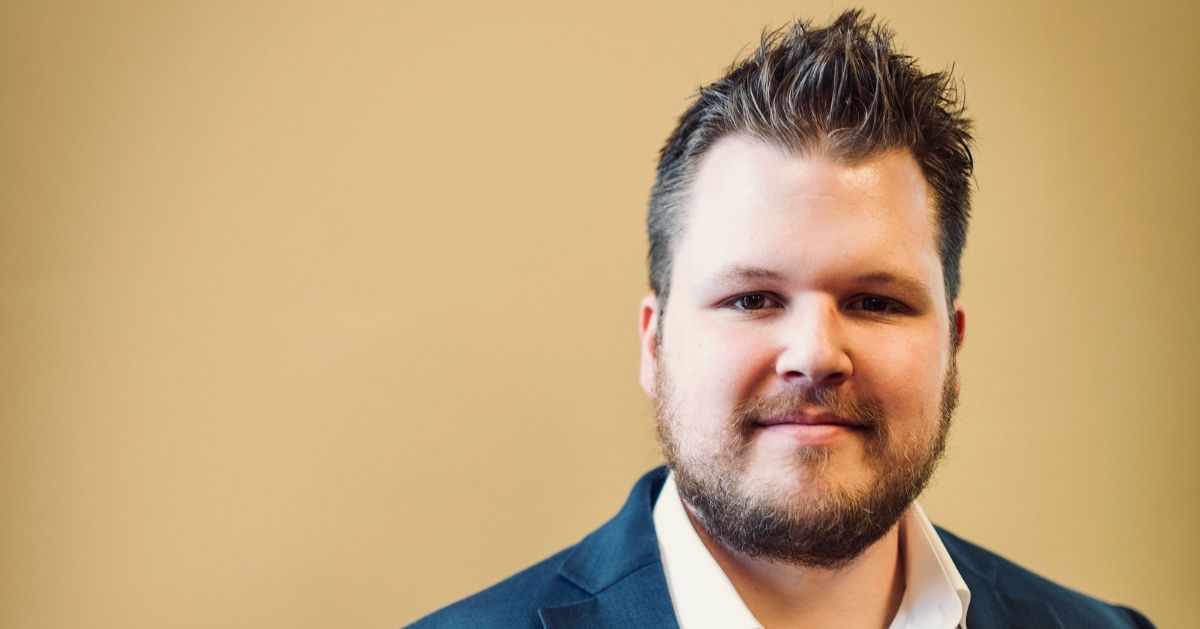
Abdul El-Sayed edged out Haley Stevens for Michigan’s Democratic Senate nomination, winning narrow statewide support that came overwhelmingly from highly educated counties and college towns while losing every one of the state’s least-educated counties.
Abdul El-Sayed won Michigan’s Democratic Senate nomination Tuesday by about a point and will face Republican Mike Rogers on November 3. Thursday morning CNN data reporter Harry Enten took the question from anchor Kate Bolduan and responded with a striking number: Zero of fifteen. El-Sayed did not carry a single one of the fifteen Michigan counties with the lowest share of college degrees, and he won thirteen of the fifteen with the highest.
“More from elite circles than from the working class circles,” Enten said, and the returns make that plain. Detroit itself backed Rep. Haley Stevens; she won more than 60 percent of the vote in the state’s largest Black-majority city and carried Wayne, Oakland and Macomb counties—the three that cast most of Michigan’s Democratic votes. El-Sayed’s path ran through university towns and precincts dense with graduates, not through the traditional manufacturing suburbs and less-credentialed counties.
El-Sayed carried Kent and Washtenaw counties with more than 60 percent each, and in parts of Ann Arbor he topped 70 percent. Kent County is about 40 percent college-educated, and he won it by 26 points. Statewide splits were stark: in counties where fewer than 30 percent of adults hold bachelor’s degrees, Stevens took about 52 percent; above that line, El-Sayed took about 60.
That pattern points to educated, often younger voters clustered around campuses and liberal enclaves. It is not the same as wealthy suburbs—he lost affluent Oakland County while winning Ann Arbor. County-level returns always blur individual reality: a county with few graduates still contains graduates, and cities like Dearborn with large Arab American populations boosted El-Sayed in places that matter.
Unions split their endorsements along trade lines, and the results split too. Building trades and industrial unions listed their endorsements for Stevens—pipefitters, ironworkers, bricklayers, plumbers, boilermakers, carpenters, laborers, operating engineers, firefighters, Steelworkers and Teamsters. Those endorsements reflect leadership choices rather than an exact record of how every member voted.
The United Auto Workers went the other way, and UAW President Shawn Fain claimed the win the night of the primary. “The billionaire class thought they could buy another election. They underestimated the power of workers talking to workers. Shop floor conversations beat Wall Street’s checkbook,” he said. The UAW reported turning out 112,887 UAW voters during early voting alone, a figure many times larger than El-Sayed’s margin of victory and potentially decisive if it holds.
Not every major union took the field; the Michigan AFL-CIO and the Michigan Education Association stayed out. Pollster Richard Czuba asked whether the UAW endorsement was a harbinger of broad union support or a single, more liberal union choosing the furthest candidate to the left. No other big union followed suit before the vote.
Observers framed this coalition in familiar terms. Nate Silver described the Democratic Socialists of America as thriving in a “sweet spot” of highly educated, downwardly mobile voters, and DSA’s own 2021 membership survey showed 80 percent of members over 25 hold bachelor’s degrees while 45 percent live in households making under $60,000 a year. Those figures underscore the mix: credentials without the expected paycheck, and a gap between identity and economic standing.
El-Sayed has been clear about some positions. He told Bridge Michigan that “in an era where Trump is weaponizing ICE against the Constitution itself, I think abolishing ICE is a moderate position.” He also ran an ad saying, “I’m Abdul El-Sayed, the only Senate candidate for abolishing ICE, and I approve this message.” In the counties he won, those positions read as mainstream to the voters who live there.
High-profile allies amplified his reach. Hasan Piker, a streamer with roughly 10 million followers across platforms, closed the campaign for him and campaigned in Detroit shortly before the primary. Piker has made incendiary remarks in the past and did not back away when challenged: “I stand by that,” he said on one contentious moment, and later “I’m a lesser evil voter and therefore I would vote for Hamas over Israel every single time.” Those comments complicated El-Sayed’s candidacy for many Democrats.
Veterans of Democratic politics reacted sharply. James Carville said, “Hasan Piker and James Carville are not going to be in the same political party. One of us is going to leave. It might even be me.” Sen. John Fetterman dared El-Sayed to keep campaigning with Piker into the general election and noted El-Sayed “barely, barely won by 14,000 votes.” Outside a suburban library, voter Irvin Kappy summed up his view of El-Sayed as a potential nominee: “Absolutely not,” he said when asked if he would support El-Sayed, “I’d vote for the Republican, which I’ve never done before.”

