

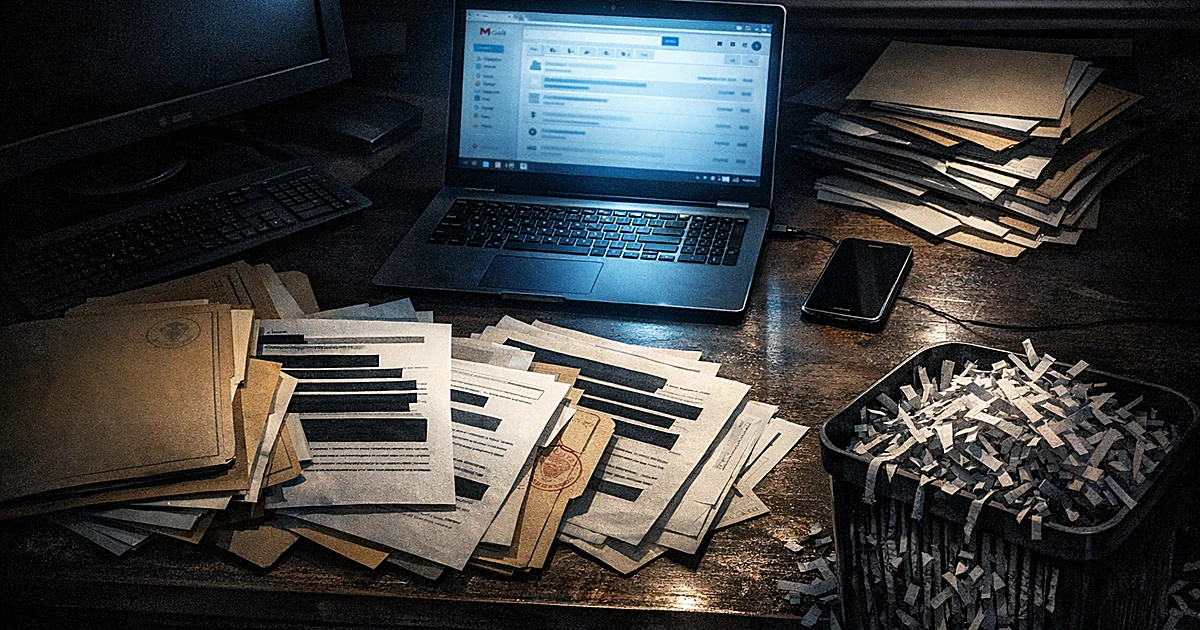
A former senior adviser at NIAID, Dr. David Morens, admitted in federal court that he used private email to hide records about COVID-19 research funding, including grants tied to work at the Wuhan Institute of Virology. The guilty plea exposes explicit instructions and emails showing deliberate efforts to evade FOIA and the Federal Records Act. The case raises questions about who knew what inside the highest levels of pandemic-era public health leadership and what will follow from this admission.
Dr. David Morens, 78, pleaded guilty to conspiring to defraud the United States by concealing federal records, and the Department of Justice has announced the plea. He admitted routing government business through a personal Gmail account to keep communications outside federal transparency laws, a move that carries up to five years in prison and a $250,000 fine at sentencing on November 12. That admission is not a technicality; it goes to how decisions and communications were hidden during a national crisis.
The emails Morens admitted to deleting and hiding involved NIH grants that funded research with the Wuhan lab, the same facility at the center of intense debate over COVID-19 origins. Among the funds in question was a $3.1 million NIH grant to EcoHealth Alliance, which included a $600,000 subaward to the Wuhan Institute of Virology. Those figures matter because they show taxpayer dollars flowed into research the public has a right to scrutinize.
The timeline of the scheme stretches from April 2020 through June 2023, during which Morens exchanged messages with EcoHealth Alliance president Peter Daszak. He told colleagues to use his personal email and outlined deletion plans, revealing a pattern of deliberate concealment rather than sloppy record keeping. A congressional subcommittee later uncovered emails that painted a clear picture of intent.
One email Morens wrote reads exactly as follows: “i learned from our foia lady here how to make emails disappear after i am foia’d but before the search starts, so i think we are all safe.” That line is chilling because it explicitly describes a method to avoid oversight. In another message he wrote, “Plus i deleted most of those earlier emails after sending them to gmail.” These words are in his own handwriting, and they demand accountability.
In a separate message to Daszak, Morens was even more direct about how sensitive material moved through the system: “I can either send stuff to Tony on his private gmail, or hand it to him at work or at his house. He is too smart to let colleagues send him stuff that could cause trouble.” That reference names Dr. Anthony Fauci and implies a deliberate routing of documents away from official channels. Whether that implicates Fauci directly is still an open legal and political question.
Fauci has pushed back, telling Congress: “With respect to his recent testimony before this subcommittee, I knew nothing of Dr. Morens’s actions regarding Dr. Daszak, EcoHealth or his emails. It is important to point out for the record that despite his title, and even though he was helpful to me in writing scientific papers, Dr. Morens was not an advisor to me on [NIAID] policy, or other substantive issues.” That defense strains against both the emails and the proximity of Morens to top decision makers during the pandemic.
Morens reportedly instructed colleagues not only to use his personal account but to expect deletions aimed at avoiding media scrutiny. He told associates he would “delete anything he did not want to see in the New York Times,” a line that makes motive plain: the goal was to prevent public exposure of how federal research dollars were managed. Those choices cut against the federal rules that require record preservation and public access.
The legal fallout is already active on multiple fronts. The DOJ has confirmed Morens’s plea but has not disclosed whether he will cooperate or testify against others. Senators and investigators are pressing for answers about who taught him these tactics and whether additional officials were involved in hiding records.
Political leaders have seized on the case to press for accountability. Questions asked in public forums now focus on whether this guilty plea is an isolated failure or evidence of a broader culture that prioritized protecting reputations over preserving records. That line of inquiry speaks to whether institutional failures allowed critical decisions about pandemic-era research to escape scrutiny.
Beyond the courtroom, the public interest is straightforward: FOIA and the Federal Records Act exist so citizens can inspect what their government is doing with taxpayer money and public health policy. Morens admitted he undermined both laws by moving emails to private accounts and deleting messages tied to controversial grants. Those actions, on their face, betray the public trust and demand an answer about how widespread such behavior was.
As Morens faces sentencing in November, the stakes go beyond one man’s penalties. The case forces a harder look at the offices that handled pandemic decisions and the people who advised them. For those who have spent years calling for transparency, this plea is a clear indication that the questions they raised were not only political rhetoric but rooted in verifiable conduct that must be examined.

