

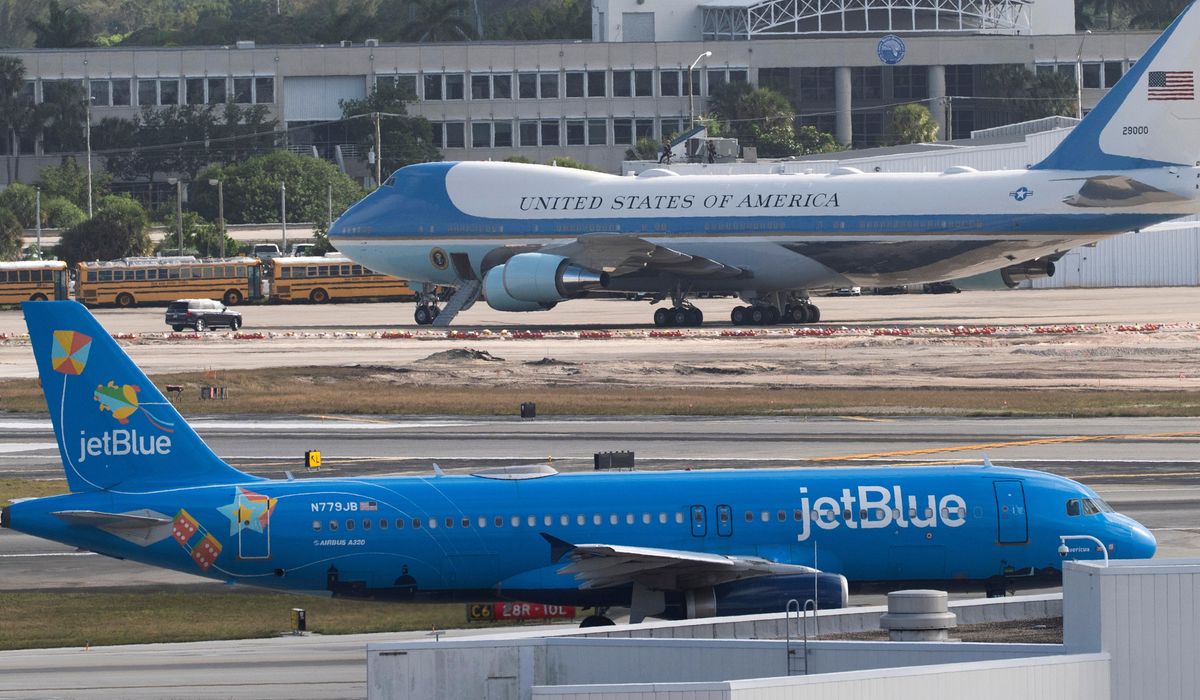
The Federal Aviation Administration briefly grounded all JetBlue flights early Tuesday after the airline asked the agency to halt departures, according to a notice on the FAA website.
The FAA posted a notice saying it had temporarily stopped JetBlue departures early on Tuesday at the airline’s request. That action applied to all flights operated by JetBlue while the ground stop was in effect. The agency characterized the measure as brief, without extensive detail in the public notice.
A ground stop like this means aircraft do not depart origin airports until the hold is lifted, rather than diverting aircraft already en route. For passengers it typically shows up as delayed departures, missed connections and cascading schedule changes across the carrier’s network. Airlines and the FAA use these tools to contain a problem early and limit wider disruption.
The FAA’s notice did not go into specifics about why JetBlue made the request, leaving the operational cause unclear in public filings. Airlines can request a ground stop for a range of reasons, from safety and maintenance issues to air traffic control coordination or staffing problems. Without a detailed statement from the carrier or additional FAA updates, observers must rely on the basic public record the agency provided.
When a large carrier pauses departures, it affects airport ramps, gate assignments and crew schedules almost immediately. Ground stops reduce the number of aircraft moving into crowded airspace, giving controllers and operators time to sort out whatever prompted the pause. That short breathing room is often intended to prevent more severe knock-on effects later in the day.
For travelers, the immediate consequences are straightforward: flights scheduled during the hold window can be delayed or rescheduled, and connecting travelers may face uncertainty. Depending on the length of the pause, airlines typically work to rebook passengers and adjust crews to get service restarted. The operational churn can take hours to settle even after departures resume.
From a regulatory perspective, the FAA manages national airspace and coordinates with carriers on operational restrictions when needed. The agency issues notices like the one on Tuesday to keep the system synchronized and to provide a public record of actions taken. These notices are usually short and focused on the status change rather than detailed root-cause explanations.
Airlines sometimes opt to request a temporary halt rather than letting problems spread across their network, and that choice reflects a tradeoff between short-term disruption and broader chaos. A controlled pause can limit the number of aircraft affected and help preserve safety margins and crew duty limits. The strategy is a practical response to complex scheduling and safety constraints that airlines juggle every day.
Industry observers will often watch whether a ground stop coincides with technical bulletins, weather issues, or staffing announcements, but the public record does not always reveal the internal trigger. Investigations or follow-up statements from carriers sometimes provide more context when major equipment or safety questions are involved. In many cases, however, the matter resolves quickly and operations proceed with minimal public detail.
The FAA’s brief notice makes clear the agency acted on a request from JetBlue and that service interruptions were temporary. Customers and airports experienced the immediate pauses typical of such actions while operations returned to normal once the restriction ended. The public documentation remains the primary source for confirming the timing and scope of the ground stop.

