

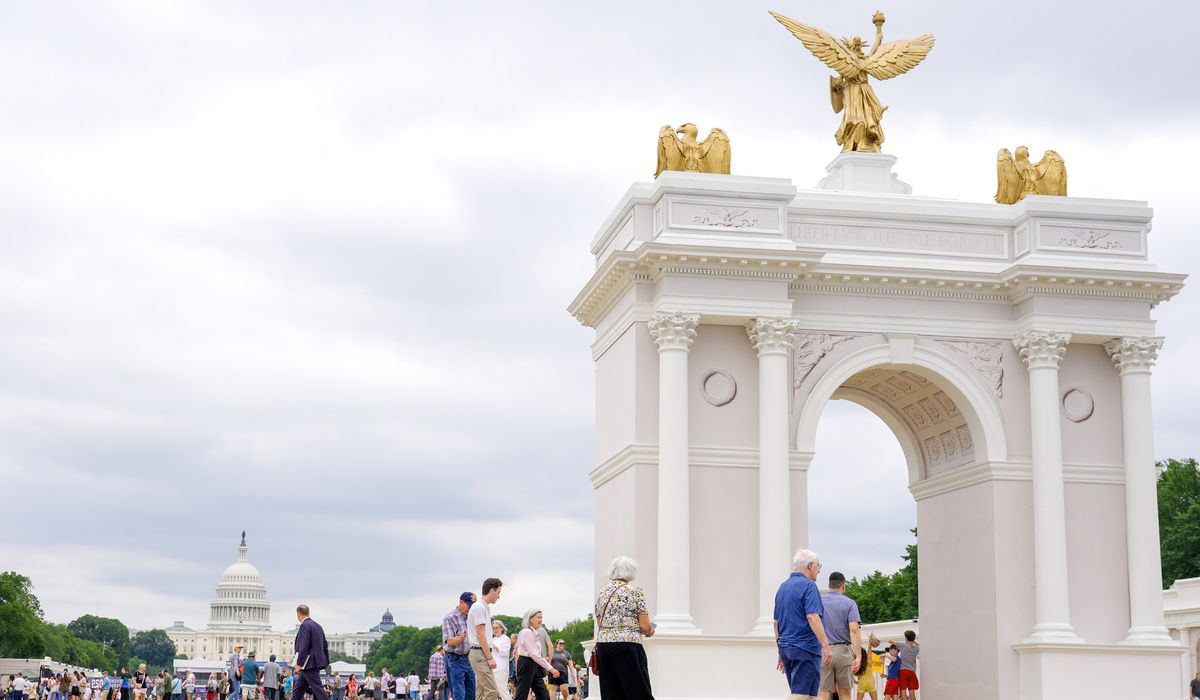
President Donald Trump’s plan for a dramatic arch in the nation’s capital earned initial approval Thursday from a key federal commission, though members delayed a final decision on how to proceed.
The commission’s preliminary yes signals that this idea is more than political theater; it’s now in the design and review pipeline. Backers see an opportunity to reshape a skyline while creating a new focal point for visitors and citizens alike. Opponents quickly raised questions about aesthetics, precedent, and process, so the commission opted to pause before committing to the next steps.
Supporters framed the project as a bold, unmistakable statement and a long-overdue update to the capital’s visual identity. From a Republican perspective, it represents ambition and a willingness to invest in national stature rather than tucking everything into bureaucracy. The initial approval affirms that private vision can advance through federal channels when there is sufficient support and planning.
Critics countered with familiar concerns: how the arch would fit the existing capital fabric, what it might cost indirectly, and whether it could distract from historic monuments. Those are fair questions to ask, which is exactly why the commission chose caution over haste. Pausing allows designers, planners, and the public to address those points without being forced into a hasty yes or no.
The hold on a final decision also gives officials time to map out review milestones and to clarify the scope of federal oversight. That can be welcomed by anyone who wants a clean administrative record and a defensible path forward. It keeps the spotlight on procedure rather than turning a single hearing into the entire debate.
There is political risk and political reward in a project like this. For elected officials and party leaders who back it, the arch can be a signature achievement: a tangible, lasting change tied to one administration. For opponents, it’s a ready-made critique about taste and priorities. The commission’s hesitation reflects the reality that architecture in the capital is as much about symbolism as it is about steel and stone.
Practical matters now move to the fore: sightlines, materials, permits, and how the structure would interact with existing memorials and federal lands. Those technical conversations are where support can solidify or fray, depending on how transparently they are handled. A careful review gives proponents a chance to make the case in detail rather than rely solely on slogans.
Whatever happens next will test the balance between bold civic ambition and respect for the capital’s historic character. The commission’s initial nod on Thursday put the idea on a path, but the delay shows the process is not automatic. Expect more hearings, more technical reviews, and continued political sparring as the plan moves forward or stalls.

