

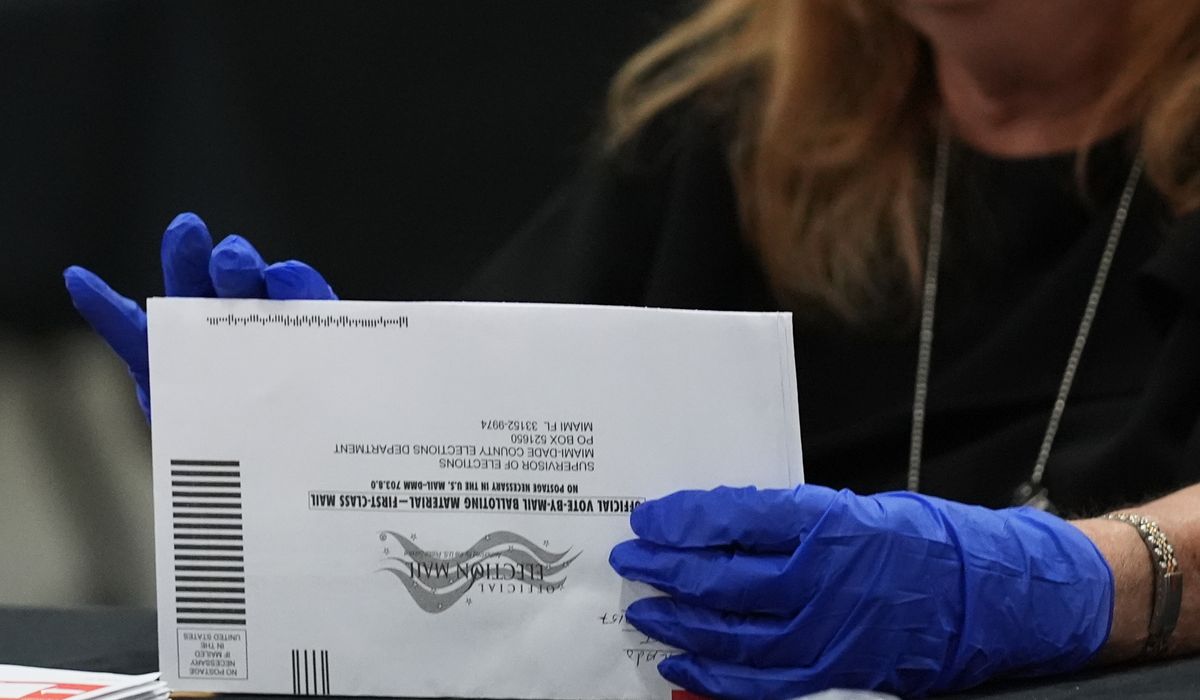
A federal judge on Thursday halted – at least for now – attempts to implement President Donald Trump’s executive order limiting mail voting, a decision that stopped immediate changes and set the stage for more legal fights over election rules and federal authority.
The order from the White House aimed to set uniform standards on mail ballots, arguing that a patchwork of state rules creates risk and confusion. Supporters said the directive sought to strengthen public confidence in election outcomes by addressing inconsistent procedures, deadlines, and verification requirements. Opponents warned it could interfere with states’ traditional control over election administration and potentially disenfranchise some voters.
The court’s temporary halt prevents the administration from moving forward while the case proceeds, leaving current state practices untouched for now. That pause gives election officials and voters breathing room, but it also prolongs uncertainty as campaigns and election managers prepare for future contests. From a Republican perspective, the delay feels like a missed chance to establish common-sense standards that many believe protect ballot integrity.
Legal arguments on both sides will shape what comes next, and Republicans plan to press the case that the executive branch has a role in ensuring fair counting and verification. The administration framed its order as a necessary step to prevent fraud and standardize processes in a system increasingly dependent on mail ballots. Critics argue the change should come through Congress or state legislatures, not unilateral executive action.
The broader debate is about balancing access with assurance that each counted ballot is legitimate, and that balance is what conservatives say the order tried to strike. Mail voting expanded rapidly in recent election cycles, and calls for clearer rules grew louder as states adopted different protocols. Republicans emphasize that voters deserve both access and confidence that every valid vote is accurately recorded and properly tallied.
Courts will weigh statutory authority, constitutional limits, and practical effects on election administration when they decide whether the pause holds. Republicans see judicial review as appropriate but worry that procedural stays can entrench varied state policies instead of encouraging reliable national standards. The judicial process is likely to include appeals and tight deadlines given the time-sensitive nature of election rules.
Meanwhile, state officials must keep preparing under existing laws, and election administrators face the practical reality of running systems designed by lawmakers in their states. That means training poll workers, printing ballots, and setting up secure handling for mailed ballots based on current statutes. Republican officials argue that consistent, transparent procedures across jurisdictions would reduce confusion and give voters clearer expectations.
Political reaction was swift, with conservative commentators framing the judge’s pause as a temporary obstacle to sensible election oversight. They contend that the executive order sought to bring predictability to a chaotic patchwork of rules that can undermine voter confidence. For many Republicans, the legal fight is less about politics than about fixing vulnerabilities exposed by rapid changes to voting methods.
Looking ahead, the case will test how far the president can go in shaping election practices without new legislation from Congress. Republicans intend to pursue arguments that executive action can protect the integrity of federal elections, while remaining mindful of state authority. Whatever the courts decide, the dispute is likely to drive legislative and administrative discussions about the proper balance between access and security in voting systems across the country.

