

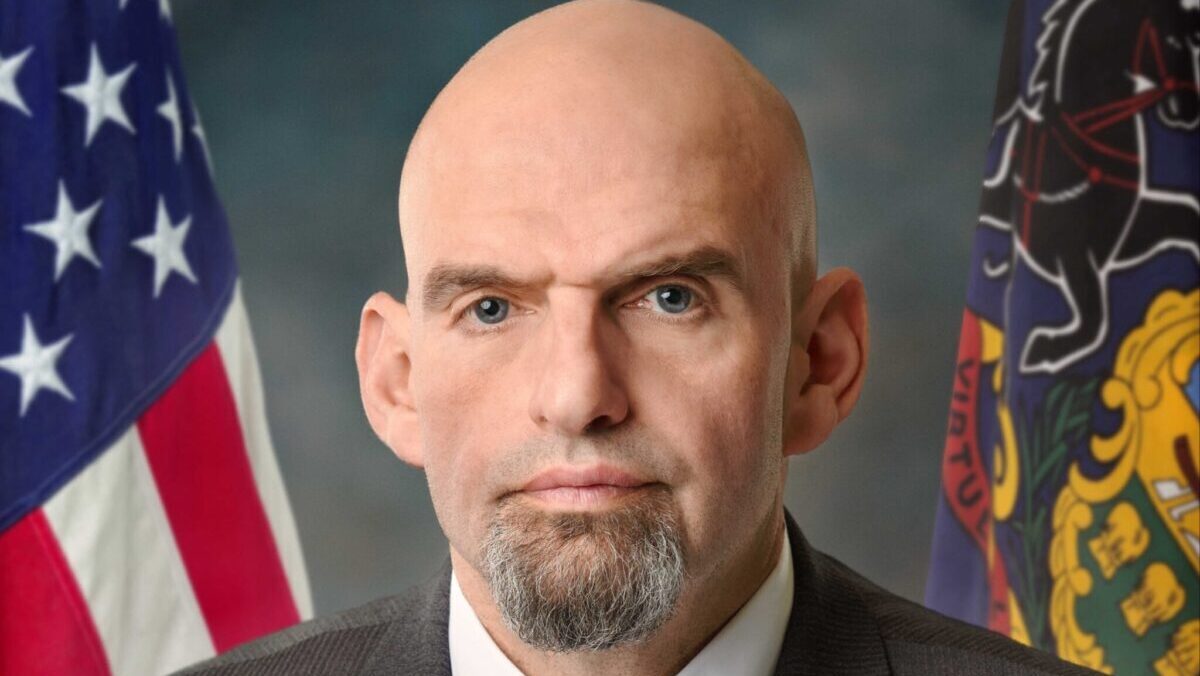
Pennsylvania Sen. John Fetterman pushed back against parts of his party over a government shutdown and certain leftward shifts, but he stopped short of switching parties, insisting he would remain a Democrat while voicing disagreements on key issues.
Pennsylvania Sen. John Fetterman has drawn attention for breaking ranks with many fellow Democrats over the idea of shutting down the government and for pushing back against growing acceptance of socialism within the party. He has publicly criticized those tactics and suggested that some current Democratic stances are out of step with practical governing and working-family priorities. That friction has put him in an awkward spot politically, seen as distancing himself without abandoning his party label.
Fetterman made these comments during a televised interview on Monday evening with Fox News host Jesse Watters, where the host pointed out recurring areas of agreement with Republicans and pressed on the possibility of a party switch. “You’re agreeing with the Republicans on the shutdown, you’re agreeing on Israel, you’re agreeing on the woke B.S,” Watters pointed out before asking, “Are you close to becoming a Republican?”
“No, no, I’d be a terrible Republican, but I’ll just be a very honest Democrat that’s not necessarily afraid to push back against some of these views that I just don’t agree with,” Fetterman replied. He framed his stance as an attempt to be candid about what he sees as pragmatic positions rather than a wholesale conversion to the opposition. That choice keeps him in the Democratic fold while signaling a willingness to confront party orthodoxy.
The senator made clear that some of his disagreements are substantive and not mere political theater, saying he is “very unapologetically supportive” towards the state of Israel. That line underscores a foreign policy stance that contrasts with a vocal pro-Palestinian wing of the left and aligns him more with mainstream bipartisan support for Israel. For voters who care about that relationship, his words matter and separate him from more radical voices.
Fetterman also insisted the country should not accept a shutdown as a bargaining chip. “If you think it’s the right thing to shut our government down for any reason, then that should be a problem too,” Fetterman went on to stress. He tied that concern to immediate, measurable effects on Americans and framed the shutdown as an avoidable harm. In his view, governing can’t be a hostage situation when millions of people depend on stable services.
On immigration and border security, Fetterman did not mince words about conditions under the current administration. “And I believe we need to secure our border, and things were out of control under the Biden administration about the border,” he acknowledged. That admission is notable coming from a Democrat, since it echoes a priority usually emphasized by Republicans and signals an appetite for tougher enforcement and reforms that the senator believes will restore order.
The senator made a direct plea about ending the shutdown and reopening government, noting the moral and practical stakes involved. “And so, you know, with this shutdown, it would be wrong if the Republicans do that. It’s wrong now. We need to reopen this,” the senator insisted. He framed reopening as a commonsense obligation rather than a partisan victory, pushing both parties to prioritize people over political stunts.
Fetterman singled out the Supplemental Nutrition Assistance Program as an example of who gets hurt when work in Washington grinds to a halt. “And now for me, as a Democrat, 42 million Americans, the food insecure, I mean, that’s at the very kind of core of the kinds of people that we really need to protect,” he declared. That figure is meant to convey the scale of the threat to vulnerable Americans and to make clear that procedural fights have human consequences.
He also emphasized pressure from labor groups and unions calling for a resolution. “And now and now every union that’s attached to the shutdown, you know, they’re all calling this, it has to end,” Fetterman remarked. By citing unions, he linked his stance to organized labor’s demand for stability, arguing that workers and their families should not be collateral damage in political brinkmanship.
Fetterman wrapped his comments with a straightforward appeal to common cause on economic issues. The freshman Democrat concluded by saying, “You know, if we’re fighting for working families, why don’t we agree with them and just do this?” He left no ambiguity that his priority is protecting ordinary people and pressing both sides to act rather than posture, even as he remains inside a party he openly criticizes on certain points.

