

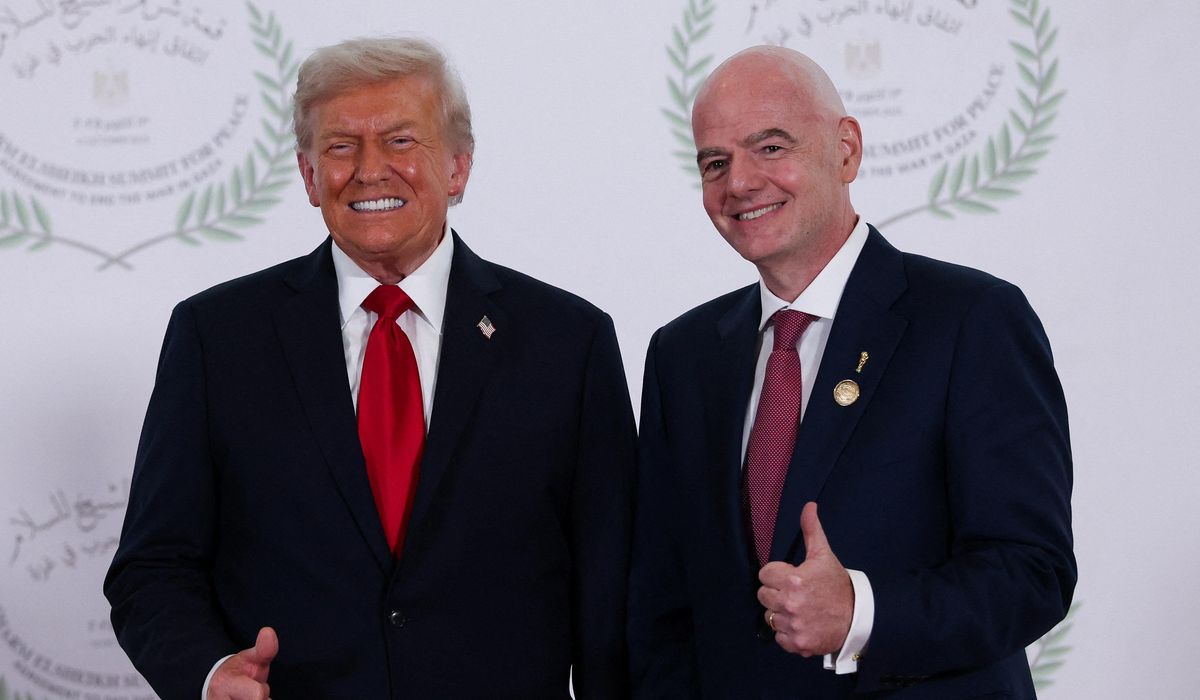
FIFA announced a new peace prize that it will present for the first time at the World Cup draw on Dec. 5 in the District, a move meant to connect soccer’s global reach with diplomatic gestures.
FIFA said it is creating a peace prize and plans to hand it out at the World Cup draw on Dec. 5 in the District, a timing that ties the award to one of the sport’s biggest moments. The announcement frames the prize as a recognition that goes beyond competition and into global influence. The decision brings global attention to sports as a platform for social and political messaging.
The prize will debut during the World Cup draw, a high-profile event watched by millions, which makes the choice strategic as well as symbolic. Presenting a peace award at that moment aims to spotlight efforts that use football to bridge divides and promote dialogue. Selecting a first recipient at such a public stage ensures the prize arrives with immediate visibility and conversation.
Organizers describe the prize as intended for individuals or groups whose work aligns with peacebuilding, reconciliation, or humanitarian impact that connects to the game. FIFA’s announcement did not limit the award to players or officials, opening the field to charities, activists, and community programs. That broadened eligibility signals an effort to position football as a tool for civic and cultural influence, not just sport.
The location, referred to as the District, anchors the event in a political and diplomatic setting where international attention tends to concentrate. Hosting the award ceremony during a World Cup draw creates intersections between sport, diplomacy, and media coverage. Observers note that such moments offer an opportunity to amplify messages that resonate beyond stadiums.
Reactions across the football world are likely to be mixed, with supporters praising the intent and skeptics questioning motives or timing. Some will view the prize as a genuine attempt to reward positive social action connected to football, while others may see it as image management tied to a high-profile event. That tension is familiar whenever sports institutions step into public policy or humanitarian messaging.
Details on selection criteria, the nomination process, and the composition of any judging panel will be closely watched once FIFA releases them, because transparency will shape how the prize is received. Clear rules and an independent, credible panel would reduce doubts and lend legitimacy to the award. Without that clarity, critics may raise concerns about politicization or brand-driven choices.
For potential recipients, the prize offers visibility and validation that could expand the reach of their work and attract new partners or funding. Recognition on the World Cup stage can translate into quicker mobilization, greater media coverage, and wider public awareness for initiatives that use sport to address conflict and social challenges. The announcement already places a spotlight on organizations and individuals who blend athletic platforms with community and humanitarian goals.
Logistically, presenting the award at the draw will require coordination with broadcasters, event planners, and security teams, all of which are already complex around global football events. The added ceremony will need to fit into a tightly scheduled program while ensuring the moment lands with impact rather than appearing tacked on. If FIFA can balance showmanship with substance, the prize could set a precedent for future editions of the World Cup and related events.

