

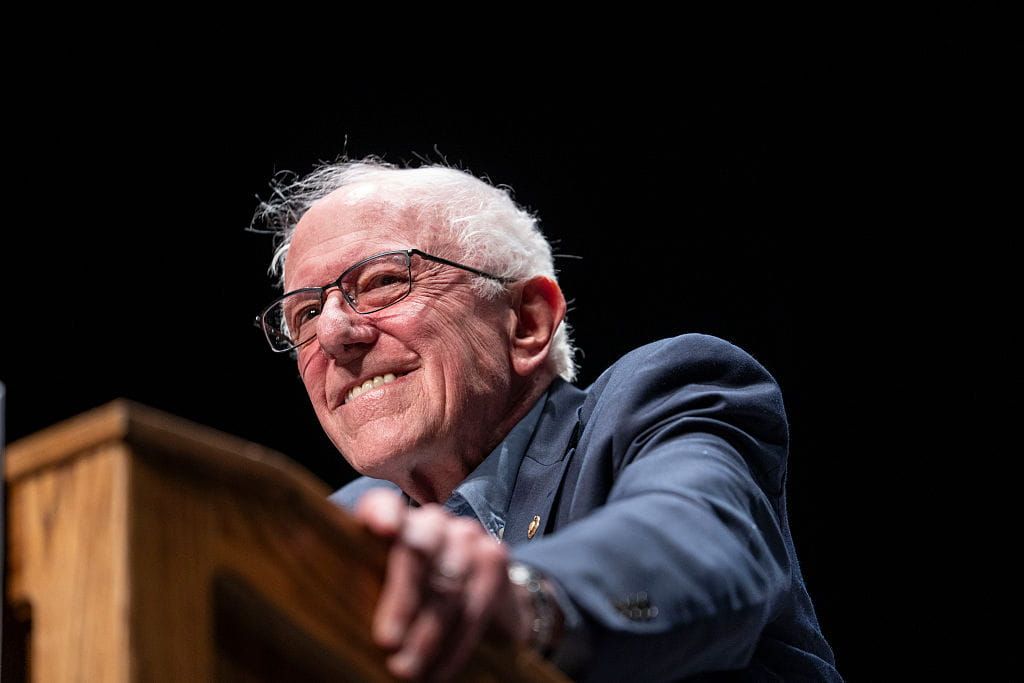
The back-and-forth between Rahm Emanuel and Sen. Bernie Sanders has turned into a test of whether the Democratic base will prioritize authenticity or electability, and whether establishment complaints about a socialist surge actually reflect policy concerns or preservation of power.
Rahm Emanuel warned that “Bernie bros” and other democratic socialist candidates could doom Democrats in November, arguing that a push for authenticity risks alienating swing voters. He charged that “It was socialists who led the charge to defund the police, open the borders, abolish prisons, release violent criminals onto the streets and degrade the flag.” Those are sharp accusations aimed straight at the left flank of the party.
Sen. Bernie Sanders fired back, calling Emanuel a member of the “establishment” who’s “dependent on billionaire campaign contributions to want to maintain the status quo.” Sanders framed the fight as one between entrenched donors and a grassroots progressive movement he says is winning in primaries across the country. His rhetoric leans on anti-establishment anger, even as he is far from a blue-collar pauper.
Sanders’ personal finances complicate his populist posture: he has a net worth of around $2 million, owns multiple homes, and reportedly earned more than $1.7 million in book sales, including the ironically titled It’s OK to Be Angry About Capitalism. That contrast between message and means gives critics ammo to label the socialist wing as rhetorically pure but practically privileged.
The core political question is whether socialist primary wins actually matter in general elections. Democratic socialists have won races in states like California, Colorado, New York, Maine, Maryland, New Jersey, Oregon, and Vermont, plus pockets in North Carolina, Utah, Arizona, Georgia, and Pennsylvania. Some of those states are safely blue or red, but swing states such as Pennsylvania could make primary outcomes consequential for the general election.
Polling and surveys show a messy picture. One online survey of 1,400 voters likely to vote in a Democratic presidential primary found 45% self-identified as “Liberal,” 34% “Moderate,” 11% “Progressive,” 6% “Socialist,” and 5% “Conservative.” Those raw numbers suggest moderates still make up a big chunk of the primary electorate, even as progressives and socialists punch above their weight in some primaries.
The same poll produced mixed attitudes about electability and authenticity. When asked if “Just because a candidate is moderate does not mean they are boring,” 89% agreed. Meanwhile, 88% said they’d vote for someone they don’t agree with on every issue if that candidate fights for working people, and 72% said they’d accept a candidate who is authentic and true to their beliefs. Those figures point to pragmatism mixed with a hunger for genuine representation.
Other items conflicted: 66% agreed that a nominee too far left risks losing the general election, but 62% also said they need a true progressive to be excited. Forty-five percent said nominating a moderate would repeat past mistakes because moderates don’t generate excitement. Three-quarters prefer “a candidate who works across the aisle to get things done, even if it means compromising sometimes,” compared with 25% who favor sticking to progressive beliefs regardless.
From a Republican perspective, this infighting is useful for strategists who expect many voters to choose parties by label rather than ideology. Party-line loyalty means Democrats will largely vote for a D on the ballot, and Republicans will do the same for R. But swing voters and independents could tip the balance where margins are tight.
Real-world consequences depend on geography. In deep blue districts, socialist nominees won’t flip seats to Republicans, but they could replace establishment Democrats. In red states, Democrats are unlikely to win anyway. In competitive states, though, a leftward tilt might repel centrists and independents, handing advantages to Republican challengers who appeal to law-and-order and economic concerns.
Strategically, establishment warnings about electoral danger sit beside progressive claims of momentum. Both sides make plausible points: Emanuel highlights risks to swing voters and national strategy, while Sanders emphasizes grassroots energy and dissatisfaction with the status quo. Voters appear split between craving authenticity and wanting practical results.
Predictions remain uncertain. Decision Desk HQ projects Democrats will likely take the House, but individual races will turn on local dynamics and candidate quality. For now, the intra-party fight looks less like a single turning point and more like a rolling set of skirmishes that will shape who sits in Democratic leadership and what ideas reach the national stage.

