

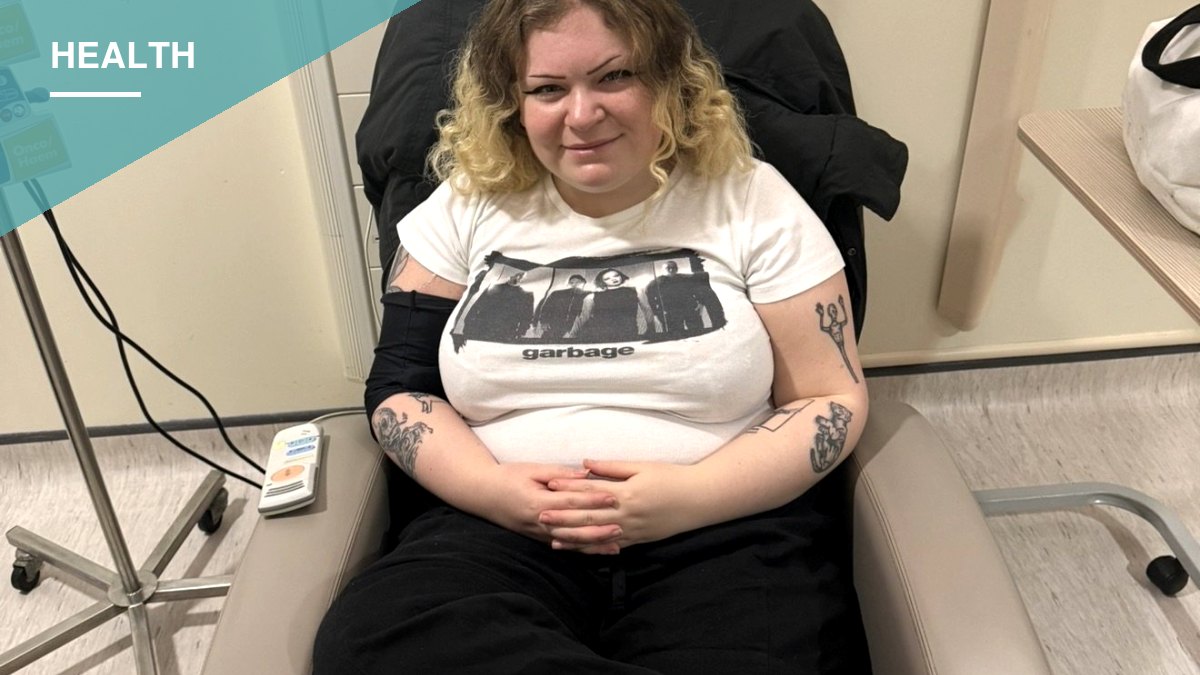
A 28-year-old creative writing student was told for weeks that she had tonsillitis before a blood test revealed she actually had a rare form of acute leukaemia.
Rowan Bland, from Edinburgh but studying in Glasgow, developed a sore throat and general exhaustion in February 2025. Her GP diagnosed tonsillitis and prescribed antibiotics, but her condition worsened. She began bruising for no reason, bleeding from her gums, developing blood blisters in her mouth, and losing weight, along with night sweats and heavy periods.
After roughly a month of deteriorating health and repeated visits to her GP, she asked for a blood test, expecting it would confirm glandular fever. Instead, her GP called two hours later and told her to go straight to hospital.
“The GP told me, ‘I’m going to warn you, but I’m pretty sure this is leukemia. They’re waiting for you at the hospital. So go now.'”
Bland was transferred to the Beatson West of Scotland Cancer Centre in Glasgow, where a bone marrow biopsy confirmed acute promyelocytic leukaemia (APL), a rare subtype of acute myeloid leukaemia. Her blood counts were dangerously low and she needed immediate blood and platelet transfusions.
Doctors told her the disease was serious but highly treatable. She spent six to seven weeks in hospital receiving intravenous arsenic and daily ATRA tablets, during which she developed complications including sepsis and blood clots. A biopsy at the end of that initial treatment showed she had gone into remission, and she went on to complete a further six months of outpatient chemotherapy, finishing in November 2025. A final biopsy in January 2026 showed no evidence of disease, though she still has monthly blood tests.
Bland said she had never considered herself at risk given her age. “I didn’t know anything about leukemia,” she said. “I just think that there’s a bit of a misconception that leukemia is for babies. And cancer is always like a lump. That was my mindset.”
She said the experience has changed her outlook entirely. Since finishing treatment she has taken part in a 5K Race for Life in Glasgow and is now training for a 10K, despite continuing to deal with osteonecrosis in her bones as a result of treatment.
“I would say I’m a completely different person,” she said, adding that running has helped her mental health considerably.
Bland credited support from the charity Leukaemia Care, whose staff visited her every Monday throughout her hospital stay. Colin Dyer, the charity’s chief executive, said leukaemia “can affect people of any age, and its symptoms can be easy to dismiss or attribute to something else,” adding that Bland’s case “shows why we need to challenge the misconception that blood cancer is something that only happens to older people.”
Bland is now urging others not to brush off unusual or persistent symptoms. “If you feel like something isn’t right, you need to push harder,” she said. “I would just tell people to really push for things like blood tests. I went undiagnosed for over a month and that could have ended very badly for me.”

