

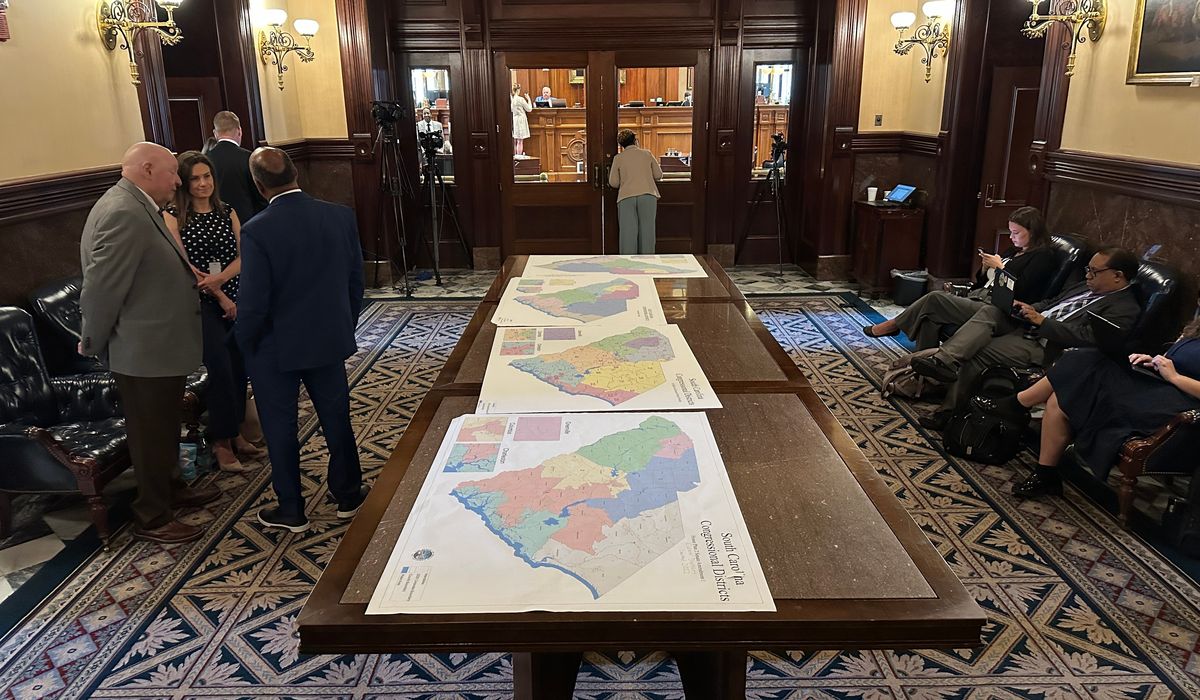
Republicans are moving quickly to redraw congressional maps after a recent U.S. Supreme Court ruling that reduced federal protections for minority voting rights, and they argue the new maps will reflect current voter realities and protect communities of interest.
State Republican leaders are treating the court decision as a green light to take back mapmaking from federal oversight and remake districts on their terms. They say the move is about updating lines to reflect population shifts, restoring competitive districts, and ensuring that representation is tied to how people actually vote. The push is fast because calendars for the midterm elections leave little time for negotiation or prolonged litigation.
The Supreme Court action that narrowed minority protections under the Voting Rights Act has shifted the legal terrain, and Republicans see that as an opportunity to reclaim control of a process they say was previously skewed. From their perspective, federal standards enforced by courts or Washington bureaucrats had frozen maps that no longer matched political and demographic reality. This change gives state legislatures the room to draw districts they believe will be fair and functional.
Republican lawmakers argue the new maps will emphasize common-sense criteria like compactness, respect for local boundaries, and keeping communities with shared economic and cultural ties together. They stress that districts should translate votes into seats in a straightforward way rather than protecting entrenched incumbents or preserving awkward lines drawn for partisan advantage. That message is aimed at voters who want clear accountability and practical representation.
Critics warn that the rush to redraw lines could be partisan and undercut minority representation, but Republicans counter that protecting the principle of one person, one vote is not the same as preserving maps shaped by litigation. They point to court challenges that dragged on for years and created uncertainty for voters and candidates. In their telling, finalizing new maps now provides clarity before ballots are finalized for the midterms.
On the ground, GOP-controlled legislatures are moving quickly to approve proposed maps and prepare for the legal fights that are sure to follow in state and federal courts. The playbook includes making sure proposed plans adhere to state constitutions, submitting materials to public comment periods, and documenting the rationale behind district lines. Republicans say that transparency around the criteria will be part of the defense against accusations of partisan gerrymandering.
Political strategists on the Republican side view redistricting as a corrective that will restore balance in states where demographics and voting patterns have shifted since the last round of maps. They argue that previous maps often insulated incumbents and created distorted majorities that did not reflect actual voter preferences. By redrawing lines to reflect current data, Republicans believe they can create more competitive districts and give voters clearer choices.
Legal experts expect swift challenges from opposition groups and civil rights organizations, which will likely argue the new maps disadvantage minority voters despite the Supreme Court ruling. Republican officials say they are ready to defend their maps but also believe those cases will ultimately reinforce the state-level authority to draw districts. That confidence is part legal and part political, reflecting a broader effort to move responsibilities back to state governments.
The timing matters. With midterm campaigns already ramping up, the maps Republicans enact now will shape candidate recruitment, fundraising, and messaging for months to come. Parties will have to adapt quickly to new district lines, revise voter outreach plans, and recalibrate where resources are spent. For Republican operatives, this is an all-hands moment to translate new boundaries into electoral gains.
Regardless of the ultimate outcome in the courts, the redistricting scramble underscores how much is at stake whenever rules about representation change. Republicans frame their actions as restoring electoral integrity and returning power to state voters. The coming legal battles and political contests will test whether that message resonates with the public and whether the new maps stand up under scrutiny.

