

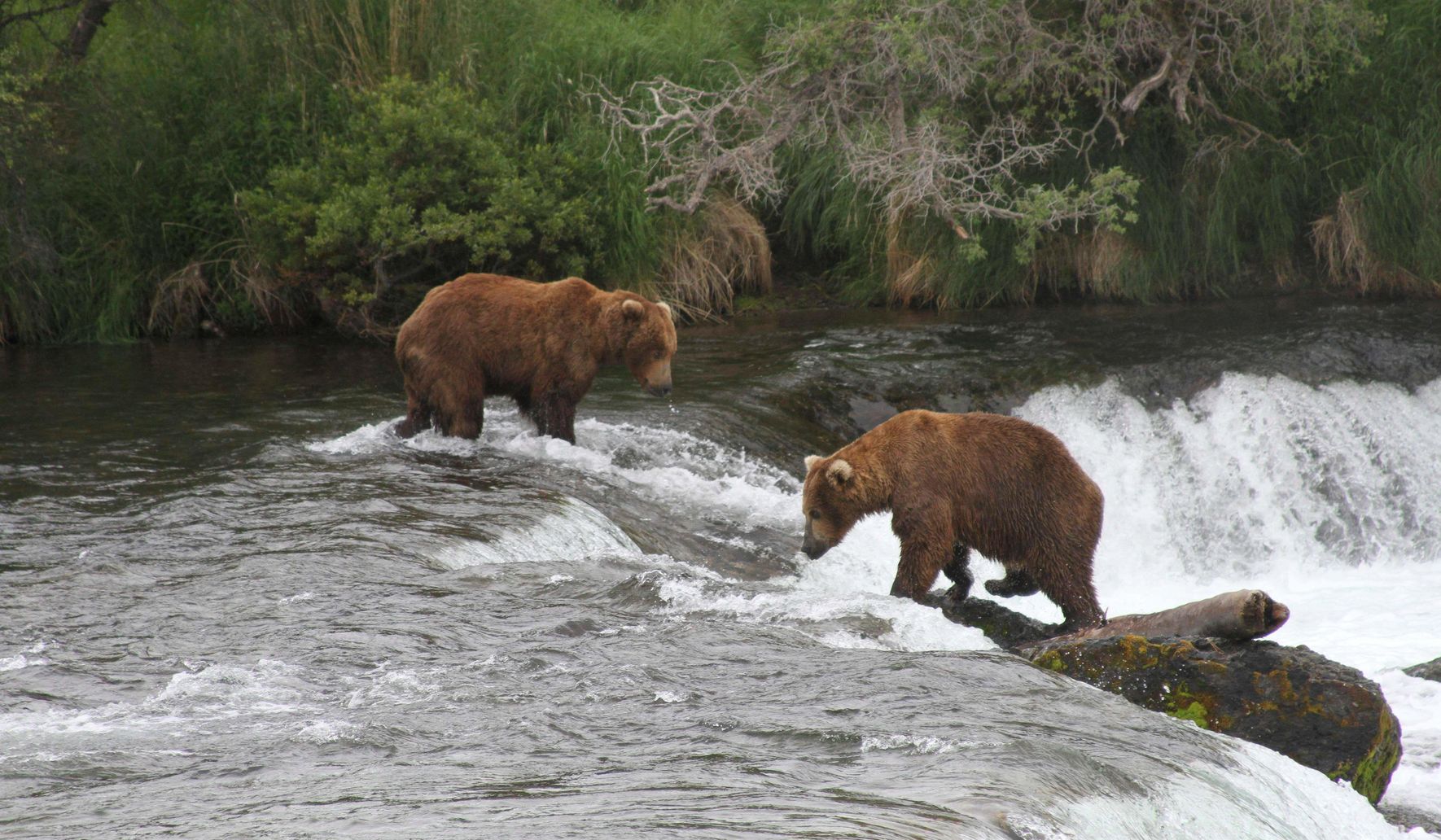
Conservation groups sued Monday over a state program in Alaska that authorizes killing brown bears and black bears as a way to increase the size of a once-significant caribou herd in the southwest region, and the dispute has opened a wider debate about how to balance predator control, animal welfare, and long-term herd recovery.
The lawsuit filed Monday challenges a state-run plan that allows removal of brown bears and black bears with the explicit goal of boosting caribou numbers. Plaintiffs say the policy targets predators instead of addressing broader ecological pressures, while supporters argue bold steps are needed to aid a herd that once played a central role in the region. The case now moves into the legal system where its outcomes could shape future wildlife management choices.
The program authorizes killing brown bears and black bears in defined areas to reduce predation on caribou calves and adults, a tactic sometimes used in wildlife management. Managers who back the program point to immediate declines in predator-caused mortality as a direct way to give caribou a chance to rebound. Opponents counter that targeted removals can have unpredictable ecological ripple effects and may not address root causes of population decline.
The caribou herd in question was once a significant presence in the southwest landscape, and its decline has raised alarm locally and beyond. Local communities that relied on the herd for subsistence and cultural practices have watched numbers fall and seasons change. Those losses fuel the urgency behind aggressive interventions and the frustration that fed the legal challenge.
Conservation groups behind the lawsuit argue that the state program sidesteps more comprehensive conservation strategies and that killing predators is a blunt instrument. They emphasize nonlethal tactics, habitat restoration, and long-term monitoring as better foundations for recovery. The lawsuit frames the debate as one about conservation philosophy as much as about law and management practice.
State wildlife managers defend their approach as responsive to immediate declines and grounded in monitoring data and field observations. They maintain that, when used carefully, predator control can reduce calf mortality and create conditions in which a struggling herd can at least begin to recover. Still, managers acknowledge the uncertainty inherent in manipulating predator-prey dynamics across a large, rugged landscape.
Scientists and independent experts point out that predator control sometimes delivers short-term increases in prey numbers but does not always lead to sustained recovery without parallel habitat improvements. Climate change, habitat fragmentation, disease, and human activity can all influence caribou survival and reproduction in ways that predator reduction alone cannot fix. Those complexities make any single policy choice a gamble with ecological trade-offs.
Public opinion in the region is split, with some residents supporting decisive action to restore a familiar resource and others alarmed at the prospect of organized killing of bears. Cultural values, subsistence needs, and differing views about human responsibility for landscape changes shape how communities weigh the options. The legal fight has become a focal point for these competing priorities and for how the state answers them.
The lawsuit will test how courts weigh scientific uncertainty, state authority over wildlife, and the standards required for programs that intervene in ecosystems. If the court curtails the program, managers may need to pivot to alternative measures or seek new public and scientific buy-in for any predator control efforts. Regardless of the ruling, the dispute underscores the challenge of managing wildlife in a changing environment while trying to respect both ecological integrity and human needs.

