

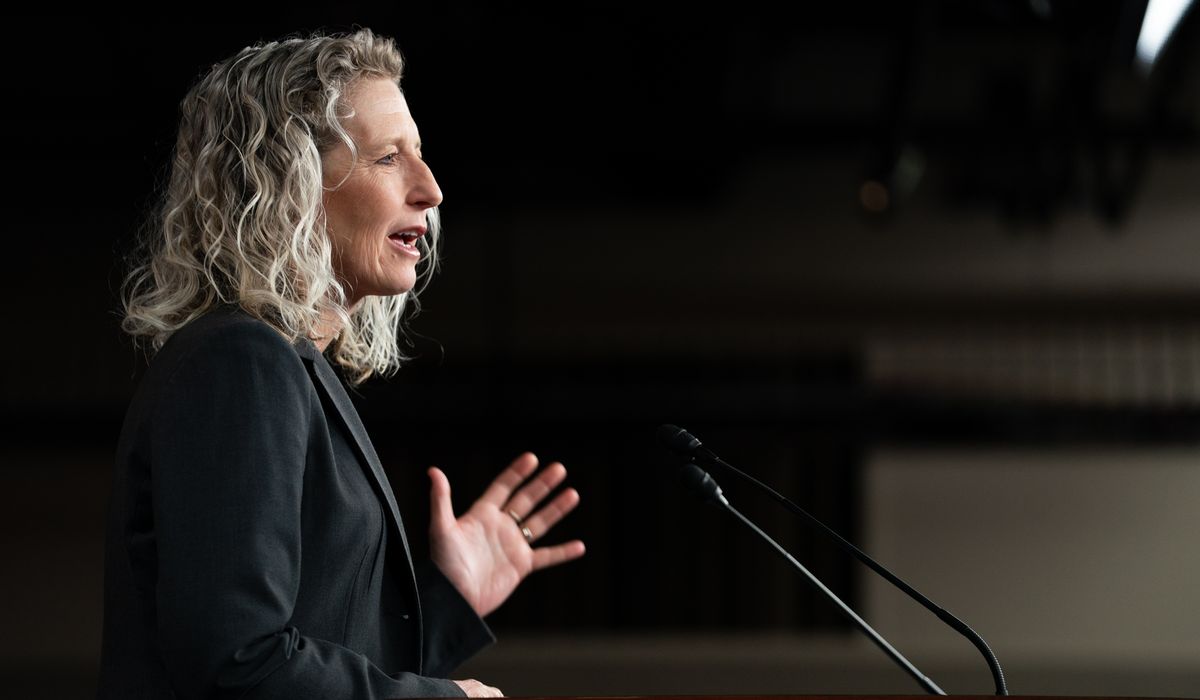
House Democrats attacked Virginia GOP Rep. Jen Kiggans after she agreed with a radio host who told House Minority Leader Hakeem Jeffries to get his “cotton-picking hands off of Virginia.”
The backlash landed quickly, predictable and loud from the Democratic side, but the moment was simple: a radio host used a blunt phrase and Rep. Jen Kiggans signaled agreement. Democrats seized the line as evidence of insensitivity, and the media amplified the dispute into a bigger story than the words alone might justify. For Republicans, the episode highlights inconsistent outrage and a growing tendency to weaponize language in political fights.
What is missing from much of the coverage is context and consistency. Plenty of politicians trade sharp rhetoric on the airwaves, and Republicans argue the reaction here is selective and performative. Kiggans did not originate the phrase; she acknowledged a radio host’s comment and stood by her view that national leaders should not be interfering in Virginia politics. That posture resonated with constituents who want local control defended against federal overreach.
Democrats framed the exchange as proof of a deeper problem, leaning on accusations that tap into race and history. Conservatives counter that the use of the phrase in this setting was pointed at a political figure, not a racial attack, and that the outrage does not square with how similar comments from the left are treated. This dispute now says more about political calculation than about any clear moral standard.
Republican defenders of Kiggans are making two basic points: words matter, but context matters more, and political opponents often weaponize language selectively. From that view, the Democrats’ rapid condemnation looks less like principled concern and more like a tactical move intended to score points. The goal, critics say, is to shift attention away from policy disagreements and onto manufactured controversies.
Kiggans’ position also taps into broader frustration about Washington’s role in state matters. Many Virginians resent what they see as national leaders dictating policy or strategy to local communities, and the phrase at the center of this controversy was aimed at that sort of meddling. Conservatives argue the real issue is not the rhetorical choice but the substance: national officials trying to steer or shame local political decisions.
Meanwhile, Democratic officials who demanded an apology or a retraction have been accused of applying a double standard. Republicans point to times when similar aggressive language from the left has been shrugged off or normalized by the same actors now feigning outrage. That inconsistency fuels Republican talking points about hypocrisy and selective moralizing.
The exchange underscores a larger trend where short moments on radio or social media become flashpoints for political theater. Both sides know this and use it to mobilize their bases, raise money, or change the news cycle. For Republicans, defending Kiggans is as much about pushing back on that dynamic as it is about the specific words used by a radio host and echoed by a Congresswoman.
In the end, the fight over a phrase quickly became shorthand for how each party plays politics. Democrats pushed protest and denunciation, while Republicans defended intent and context, arguing that national leaders should keep their focus on policy rather than piling into local battles. The episode is another example of how a single line can ignite a wider debate about fairness, free speech, and political strategy without ever resolving the underlying policy differences.

