

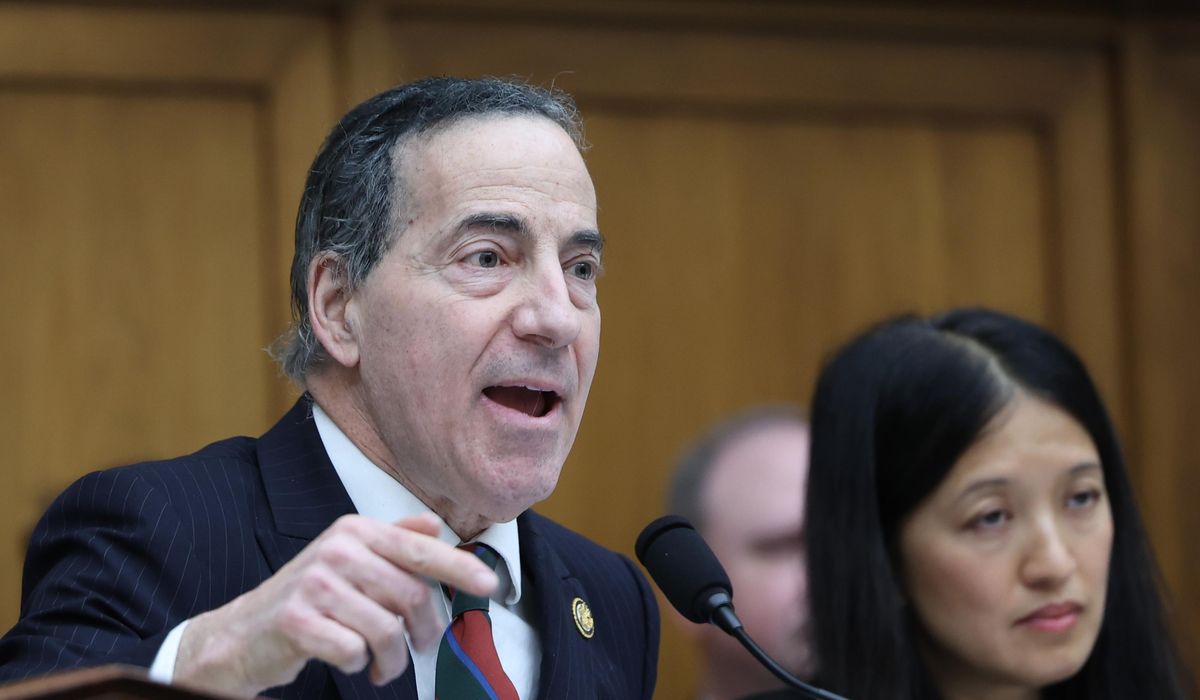
The House Judiciary Committee voted down a Democratic bid to use subpoenas to force testimony on a newly announced $1.8 billion Anti-Weaponization Fund, and the decision is drawing sharp debate over oversight, fiscal responsibility, and partisan tactics.
“The House Judiciary Committee rejected Democrats’ attempt to subpoena top Trump administration officials to testify about the creation of the new $1.8 billion Anti-Weaponization Fund.” That single line captures the clash: Democrats pushed for forced testimony, and the committee majority pushed back. The vote is being treated as both a procedural win and a policy statement.
From a Republican perspective, the committee acted to check a hasty, politically driven demand for subpoenas that would have hauled senior officials into hearings without clear necessity. Subpoenas are a serious tool tied to demonstrated need, not an opening salvo in a media campaign. Standing against that move signals a preference for measured oversight over spectacle.
At the center of this storm is the $1.8 billion figure, which naturally raises questions about scope and stewardship. When federal money of that magnitude is proposed for a broadly defined purpose, Republicans argue taxpayers deserve rigorous accounting and clear legal guardrails. Concerns center on how the funds would be allocated, who controls them, and what precise standards would trigger spending.
Republicans also see the attempt to subpoena as an extension of partisan theater rather than focused oversight. For many on the right, the push was less about facts and more about headlines and pressure tactics. That perception hardens when demands for testimony come before agencies or programs have produced documentation or a defensible policy framework.
That is not to say oversight should be abandoned. GOP members insist proper oversight means requesting documents, asking targeted questions, and following established committee procedures to get answers without resorting to broad subpoenas. That approach favors putting paper trails on the table first and reserving coercive measures for when channels are exhausted and real obstruction is evident.
There is a second, deeper worry that fuels Republican skepticism: the risk that a fund labeled to prevent weaponization could itself become a tool for political enforcement. Vague mandates and large discretionary pots of money have a history of being shaped by administrative priorities, and conservatives are right to demand protections for civil liberties and neutral, transparent criteria. Scrutiny is necessary to make sure the program cannot be repurposed into selective enforcement or political targeting.
The Judiciary Committee’s rejection of the subpoena attempt is being framed as a defense of institutional norms and taxpayer safeguards, not an opposition to oversight in principle. Republicans emphasize that legitimate accountability can and should proceed through clear documentation, targeted questioning, and adherence to constitutional separation of powers. The fight over this $1.8 billion fund will likely continue, but for now the majority has signaled its preference for process and prudence over headline-driven compulsion.

