

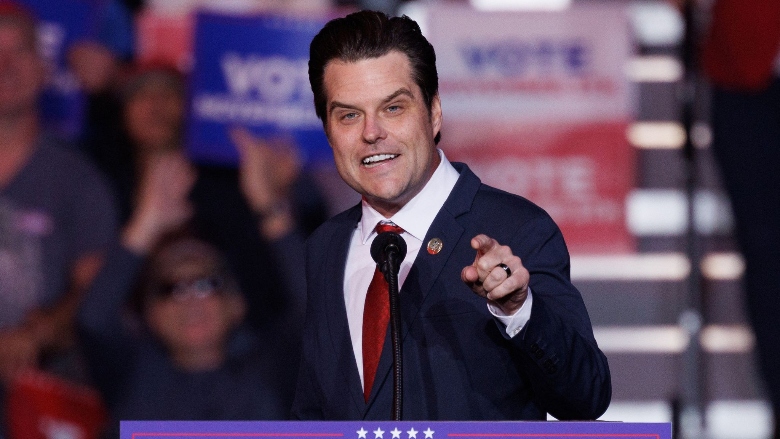
In a recent discussion with Dinesh D’Souza, Will Upton, Political Editor of The National Pulse, outlined a controversial but constitutionally valid strategy for President-elect Donald J. Trump to appoint contentious figures like Matt Gaetz or Robert F. Kennedy Jr. to key Cabinet positions—without needing immediate Senate approval. The plan hinges on the use of recess appointments, a lesser-used presidential power that could bypass Senate opposition for nearly two years.
Under the U.S. Constitution, the president can make temporary appointments to federal positions without Senate confirmation if the Senate is in recess for at least ten days. These “recess appointees” can serve until the start of the next congressional session, which typically lasts about a year.
Additionally, the Federal Vacancies Reform Act (FVRA) allows these temporary appointees to extend their service as “acting” office holders for another 210 days, effectively stretching their tenure to nearly two years. This strategy, Upton explained, would give Trump enough time to establish his administration’s policies and potentially rally Senate support for his nominees later.
Figures like Matt Gaetz and RFK Jr. are polarizing choices for Cabinet positions. Gaetz, a staunch Trump ally and firebrand congressman, would likely face fierce opposition from both Democrats and moderate Republicans in the Senate. Similarly, RFK Jr., whose unorthodox views on public health and policy have drawn bipartisan criticism, might struggle to secure the necessary votes for confirmation.
Recess appointments could allow Trump to sidestep this opposition, at least temporarily, by placing his preferred nominees in critical roles without requiring an immediate Senate vote.
While the plan sounds feasible in theory, implementing it would face significant political challenges. Senate Majority Leader-elect John Thune has already suggested that “RINO” (Republican-in-name-only) senators could block Trump’s use of recess appointments by refusing to approve a recess. Without a Senate recess of at least ten days, the constitutional provision allowing recess appointments cannot be invoked.
However, Upton pointed out a potential workaround: the president has the authority to adjourn Congress forcibly if the House of Representatives and the Senate are in disagreement over adjournment. This power, though rarely used, could provide Trump with the leverage needed to create a Senate recess, paving the way for his appointments.
Recess appointments are not unprecedented, but their use often sparks controversy. Past presidents, including Barack Obama and George W. Bush, have utilized this mechanism to place nominees in roles without waiting for Senate confirmation. However, the practice has faced increasing scrutiny in recent years, particularly after a 2014 Supreme Court ruling that limited the scope of recess appointments.
In that ruling, the Court stated that the Senate must be in a “formal recess” and not simply holding pro forma sessions to block appointments. This clarification makes it more challenging for presidents to exploit the recess appointment process without clear constitutional justification.
Upton’s proposal hinges on the dynamics within Congress, particularly the relationship between the House and Senate. If Trump’s allies control the House and maintain a dispute with the Senate over adjournment, it could give Trump the justification to adjourn Congress unilaterally. This power, granted under Article II, Section 3 of the Constitution, has never been exercised in modern history but remains a legal option for presidents facing congressional gridlock.
If Trump successfully uses recess appointments to install figures like Gaetz and RFK Jr., it would set the tone for a combative and unconventional presidency. This approach could allow Trump to deliver on his America First agenda quickly while circumventing political roadblocks in the Senate.
However, it could also provoke fierce backlash from both parties, further polarizing an already divided Congress. Critics might argue that such a strategy undermines the Senate’s constitutional role in the confirmation process, while supporters would likely frame it as a bold move to counteract obstructionism.
For now, the feasibility of Trump employing recess appointments remains uncertain. Much depends on the willingness of Senate leaders to cooperate—or their determination to resist. Upton’s comments highlight the high-stakes maneuvering likely to define Trump’s approach to governance if he returns to the White House in 2025.
As the nation watches, one thing is clear: Trump’s presidency, if realized, will continue to challenge traditional political norms, including how appointments to the highest levels of government are made. Whether this strategy becomes a reality or remains a theoretical exercise will largely depend on the unfolding dynamics between the executive branch and Congress.
Our political editor @wupton explains recess appointments, the Federal Vacancies Reform Act, and how precedent could lead to Trump getting ALL the cabinet picks he wants in place – all in under 3 minutes!@DineshDSouza pic.twitter.com/hQufZKjMWe
— The National Pulse (@TheNatPulse) November 18, 2024


3 Comments
I believe President Trump should do whatever can be done to put his people in position because the Democrats will try every trick in the book to stall his success.
What will America’s leftists do now while waiting for their nails to dry, paint to dry or watching Hillary DRY UP?
The importance of SCOTUS appointments becomes very clear now.