

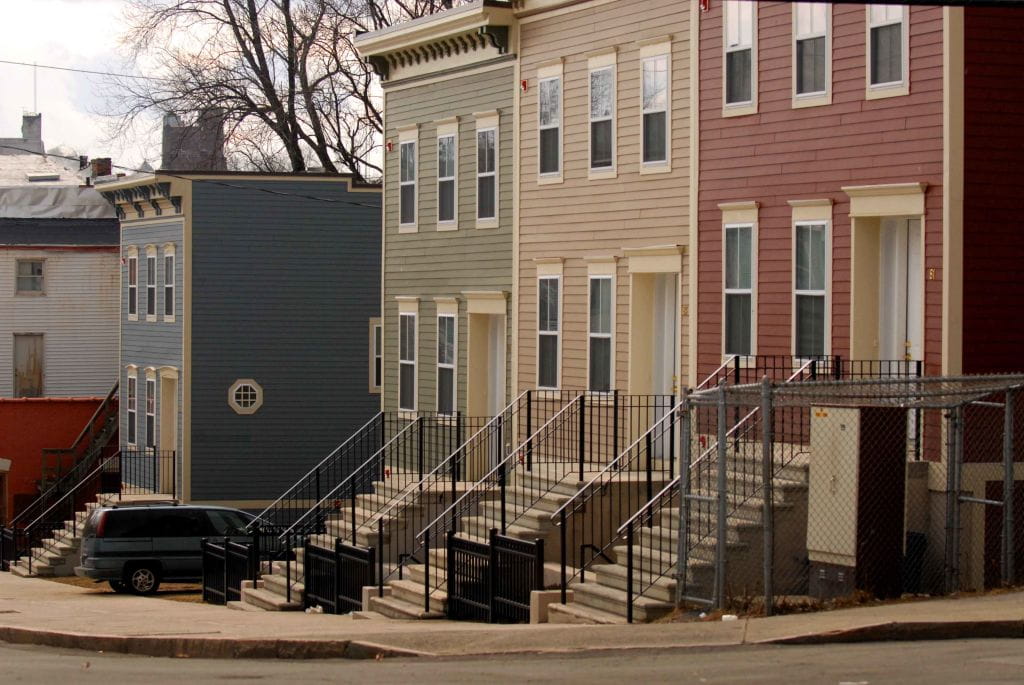
HUD submitted a Feb. 19 proposal to stop illegal immigrants from accessing taxpayer-funded public housing by requiring proof of U.S. citizenship or eligible immigration status for everyone living in HUD-funded units, including those in “mixed status households.”
The Department of Housing and Urban Development unveiled a proposal on Feb. 19 that would require every resident in HUD-funded housing to verify U.S. citizenship or eligible immigration status. The move aims to prevent individuals who are in the country unlawfully from collecting benefits paid by taxpayers. It explicitly covers people in “mixed status households” where some members may be citizens and others are not.
From a conservative perspective, the rule pushes a simple principle: public benefits funded by American taxpayers should be reserved for those who are legally eligible. This approach is framed as common-sense accountability, closing a loophole that lets ineligible individuals live off housing programs. Supporters argue it protects scarce housing resources and ensures they go to veterans, seniors, and low-income citizens who meet the rules.
Opponents are expected to raise concerns about administrative burden, civil rights, and the potential for families to be split up by verification requirements. Legal challenges are almost certain, and critics will say the rule could delay assistance or biopsy vulnerable households. But proponents contend that verification systems already exist and can be adapted to limit fraud without denying due process.
Implementing citizenship checks across HUD-funded properties will require clear protocols for documentation and appeals. Officials will need to spell out acceptable forms of proof and procedures for residents who lack immediate paperwork. The plan must balance enforcement with safeguards so eligible residents are not wrongly displaced while the system sorts out disputes.
Enforcement raises practical questions about cost and efficiency, since housing authorities will incur new administrative work to confirm status. That could mean initial expenditures for training and systems, but supporters claim long-term savings as benefits are directed only to qualified recipients. Fiscal conservatives point out that program integrity can curb waste and redirect dollars to needy American households.
There is also a security argument: verifying residents can improve accountability and make it harder for criminal actors to hide in taxpayer-funded units. Lawmakers backing the proposal say clearer records help local police and public safety planners identify who actually lives in subsidized properties. This is pitched as a win for neighborhoods that deserve the same rule of law and transparency applied everywhere.
Policy opponents will monitor whether the rule leads to unintended consequences like increased homelessness or misuse of the appeals process to delay lawful evictions. Housing advocates warn about chilling effects on mixed-status families who may avoid applying for assistance out of fear. Still, supporters insist the primary responsibility of federal housing policy is to enforce eligibility standards rather than expand access beyond legal limits.
Ultimately, the Feb. 19 proposal is positioned as a step to restore order and fairness to a system funded by taxpayers. It centers on documentation, verification, and the idea that federal housing aid should be targeted to those who satisfy legal criteria. Expect a heated debate and legal scrutiny as stakeholders weigh program integrity against humanitarian concerns and practical implementation challenges.

