

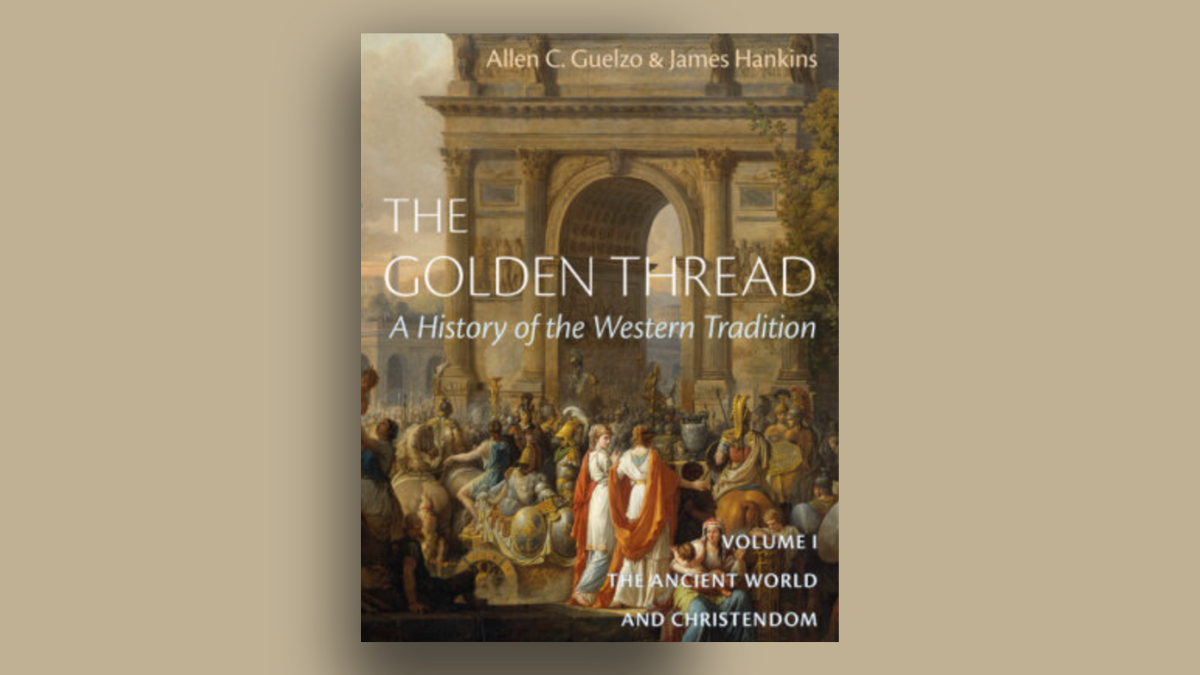
James Hankins and Allen Guelzo’s new work, “‘The Golden Thread: A History of the Western Tradition,’” presents a focused, readable case for the continued study of Western heritage in classrooms and beyond.
The book arrives as a direct, carefully argued reminder of why students still turn to Western Civilization courses for context and foundation. Its authors aim for clarity without dumbing down, offering a narrative that connects literature, law, philosophy, and politics into a single line readers can follow. The tone is deliberate: neither blindly celebratory nor unnecessarily hostile to criticism.
At its core the volume treats the Western tradition as an ongoing conversation, not a sealed relic. Chapters move through pivotal figures and ideas while emphasizing how later thinkers responded to earlier ones, which helps readers see change and continuity. That approach makes it easier to judge ideas on their own terms rather than as isolated talking points.
Pedagogically the book leans toward classroom use, with concise essays and contextual framing that aim to support instructors and students. It balances narrative summaries with selections that invite readers to engage with primary material on their own. Those choices keep the work accessible to newcomers while retaining enough depth for more advanced discussion.
In the current climate, where curricula and campus debates often focus on what to include or exclude, a clear, grounded textbook can matter more than ever. This work stakes out a position that respects the complexity of the past while arguing that that complexity is worth studying. It does not pretend the tradition is flawless, but it underscores why the tradition has mattered across centuries.
The authors write with a tone that mixes scholarship and plain language, which helps bridge the gap between academic specialists and general readers. Readers should expect careful sourcing and attention to intellectual context rather than polemics disguised as history. That steadiness makes it a practical resource for students who want a rigorous yet readable introduction.
For faculty, the book offers a structured route through major themes without forcing a single ideological frame on every classroom discussion. Instructors can use its chapters as a backbone for lectures, debates, and comparative assignments that test the perennial claims the tradition makes about rights, governance, and cultural creativity. Students benefit from a roadmap that highlights influences and counterinfluences rather than presenting a one-sided chronicle.
Beyond the classroom, the volume invites curious readers to reconnect with texts and ideas that shaped institutions and public life. It encourages active reading: weigh arguments, spot assumptions, and follow the evidence. That invitation keeps the conversation open and positions the Western tradition as a living reservoir of questions and resources rather than a static monument.

