

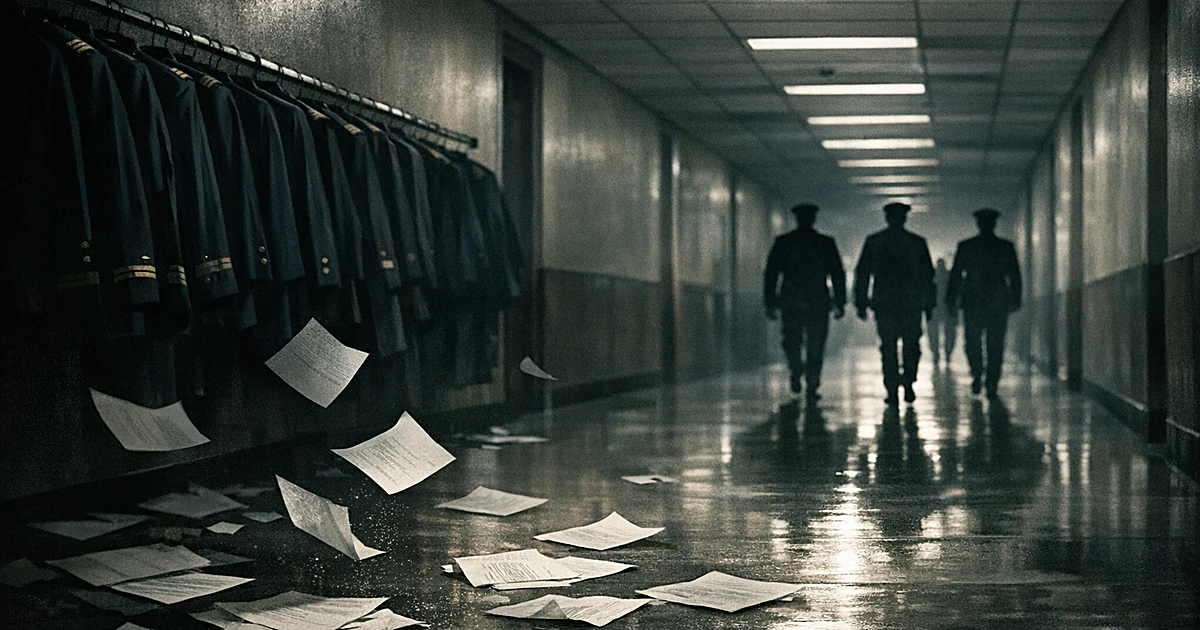
Frank Kendall, a former Air Force secretary under Biden, publicly accused Defense Secretary Pete Hegseth of politicizing the military as dozens of senior leaders have been pushed out or sidelined, prompting rare Republican criticism and raising questions about readiness and civilian-military trust.
Former Air Force Secretary Frank Kendall told a national interviewer he had “never seen an attempt to politicize our military like the one being conducted by Pete Hegseth.” That blunt charge landed in a tense moment at the Pentagon, where personnel moves have been sweeping and visible across services. Republicans who supported Hegseth’s confirmation are now among those warning that the changes risk more than short-term friction.
Kendall pointed to a string of firings and removals that he says has spread worry through the ranks. “He’s fired 25, roughly, senior officers. He’s pulling people off of promotion lists. And that effect is rippling all the way down through the ranks.” Those are operational facts critics say cannot be dismissed as partisan noise.
He also argued the purge has damaged the internal feedback that keeps civilian leaders honest, and he did not soften the claim about consequences. “It’s causing people to be afraid and refuse, and, in many cases, I think he’s not getting good advice because people are afraid to tell him things that he doesn’t want to hear.” That, he warned, brings long-term institutional risk.
Kendall summed the stakes in plain terms: “Long-term serious damage is being done to our military.” For Republicans, that line forces a hard choice between defending a secretary appointed by their party and acknowledging real harm to command continuity. The debate now includes both ideological and practical concerns.
The recent resignation of Army Secretary Dan Driscoll removed a simple partisan defense that critics were motivated only by politics. Driscoll left after months of friction with Hegseth, and his public statement thanked leadership and troops while signaling a quieter severing of ties. “Our Soldiers, Civilians, and their Families are our Nation’s very best, and they have inspired me every day.”
Driscoll also said, “We could not have made the progress we did without the support of Secretary Hegseth. I am forever grateful to President Trump for the opportunity to once again serve my country.” The polite tone concealed what multiple accounts described as deep disagreements over readiness and personnel moves.
Senator Thom Tillis, a Republican who voted to confirm Hegseth, moved from caution to a public call for new leadership. “I urge the President to find a new leader at the Pentagon who will retain and empower our military talent rather than diminish it.” Tillis added that he had “never witnessed more inept management of the brave men and women who serve our country.”
Other GOP voices have been blunt as well, arguing the stewardship at the Pentagon matters beyond politics and culture fights. A former Air Force brigadier general in Congress said the mass firings were “not morally right nor wise” and later warned that “firing without cause shows lack of character.” He also stated directly that Hegseth “would not be on my team.”
The pattern of departures has been wide and fast enough to prompt questions about institutional continuity. Over roughly an eighteen-month window, changes touched the Joint Chiefs chairman, service chiefs, secretaries, a combatant commander with Delta Force experience, and numerous other leaders. Critics argue that pace and scale amount to hollowing out the leadership bench.
Supporters counter that a new administration has the right to align leadership with new priorities and to refresh strategy for evolving threats. Hegseth’s camp says legacy leaders needed replacement to meet modern challenges and that reform has a legitimate purpose. The debate comes down to whether reform is being done with discipline and regard for readiness.
Those weighing the evidence warn that removing senior commanders in the middle of active operations carries unique risks. The ask is not for immunity from accountability, but for staggered transitions and respect for institutional memory so critical missions do not suffer. The current churn tests whether those guardrails still function in practice.
Kendall issued a politically charged warning aimed at the election calendar and broader norms: “As we approach the midterms, I’m worried that all of our guardrails are gone.” He also reminded listeners that senior officers have a duty to push back if ordered to do something “morally wrong, unethical, or illegal,” framing the issue as both procedural and ethical.
With bipartisan unease growing, the question for Republican leaders is blunt: keep defending an administration figure or act to restore confidence and continuity at the Pentagon. The military’s effectiveness depends on steady, competent leadership, and critics from across the aisle say the recent pattern is undermining that goal.


2 Comments
Gee, it couldn’t be Hegseth is purging the senior hierarchy who, among other valid reasons that destroyed morale, readiness and fitness allowed personnel including themselves to get physically unprepared and fat, brought in DEI and schedules that allowed soldiers to get promotions they didn’t earn because that was the norm. Deserter Bo Bergdahl was promoted to sergeant like that. Nor could it be they let military hardware to deteriorate to the point of being unusable or procured hardware at inflated prices.
I call BS on this article