

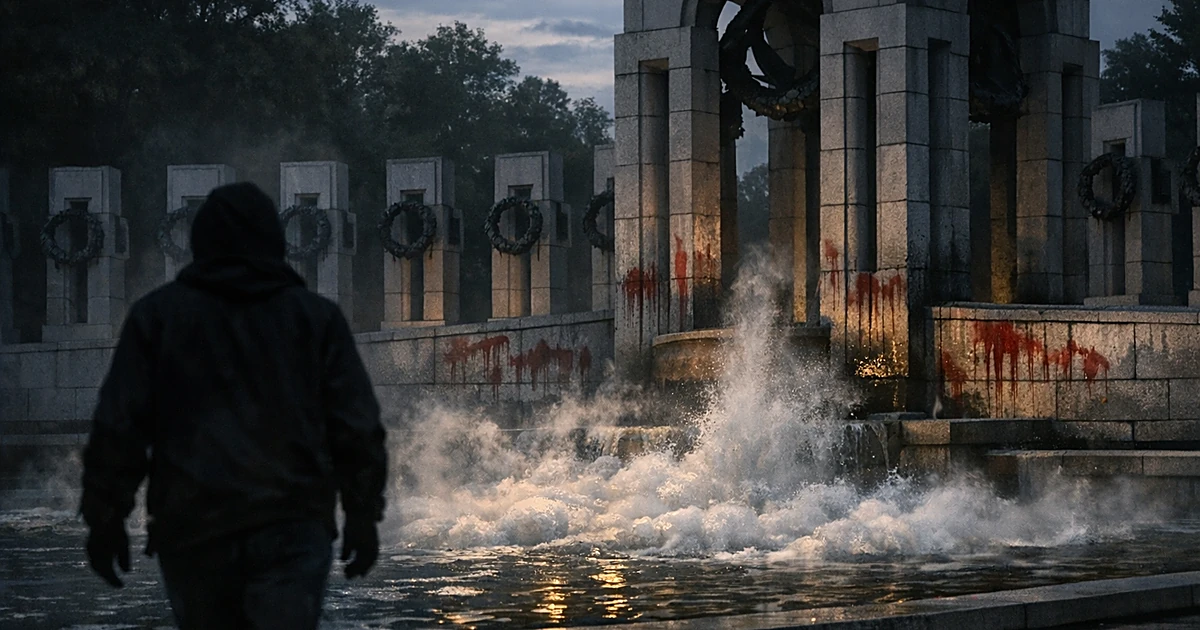
Federal prosecutors arrested a Kentucky woman after she allegedly defaced the World War II Memorial in Washington, D.C., pouring bubble soap into the fountain and spray-painting a political message on the monument that honors more than 400,000 Americans who died in the war.
Authorities say Melissa L. Farris of Elizabethtown, Kentucky, was taken into custody after the vandalism was discovered on a weekday night at the memorial between the Lincoln Memorial and the Washington Monument. Federal prosecutors announced two felony charges: Depredation Against Property of the United States and Destruction of Veterans’ Memorials, each carrying penalties of up to ten years in prison.
Investigators reported that red graffiti reading “Clean Hands Dirty $” was sprayed on the memorial and a sudsing substance was poured into the fountain, raising fears about damage to mechanical pumps. U.S. Park Police responded quickly and launched an active investigation into the scene, and officials say the woman livestreamed the act before turning herself in to authorities.
U.S. Attorney Jeanine Pirro publicly filed the charges and framed the case with a personal note about family service in the war, underlining the emotional weight of attacking a site dedicated to fallen Americans. Her office released a partial citation of the charges and emphasized the federal seriousness of defacing national property and veterans’ memorials.
“Vandalizing our World War II Memorial is a despicable attack on a sacred monument honoring the Americans who fought and died for our freedom. Those Americans include my father and grandfather.”
The memorial had just completed a four-month, $3 million renovation in May, so the timing of the incident compounds the concern about cost and care for national sites. Officials warned that soap in the fountain could harm the plumbing and pumps, potentially creating repair bills on top of fresh restoration work and prompting questions about ongoing security at national memorials.
The Interior Department issued a sharp condemnation and confirmed Park Police were on the scene as the probe continued, stressing that vandalism at a place honoring wartime sacrifice will not be tolerated. Federal prosecutors chose to bring two felony counts rather than lesser state charges or a single misdemeanor, sending a clear message that attacks on federal memorials will be treated as serious federal crimes.
“The World War II Memorial is a sacred place to honor the service of our members of the Armed Forces and the over 400,000 Americans who gave the ultimate sacrifice in WWII. The vandalism that occurred is an utter disgrace and will not be tolerated. Our U.S. Park Police are on the scene and the investigation is ongoing.”
Video evidence appears to have played a role, as authorities say the suspect recorded herself spray-painting and pouring the bubbling substance into the fountain before surrendering to law enforcement. Prosecutors have not publicly stated a motive, and while the painted slogan suggests a political complaint, they have not labeled the act as ideologically driven in the charging documents.
President Trump reacted publicly to the damage, linking it to another recent incident at a nearby site and demanding accountability, language that reflects the heightened attention federal leaders are giving to assaults on national monuments and the safety of public spaces. The president’s post criticized the attack as an insult to American heroes and used forceful wording to demand a response from law enforcement.
“Our beautiful World War II Memorial was just hit by Spray Painting Vandals. THERE CAN BE NO GREATER INSULT TO THOSE AMERICAN HEROES WHO DIED IN WORLD WAR II. First the Reflecting Pool, now this. We are on their trail! Where do these animals come from???”
The filing of two separate felonies instead of a single count signals prosecutors want to maximize the penalties available and to deter similar acts on federal property in the future. Each count carries up to ten years, meaning a conviction on both could produce a combined sentence of up to twenty years behind bars, a stern federal response for vandalism of a veterans’ memorial.
Open questions remain about the full extent of any physical damage, repair estimates, and whether other individuals are under investigation alongside the named suspect, since public statements have at times referenced multiple perpetrators. While the immediate focus is on accountability and repair, the broader issue is security at America’s memorials and how to protect them without turning solemn sites of remembrance into armed fortresses.

