

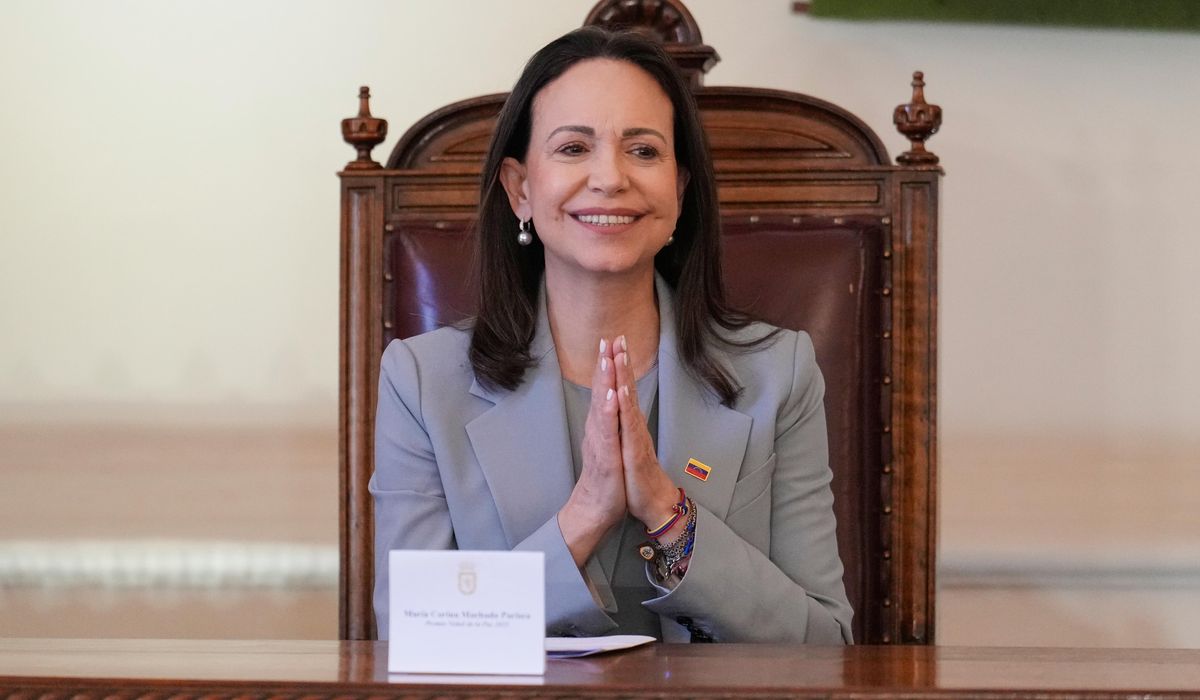
Venezuelan opposition leader Maria Corina Machado underscored that the Trump administration remains a “fundamental ally” for Venezuela’s democratic transition, stressing continued cooperation with Washington as Caracas navigates intense internal and regional pressures.
Maria Corina Machado has been clear about who she trusts to back Venezuela’s push for a free future, and she singled out the Trump administration as a key partner. Saying the U.S. is a “fundamental ally” reflects a pragmatic choice by an opposition leader operating in a high-stakes environment. That language signals an alignment with strong U.S. policy approaches rather than vague diplomatic niceties.
From a Republican viewpoint, solid allies matter because they marry principle with muscle, and Machado’s remark highlights that reality. The Trump years brought a different posture toward authoritarian regimes, one that emphasized pressure and leverage. Machado’s public recognition of Washington shows how that posture resonates with opposition figures fighting for democratic change.
Venezuelan politics are messy, with competing actors and deep institutional decay that demands outside support to counterbalance the regime. Machado’s comment is a reminder that opposition leaders often need political and diplomatic backing to keep momentum. External partners provide resources, legitimacy, and a platform for exposing abuses and rallying international opinion.
Calling the U.S. a “fundamental ally” also sends a message to domestic audiences inside Venezuela. It reassures voters and activists that the opposition is not isolated and that international ties remain intact. That perception can bolster morale among protesters and organizers who face daily repression and economic hardship.
For Republicans, the lesson is simple: firm support for democratic movements pays off when those movements explicitly welcome it. Machado did not hedge her words. Her statement invites continuing American engagement built on clear objectives and measurable pressure points.
Washington’s posture can combine sanctions, diplomatic isolation, and targeted support for civil society without pretending there are easy or immediate fixes. Machado’s position validates a strategy that focuses on leverage, accountability, and direct support for democratic actors. It also justifies keeping attention on Venezuela rather than letting the issue fade from the international agenda.
Practical politics matters too. Opposition groups must coordinate messaging, maintain cohesion, and manage international relationships carefully. Machado’s public endorsement of U.S. backing is part of that coordination. It helps present a united front to both Venezuelans and foreign partners, which is crucial when negotiating or pushing for transitional arrangements.
There will be critics who argue that external support risks interfering in domestic affairs, but Machado’s stance reframes interference as solidarity. When a domestic leader explicitly asks for assistance, the dynamic changes from outside meddling to invited partnership. That distinction matters morally and politically, especially when human rights and democratic institutions are at stake.
Any democratic transition will be complicated, and no single actor has a magic solution, but alliances sharpen the odds of success. Machado’s recognition of the Trump administration as a “fundamental ally” underlines how international backing can amplify domestic efforts. The upcoming months and years will test whether that backing translates into effective pressure and pathways to genuine political change.
Venezuela’s opposition faces a long slog, and pragmatic alliances are part of the playbook that keeps hope alive. Machado’s words are a clear signal that she sees the United States, specifically the Trump administration, as a practical and moral partner in that struggle. How Washington responds next will matter for the credibility of both the opposition and the allies who support it.

