

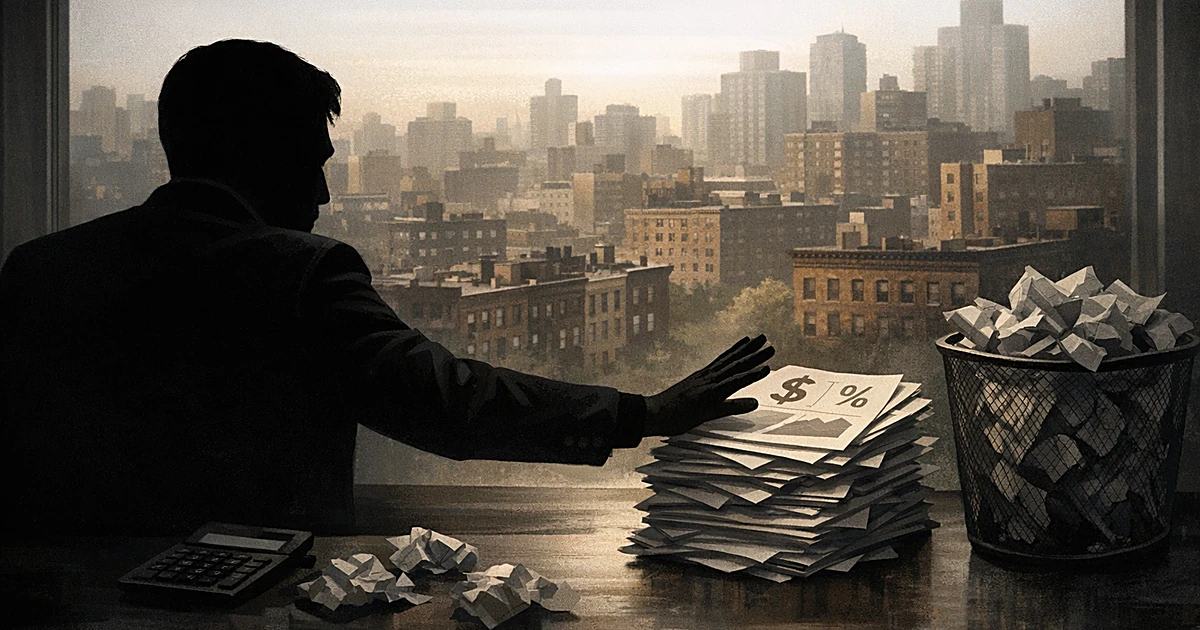
Mayor Zohran Mamdani backed away from a planned near 9.5 percent property tax increase and rewrote his budget mix, swapping a broad homeowner levy for state aid, a targeted pied-à-terre tax, pension tweaks, and other fixes.
Mamdani announced that a property tax hike is off the table in his executive city budget, after facing pushback from Albany, the city council, and the business community. He had pitched the across-the-board increase as a last resort to close a budget gap he described as substantial, then reversed course when that threat failed to land.
The proposed 9.5 percent property tax increase would have been a blunt instrument, projected to generate roughly $3.7 billion annually and hit homeowners across all five boroughs. That kind of across-the-board approach reads as punishment, not reform, and business leaders and council members responded accordingly.
Instead of forcing a mass property rate shock, the mayor is leaning on billions in new state support, a targeted tax on luxury second homes expected to bring in about $500 million, and a mix of pension and technical changes. The new executive budget totals $124.7 billion for fiscal year 2027 and avoids the broad property tax increase he once put on the table.
The politics here are clear: Mamdani used the threat of a homeowner tax increase as leverage with Albany and as a headline-grabbing ultimatum. When Albany and the city’s business base pushed back, he folded and accepted alternative revenue that spares ordinary property owners from the hit he threatened to impose.
A lot of the reversal comes down to state money. The mayor and the governor announced an additional $4 billion in state support, bringing total new state assistance to nearly $8 billion over two years. That infusion helped close most of the gap that had been the headline reason for the proposed tax hike.
“With this latest agreement, the Mamdani administration will officially close the more than $12 billion deficit it inherited from the previous administration.”
That official claim of covering a more than $12 billion shortfall stands in tension with the smaller $5.4 billion figure Mamdani cited earlier as the reason for a property tax threat. The arithmetic makes it look like state aid was always the practical route — not a mass property tax increase on working homeowners.
Mamdani once described the city’s property tax system as “broken.” That is a fair gripe; the system is complicated, regressive in places, and overdue for reform. But proposing a sweeping 9.5 percent hike that would hit small homeowners and landlords alike was never a thoughtful fix; it was leverage dressed up as fiscal policy.
The mayor also faced real economic pushback. Major financial firms signaled they might leave the city rather than operate under the kind of tax regime Mamdani advocated, and that kind of capital flight is not theoretical in a place that depends on financial services for revenue. The business backlash narrowed the mayor’s options quickly.
Political allies in Albany also drew clear lines. When the intended targets of higher income and corporate taxes did not yield the revenue Mamdani demanded, the city had to pivot. The pivot included the pied-à-terre levy, pension restructuring, and class-size flexibility measures rather than sweeping property levies.
Mamdani tried to frame the retreat as a win, telling reporters his budget “does not raise property taxes and it refuses to slash services.” He added: “We pulled New York City back from an existential fiscal break.” Those words sound big, but they come after he played a high-stakes bluff that forced other players to cover the bill.
This outcome is also a defeat for the progressive push to raise taxes on top earners. It “doesn’t look like there will be an income or corporate tax hike for wealthy New Yorkers this year,” a reality that undercuts that wing’s priorities. As one lawmaker put it, “the rich should pay more,” but governing requires trade-offs beyond slogans.
The numbers are the bottom line: a deficit figure north of $12 billion, a threatened $3.7 billion annual property tax hike, and an $124.7 billion spending plan now balanced with nearly $8 billion in state aid and narrower local measures. That funding mix protects property owners for now, but it leaves open hard questions about sustainability next year.
New York City homeowners avoided a major tax hit this budget cycle, but the underlying problems remain. The property tax system was left unreformed and the deficit was dealt with through one-time state money and targeted levies rather than structural change. The mayor’s retreat reads like a failed bluff more than a policy win, and the instinct to reach for broad-based homeowner taxes when revenue falls short looks likely to resurface unless real reform happens.


1 Comment
Are you voters of New York proud of yourselves for electing that anti American communist loon Mamdani into office?