

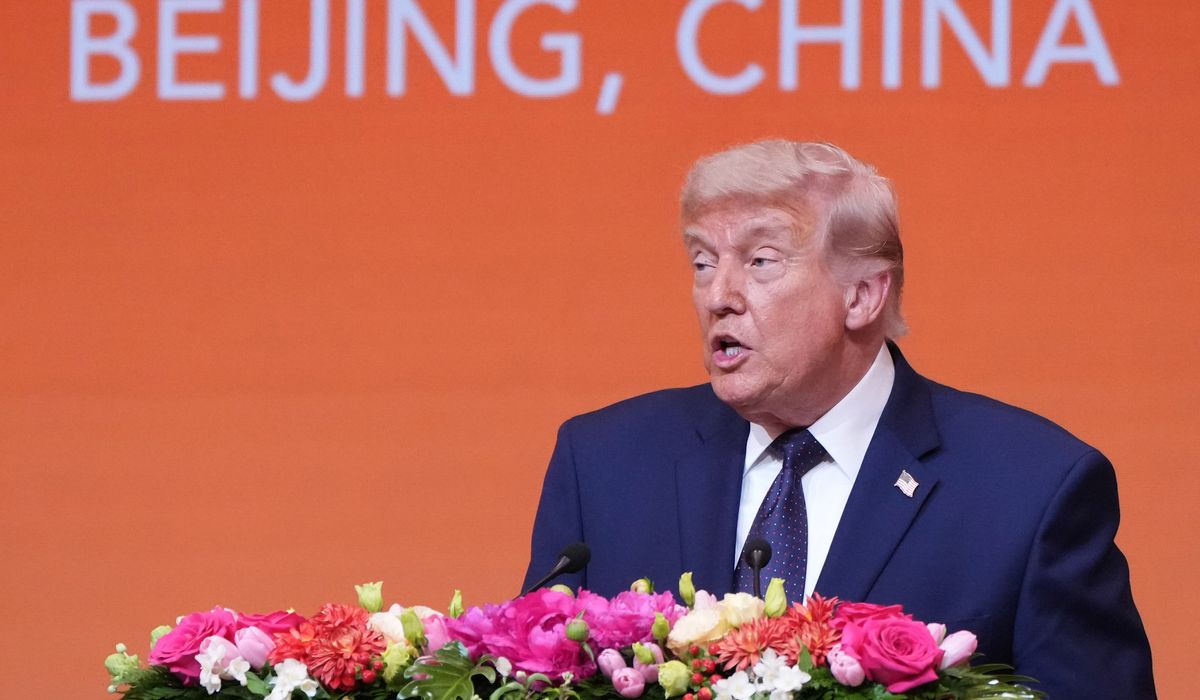
President Trump invited Chinese President Xi Jinping to the White House for a visit on Sept. 24, a high-profile diplomatic move that puts U.S.-China relations back at the center of the Washington agenda and raises questions about the priorities and terms of engagement between the two nations.
President Trump extended the invitation on Thursday for Chinese President Xi Jinping to visit the White House on Sept. 24, signaling a planned face-to-face at the highest level. That date is now the focal point for a range of strategic, economic, and security conversations that will shape how the United States approaches China in the months ahead.
The optics are unmistakable. A White House visit for Xi is more than a photo op; it is a bargaining stage where America should make clear what it will and will not accept from Beijing.
From a Republican perspective, any summit with China must emphasize leverage. That means pushing for better trade terms, protecting supply chains, insisting on fair competition, and making national security nonnegotiable.
Economic issues are front and center. U.S. businesses and workers have legitimate concerns about intellectual property theft, market access, and distortive state subsidies. A September meeting gives the president a chance to press for concrete commitments, timelines, and mechanisms that produce measurable change for American workers.
Security and technology will also be on the agenda. The United States has to safeguard sensitive infrastructure and ensure that technological leadership is not ceded through lax oversight. Those conversations cannot be abstract; they must translate into enforceable policies and, where necessary, sanctions or restrictions that protect American interests.
Human rights and geopolitical behavior cannot be ignored either. While diplomacy requires compartmentalization, the U.S. must remain willing to call out coercive actions and assert consequences when Chinese policies threaten allies or international norms. That posture bolsters credibility at home and with partners abroad.
Timing matters for politics as well. A late September visit intersects with domestic debates over trade, defense, and the economy. For Republicans, the goal should be to use the meeting to demonstrate that American strength and resolve produce better results than indulgence or appeasement.
Negotiations at this level require careful choreography. The White House will need a clear list of priorities and bottom lines, and Republicans will look for visible wins that protect jobs, bolster security, and reinforce U.S. global leadership. Vague statements will not satisfy those standards.
Expectations should be pragmatic. Diplomatic breakthroughs are rare, but progress is possible when the United States shows unity and purpose. A visit scheduled for Sept. 24 is a chance to test whether Beijing will deliver on commitments or just seek favor without change.
Republican lawmakers and analysts will scrutinize both the process and the outcomes. They will demand transparency about any agreements and insist that enforcement mechanisms be embedded in any deals. That scrutiny is essential to ensure American interests are not traded away for short-term optics.
Finally, the visit will be a measure of presidential strategy. Is the White House using leverage to secure American advantage, or is it offering legitimacy without sufficient reciprocity? The answer will shape how policymakers and voters judge the administration’s handling of one of the most consequential bilateral relationships in the world.

