

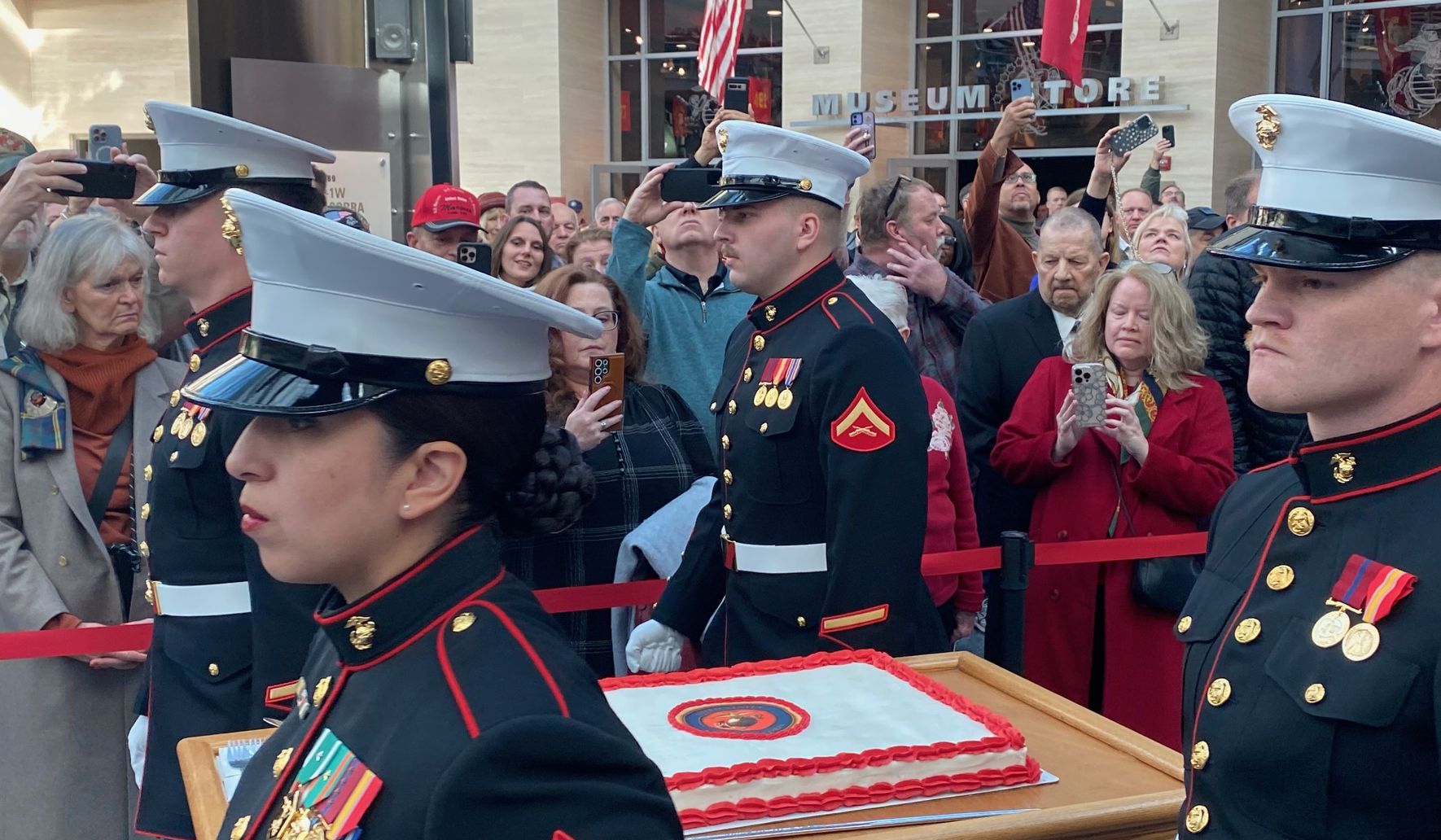
Marines are rightly proud of their “first to fight” reputation, but they’re also “first to celebrate.”
The Marine Corps has a long history of pairing fierce combat readiness with surprisingly rich traditions of celebration and unit life. That mix of discipline and revelry shows up in ceremonies, birthdays, reunions, and the small rituals that keep morale high during deployments. Those moments of celebration are not distractions; they are part of the fabric that sustains Marines and their families through long tours and dangerous missions.
Celebrations start with the Marine Corps Birthday on November 10, a deeply rooted ritual where units worldwide mark the corps’ founding. Mess nights and cake-cutting ceremonies bring officers and enlisted together in shared history, and those events reinforce identity and cohesion. The formality is part of the point: ritual builds continuity when operational tempo and uncertainty threaten to erode unit bonds.
Camaraderie also appears in informal, day-to-day ways that commanders and planners value even if they are not on any checklist. Shared meals, music at the squad bay, and simple jokes between watches are small celebrations that pay big dividends in resilience. Those informal practices let Marines recharge briefly, reset their focus, and return to tasks with clearer heads and stronger trust in one another.
When units return from deployment, the celebrations get louder and more public. Reunification ceremonies recognize both accomplishments and sacrifices while giving families a formal moment to reconnect. These events help heal the stress of separation and make the transition back to civilian rhythms more manageable, which improves long-term retention and readiness across the force.
Field customs also evolve with the mission, reflecting local culture and current constraints while preserving core values. Limited resources in austere environments lead to creative ways to mark holidays and milestones, whether it is a shared ration turned into a special meal or a watch rotation rearranged so everyone sees a brief fireworks-like display. Creativity under constraint keeps traditions alive and shows leadership that morale matters even in hard places.
Leadership plays a clear role in these celebrations, setting tone and safeguarding meaning rather than turning events into distraction. Senior NCOs and officers who participate signal that unit history and well-being matter as much as mission metrics. When leaders visibly engage in rituals, it normalizes the practice and lets younger Marines learn why those rituals exist beyond the surface-level festivity.
Families and local communities are part of the celebration ecosystem and provide a civilian anchor for Marine life. Family readiness groups, local bands, and municipal events amplify the sense that service is shared beyond the base perimeter. Those civic connections help Marines reintegrate and remind communities why investing in service members’ social and emotional health benefits everyone.
Cultural elements like music, unit patches, and dress uniforms all support the celebratory side of Marine life without diluting discipline. A well-executed parade or a precision drill demonstration is both a show of capability and an affirmation of pride. Music and pageantry have a practical effect: they create memories that outlast deployments and reinforce why units train hard together.
Technology and social media have changed how Marines celebrate by broadening the audience and making traditions accessible across distances. Video calls, shared playlists, and unit photo albums let deployed Marines participate in homefront events they used to miss. That connectivity changes the rhythm of celebration but does not replace the value of in-person rituals that remain central to Marine identity.
Recognition and awards often close important celebrations and serve a dual purpose of honoring achievement while setting expectations. Whether a medal ceremony in a deployed environment or a promotion and cake back home, public acknowledgment strengthens the link between individual effort and collective excellence. Those moments matter for retention and for passing standards from one generation of Marines to the next.
In short, the Marine Corps balances a reputation for combat readiness with a parallel commitment to ritual and morale. The “first to fight” label describes capability, and the “first to celebrate” spirit describes how the corps preserves itself through connection and tradition. That pairing supports operational effectiveness by keeping Marines grounded, motivated, and connected to each other and the communities they serve.

