

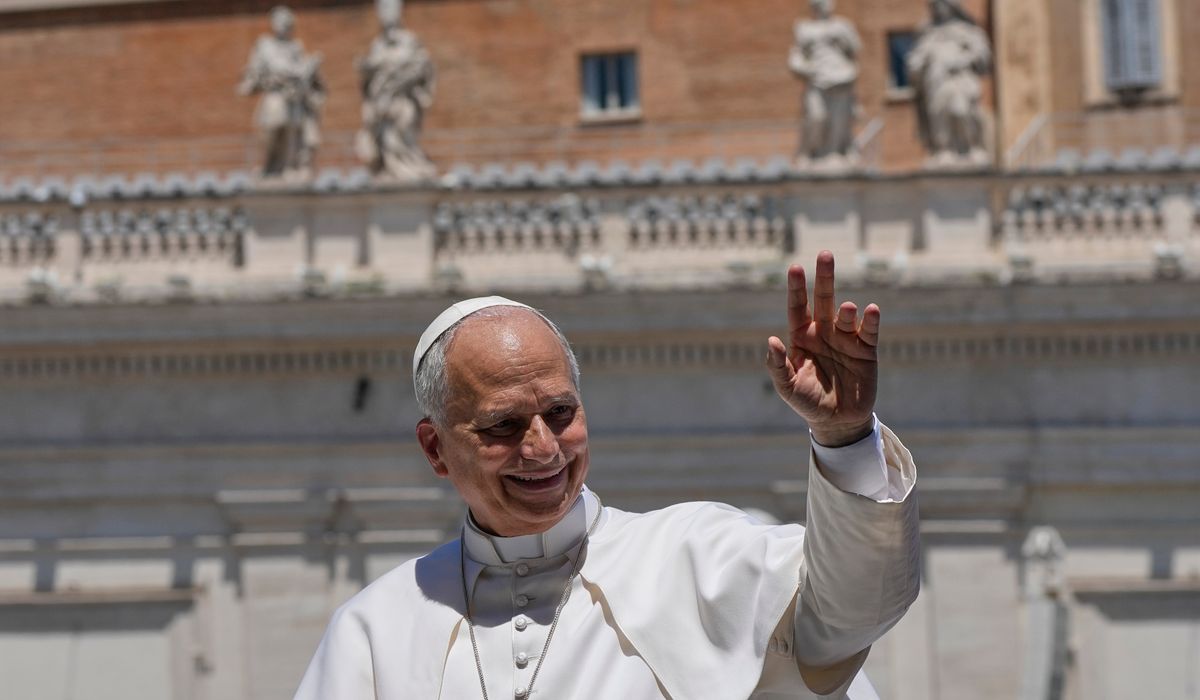
Chicago Mayor Brandon Johnson led a 46-person delegation to the Vatican on Wednesday for a private audience with Pope Leo XIV, the Chicago-born pontiff meeting with his hometown’s leader. The encounter was private, brief and framed by the unusual detail that the pontiff hails from the same city as the mayor. The visit quickly drew attention at home because it paired local political leadership with a spiritual figure who shares Chicago roots.
Mayor Brandon Johnson traveled to the Vatican with a sizable contingent, and the trip was described as a private audience rather than a public ceremony. A private audience with the pope is a formal but intimate meeting, which often centers on personal greetings and mutual courtesies. The fact that the pontiff is Chicago-born added a civic angle to what might otherwise be a standard diplomatic visit.
A delegation of 46 people signals a broad show of support and resources, and the size itself became a talking point for observers. While the official record only notes the delegation and the private audience, such groups typically include city officials, advisers and community representatives. That mix underlines that the visit had both symbolic and practical purposes tied to city interests and heritage.
The hometown connection changes the optics: a mayor meeting a pope with shared local roots can feel personal as well as ceremonial. That kind of meeting often highlights cultural ties and shared history, and it can provide a rare moment of unity between religious and civic communities. For Chicago residents paying attention, the image of a hometown leader greeting a hometown-born pontiff resonated beyond the formalities.
Private papal audiences have long been a part of Vatican life, offered to heads of state, civic leaders and influential figures around the world. They are less about formal agreements and more about establishing rapport, offering blessings and, sometimes, making requests or presenting concerns. The format typically keeps detailed discussions off the record, leaving public statements short or nonexistent.
At home, the mayor’s trip prompted questions about why a delegation that size was necessary and what, if anything, would emerge publicly from the meeting. Some residents and commentators focused on optics and cost, while others saw the visit as a cultural moment that reflects Chicago’s global footprint. The city’s officials did not release a full itinerary, so the audience remains a discrete event with limited official commentary.
The Vatican setting lends a diplomatic tone even when the encounter is private, and the pope’s role as a spiritual leader means the conversation can touch on pastoral concerns as much as civic ones. For a Chicago-born pontiff, meeting the city’s mayor carries personal resonance that goes beyond protocol. Those nuances shape how the visit is reported and discussed back in the United States.
Logistics for such a trip tend to be complex, involving coordination between local offices, diplomatic channels and Vatican staff, though those details mostly stay behind the scenes. The decision to keep the audience private follows long-standing Vatican practice for many meetings, especially those intended to be low-profile. That privacy leaves the public to draw its own conclusions about tone and intent.
The immediate public record is short: a mayor, a 46-person delegation, a private audience with Pope Leo XIV, and the notable fact that the pontiff was born in Chicago. Beyond those core facts, officials have kept the specifics close to the vest, so the visit stands as a moment of symbolic resonance rather than a source of new policy announcements. Observers in Chicago will likely keep watching for any subsequent statements or initiatives that trace back to the encounter.

