

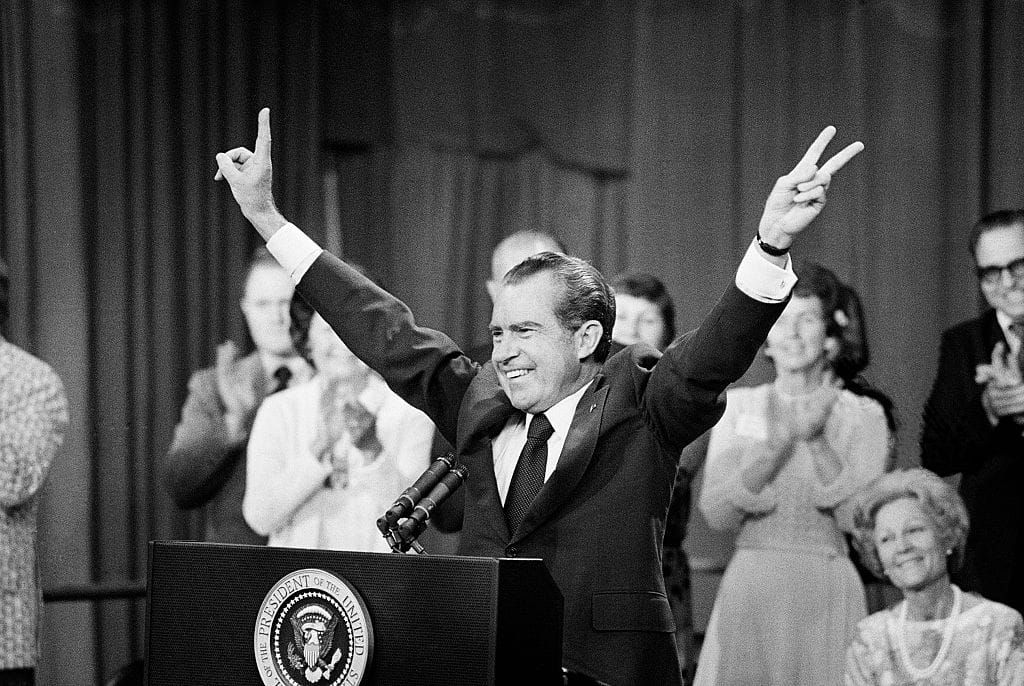
Young people on social platforms are rediscovering Richard Nixon, sparking a wider reassessment of his record and image as memes, clips, and commentary push a Nixon renaissance into the mainstream.
Across social media a movement dubbed Nixon-maxxing has taken hold among Generation Z and younger millennials, driven by short videos, memes, and sharp, recontextualized clips of Nixon speaking on policy and philosophy. The trend is not just nostalgia; it’s a deliberate effort to soften decades of Watergate-focused coverage and highlight other parts of his record. This wave is spreading organically rather than from a single coordinated campaign.
The Nixon Presidential Library has played a role by releasing compact, shareable interviews and clips that showcase Nixon on foreign policy and broader themes, and those moments land with audiences that crave substance. Young viewers respond to clips that feel more substantial than the usual political soundbite, which feeds the cycle of rediscovery. As those clips circulate, conservative commentators and creators amplify the effect.
At a recent event in Yorba Linda, Vice President JD Vance captured the mood when he said, “I think Nixon’s historical legacy is enjoying a bit of a renaissance, and deservedly so,” Vance said. “I joked that if Watergate happened tomorrow, it would be like a 12-hour news story. The idea that it took down a presidency is crazy.” That endorsement from a sitting Republican official gave the trend mainstream credibility among conservatives.
Bill Murray also weighed in, recounting his own loss of faith in Bob Woodward after reading passages of a book he found inaccurate. Murray told the story on a major podcast and suggested that the way some stories have been told about figures like Nixon deserves scrutiny. His remarks landed with fans who trust his candid take.
“If this is what he writes about my friend that I’ve known, you know, for half of my adult life, which is completely inaccurate, talking to like, the people of the outer, outer circle, getting the story – what the hell did that could they have done to Nixon? I just felt like if he did this to my friend like this, and I acknowledge I only read five pages, but the five pages I read made me want to set fire to the whole thing.”
Conservative voices across media have stoked the reassessment, with figures suggesting the official Watergate narrative deserves renewed interrogation. Christopher Rufo went so far as to argue that Watergate “was a setup from start to finish,” a line that captures growing skepticism among skeptics of the conventional account. That claim draws sharp disagreement from many historians, but it also reflects why the story is trending.
Platforms that reward bite-sized content have altered how reputations are built and rebuilt, and Nixon’s case shows that archival footage can be repackaged to change perception. Short clips of calm, detailed policy talk often travel farther than long essays in today’s attention economy, and those formats favor a different Nixon than the one fixed in textbooks. The result is a broadening of the conversation about his presidency.
Conservative outlets and creators such as PragerU, Hugh Hewitt, and Michael Knowles have embraced aspects of the revival, running pieces and segments that emphasize Nixon’s achievements while questioning the dominant Watergate frame. Their coverage brings Nixon-maxxing to larger, politically engaged audiences. That amplification is important for converting social buzz into mainstream debate.
The parallels between Nixon and Donald Trump are hard to miss from a Republican vantage point: both battled the coastal press, drew intense establishment scrutiny, and inspired visceral reactions across elite media. Nixon styled himself as a champion of Middle America, and his political instincts on law, order, and trade resonate with parts of today’s conservative movement. Comparing the two highlights how media hostility and institutional pushback can shape a leader’s legacy.
On policy, Nixon’s record is mixed and consequential: he created the Environmental Protection Agency, implemented the so-called Nixon shock with price and wage controls, and floated proposals like a guaranteed basic income for working families. By contrast, Trump favored tariffs, novel financial interventions, and programs aimed at reshaping economic structures such as Trump Accounts for newborns. Those policy moves give both men substance beyond their headlines.
Many commentators dismiss recent reexaminations as revisionism, but Republicans note that reassessing history is part of healthy debate and political life. Skepticism of entrenched narratives has only intensified since 2016, and the same impulse that questions the deep state’s account of recent events now probes older episodes like Watergate. That shifting lens can change public memory over a generation.
People are already wondering who might be next for a comeback. Talk on social platforms that the Iraq energy deals and other developments have vindicated some decisions by George W. Bush is spreading, and some suggest it may take decades for reputations to swing. The pace of cultural memory has accelerated, but the work of changing a president’s image still often needs time.
Small, sharable moments have proven powerful enough to nudge public perception, and that is the engine behind Nixon’s newfound popularity among young conservatives and some independents. The trend also brings back a line Nixon himself left in a note to himself in 1969: “Defeat doesn’t finish a man, quitting does. A man is not finished when he’s defeated. He’s finished when he quits.”

