

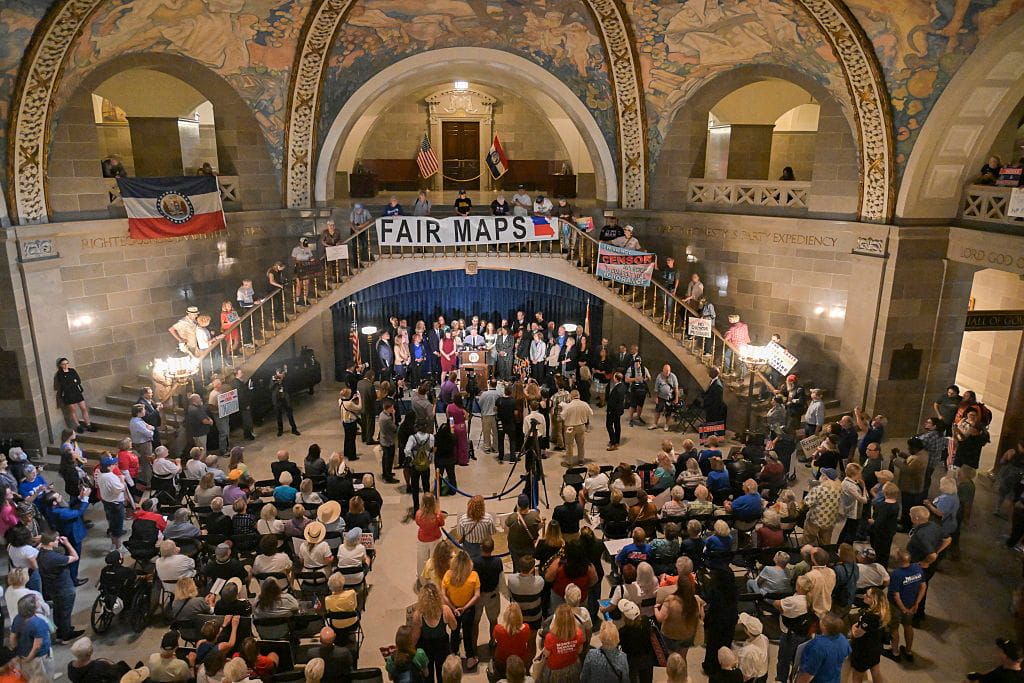
Missouri Judge Gives GOP Redistricting Win – But It Isn’t Over Yet — a judge handed Republicans a win on the state’s new congressional map, but legal challenges are still active and time is short. The decision clears a path for the GOP plan to move forward for now, while opponents prepare appeals and maneuvers aimed at reversing or delaying implementation. The political and legal jockeying will determine whether the map stands before ballots are finalized for upcoming elections.
Aug 21, 2026. The ruling came after a challenge from Democratic-aligned plaintiffs who argued the map diluted minority or partisan representation, and a trial judge instead favored the Republican-drawn plan as lawful under the relevant state standards. Court observers noted the decision did not close every door; the judge issued findings that can be appealed, and opponents have signaled they will take the fight up the ladder. That sets the stage for a potential cascade of filings across state and possibly federal courts.
The practical effect is that the GOP map currently has legal cover, which matters for planning campaigns, filing deadlines, and ballot preparations. Election officials need certainty to print ballots and finalize candidate filings, and any late judicial reversal could cause chaos or force emergency remedies. Republicans see the decision as a win that restores maps reflecting the state’s recent population and political shifts, while Democrats frame continued litigation as necessary to preserve fair representation.
“Democrats haven’t given up the fight, but the clock is running out.” That line captures the posture of the challengers, who emphasize appellate review as their next step and warn of further legal action if the trial ruling is enforced. From the GOP perspective the appeals are predictable and intended to delay implementation, and supporters argue the courts should respect the trial judge’s careful findings. Both sides are staking important strategic moves on short deadlines and procedural timelines.
One clear reality is that timing favors those who can square the map with election administration tasks quickly, and the current ruling gives Republicans that tempo advantage. If the map holds through initial procedural stages, campaigns will organize under new district lines and voter outreach will follow those boundaries. Yet appellate courts can still issue stays or orders that unwind those preparations, so the outcome remains uncertain despite the trial-level victory.
Legal experts point out that appeals often hinge on narrow questions of law and deference to trial court fact-finding, so the next phase will test how higher courts treat the judge’s record. Republicans are arguing that the map conforms to state constitutional criteria and respects traditional redistricting principles, while opponents press constitutional and statutory claims seeking a different remedy. The appellate calendar, and whether a court grants emergency relief, will decide which argument gets the next hearing.
Politically, the ruling has immediate consequences for both parties’ messaging and mobilization. Republicans will tout a judicial validation of their approach and push candidates to move forward under the new lines, while Democrats will use the ongoing litigation to rally donors and activists around a narrative of resistance. Voters in competitive districts could see a rapid shift in the list of candidates and campaign alignments depending on how the courts act in the coming weeks.
Observers in both parties are watching not only legal briefs but also the optics of delay tactics versus finality, because courts often weigh practical impacts on elections when deciding whether to intervene at late stages. A decision to halt implementation would be consequential and could invite higher-court review on compressed timelines. Conversely, a refusal to grant emergency relief would allow the map to operate while appeals proceed, potentially softening the impact of any later reversal.
The broader takeaway is procedural: this dispute will likely travel beyond a single courtroom and test how state and federal tribunals handle contested redistricting close to an election. For now, Republicans have a favorable ruling to build on and a window to lock in electoral mechanics, while opponents prepare the next legal volley. The battle over lines is far from over, and every procedural step from here matters to the final political outcome.

