

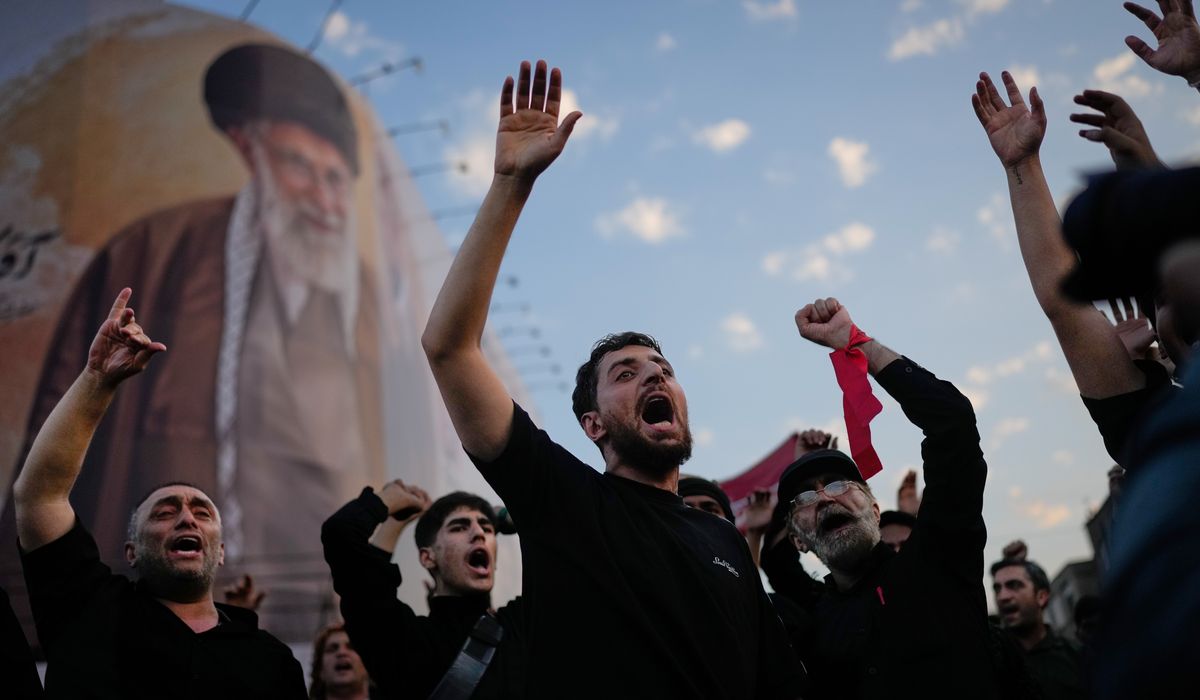
Mourners dressed in black flooded into Iran’s capital Monday for a procession as part of the funeral of the late Supreme Leader Ayatollah Ali Khamenei.
The scene in Tehran was dense and emotional, with long lines of people moving through streets that are normally orderly but now packed. Authorities organized the route tightly, and images showed a sea of dark clothing stretching along major avenues. Few faces appeared jubilant; most wore the gravity that comes with state funerals in tightly controlled societies.
Public processions like this serve multiple purposes for regimes that rely on ritual and theater to keep control. On one level the funeral is a display of unity, aimed at reassuring supporters and intimidating opponents. At another level it is an operational challenge: moving tens of thousands of people, securing checkpoints and managing potential unrest at the same time.
Security forces were visibly present, their numbers and positioning a reminder that survival of the state apparatus matters as much as the words spoken at the podium. In cities like Tehran, the line between mourning and political theater is thin, and authorities know how to blur it. Every crowd chant, every blocked street and every TV shot feeds the narrative the government wants to present.
For the public, attendance can mean different things: sincere grief, social pressure, or pragmatic calculation about staying safe and being seen as loyal. In authoritarian systems, absence from official events can carry risks, while showing up can be the easiest way to avoid suspicion. That dynamic makes it hard to read crowds purely as a sign of genuine popular support.
The death of a leader who stood at the center of a system for years opens questions about succession and stability. Institutions that look stable on paper can reveal fault lines when leadership changes, and ceremonial moments often mask those fractures. The real test comes after the cameras leave: who consolidates power, and how will policy and repression shift in response?
Regional implications matter too, because Iran’s influence is not confined to its borders. Rival states and nonstate actors watch closely for any sign of change they can exploit. A perceived vacuum at the top invites maneuvering from rivals, and that increases the likelihood of proxy clashes and sudden policy shifts that can ripple across the region.
From a practical standpoint, foreign governments will be measuring risk and seeking clarity about Tehran’s next steps. Republican policymakers tend to favor clear-eyed assessments that combine pressure and deterrence, while preparing contingency plans for sudden instability. The debate in Washington will be about how to respond without empowering the most dangerous elements inside Iran or creating unintended consequences.
Media coverage of the funeral underscores how propaganda and perception interact. State outlets aim to craft a narrative of continuity and reverence, while independent observers look for signs of dissent or disengagement. The contrast between carefully framed television shots and on-the-ground reports can be stark, and analysts will parse both to understand what ordinary Iranians are really thinking.
Historically, funerals for powerful leaders have sometimes been the last ritual of a system and other times the first act of a new chapter. Which path Iran takes will depend on internal powerbrokers, the resilience of state institutions, and external pressures. For now, the procession in Tehran is both an ending and the beginning of a period where the stakes are high and outcomes uncertain.
The visuals from the day—crowds, checkpoints, and a capital saturated with state symbolism—are a reminder that politics in Iran is about control as much as consent. Observers will watch how those visuals translate into policy and who emerges to wield authority in the coming weeks and months. Meanwhile, the country adjusts to a loss at the top and the slow, messy work of political realignment begins.

