

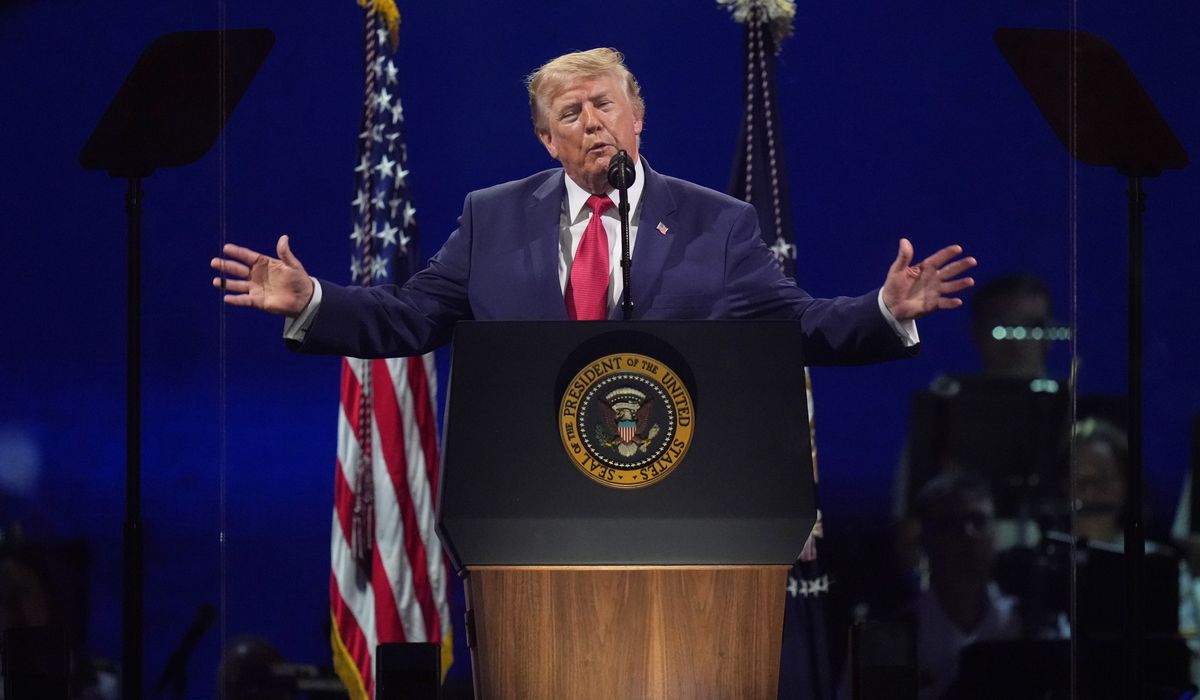
President Trump arrives at the NATO summit in Turkey with a clear task: press European allies that still fall short on defense spending while visibly reinforcing American leadership on the world stage. The gathering puts burden-sharing, military readiness, and deterrence against rival powers at the center of conversations. Expect hard talk about commitments and a push for quicker, measurable progress from NATO partners.
The NATO meeting coming up in Turkey gives President Trump a rare chance for direct, in-person pressure on allies who lag on defense spending. After years of verbal warnings, the White House can now spotlight who pays their share and who relies on America to pick up the tab. That political pressure is practical too—modern militaries need consistent funding, not promises that disappear when budgets get tight.
Allies agreed to a 2 percent of GDP benchmark for defense, yet many European capitals still come up short. Trump’s message is simple and sharp: commitments only matter if they’re kept. A Republican vantage emphasizes fairness and reciprocity; if allies want U.S. protection, they should invest in the forces and systems that make that protection feasible.
The summit will also put procurement and modernization on the agenda, not just headline spending numbers. NATO needs equipment that can operate together, from munitions stockpiles to secure communications and air defenses. Too many European forces are still stretched thin on training, logistics, and interoperable gear, which undermines collective deterrence.
Turkey as host complicates the picture but also focuses attention on frontline realities. Its geographic position means Turkey deals directly with migration, regional instability, and threats spilling over from the Middle East. That proximity gives Greece, Europe, and the U.S. reasons to coordinate more effectively on both conventional and hybrid threats.
President Trump will likely use concrete examples when he calls out shortfalls: ships that need refueling, air forces with limited sortie rates, and ground units lacking up-to-date armor and munitions. Those are not abstract complaints; they translate into slower response times and fewer credible options for crisis management. Republicans argue that hard numbers and visible capability gaps are the best leverage for change.
Energy and supply lines will be another practical thread through alliance talks. Europe’s dependence on external energy sources can be a vulnerability in a crisis, and robust military logistics depend on reliable energy and transportation networks. Shoring up redundancies and improving NATO’s mobility would make deterrence more believable and reduce fragile dependencies.
Support for Ukraine and defense against any further Russian aggression will also be on the agenda, and the tone is likely to be unapologetically pragmatic. Strong deterrence requires visible commitments—forward deployments, regular exercises, and sufficient munition stocks. Leaders who want peace should plan and posture for the costs of preventing conflict, not only for managing its aftermath.
Ultimately, the NATO summit is a test of whether words will turn into action, and Trump’s presence raises the stakes for allies who have long taken American resolve for granted. The message by Republican logic is straightforward: shared security means shared responsibility, not open-ended U.S. underwriting. Expect pushback, diplomacy, and a firm focus on deliverables that troops and planners can count on.

