

NORAD Scrambles Jets to Identify and Intercept Four Russian Warplanes Near Alaska
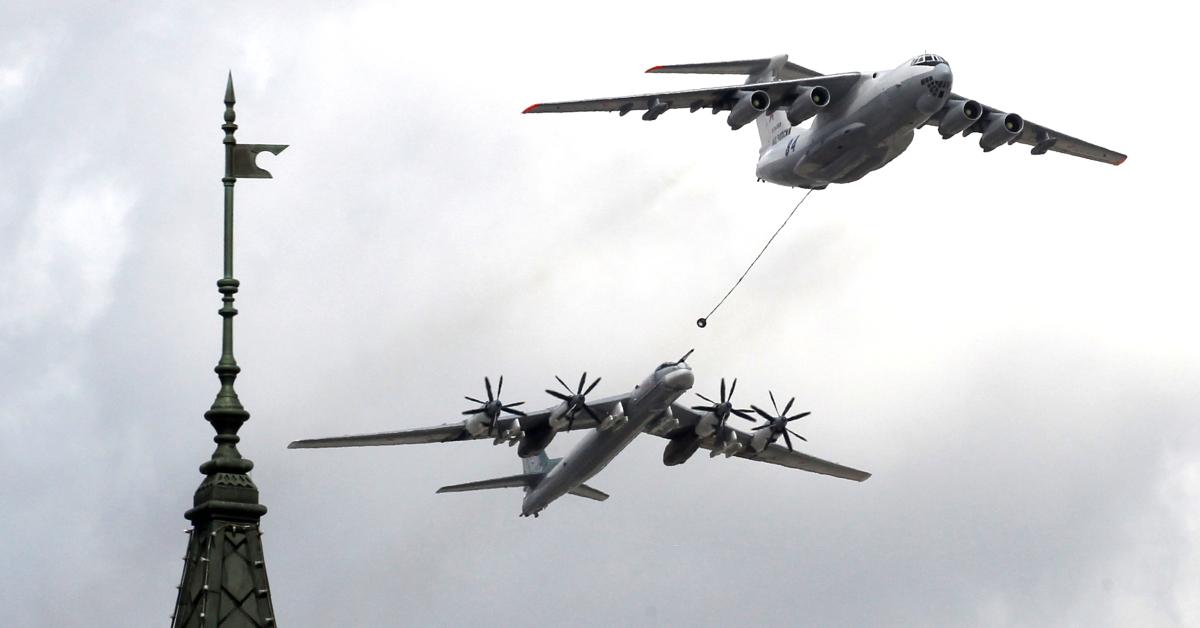
The North American Aerospace Defense Command detected four Russian military aircraft operating near Alaska and launched a quick, visible response to identify and shadow them, a move that underscores how real-world air security still matters even when headlines move on. Two Tu-95 long-range strategic bombers and two Su-35 fighters were tracked inside the Alaskan Air Defense Identification Zone, which sits just outside U.S. sovereign airspace but demands immediate attention. NORAD moved aircraft and tankers into position to make sure those planes were seen, logged, and deterred from drifting closer to sovereign territory.
NORAD identified the presence and pattern of flight and dispatched reconnaissance and intercept assets to the area, a textbook response meant to prevent surprises and clarify intent. The mix of platforms was deliberate: an E-3 early warning and control plane to manage the battle-space picture, multiple F-16 fighters to intercept and visually identify the aircraft, and KC-135 tankers to extend the mission timeline. That combination lets NORAD keep eyes on crucial approaches to the American homeland and forces adversaries to reveal their profile and tactics every time they approach our defensive perimeters.
“The Russian military aircraft remained in international airspace and did not enter American or Canadian sovereign airspace,” NORAD said. That exact line matters because it describes what happened without pretending more than it did, but it also shows why the ADIZ exists in the first place: to give defenders warning and opportunity to respond before sovereign airspace is at risk. The U.S. and Canada do not cede the right to inspect or identify aircraft near their borders, and NORAD acted exactly to uphold that posture.
The Alaskan ADIZ is not a suggestion, it is a controlled buffer designed to force identification of aircraft approaching North America from the north and across wide ocean approaches, and Russia knows that we notice. Aircraft operating in that zone must be ready to be identified for national security reasons, which is why intercepts occur and why the E-3 and fighters were used to confirm types, formations, and intent. Treating the ADIZ as a technicality weakens deterrence; treating it like a real perimeter forces adversaries to show their hand every time.
This recent activity fits a pattern of Russian probing that has increased over the last several years, often timed to test response times and political will. Earlier this month Russian drones were shot down after they crossed into Polish airspace, and Baltic nations have reported incursions and tense intercepts that followed. These operations are not isolated stunts; they are part of a larger sequence meant to habituate responses and to signal capability without crossing thresholds that would trigger broader reprisals.
From a Republican viewpoint, the takeaway is straightforward and uncomfortable: the military and homeland defense tools are working when properly funded and directed, and that must remain the default. We should thank the pilots, the crews, and the command-and-control teams who keep watch night after night instead of politicizing their work or starving them of resources. At the same time, elected leaders who favor cuts or hollowed-out readiness must be reminded that deterrence is bought with capability, training, and the sustained posture that scares off miscalculations.
The presence of Tu-95 bombers is not just an aviation statistic; it is a signal because those aircraft are strategic platforms with long reach and, historically, delivery roles that commanders use to test patterns and stretch logistics. When strategic bombers appear near Alaska, the conversation cannot be only about one intercept; it has to be about the Arctic theater, refueling tracks, basing posture, and the integrated sensors that must cover thousands of miles of ocean. Adversaries will always probe where they think the seams are, and Alaska is a place where seams can be lethal if ignored.
Operationally, the intercepts achieved what they were meant to do: force identification, deny ambiguity, and roll back any potential misinterpretation that could escalate into mistakes. Aircraft stayed in international airspace, and NORAD made clear those facts while still demonstrating that U.S. and Canadian forces are watching. That visible readiness matters in a contested world where silence can be read as indifference and indifference can invite risk.
Policy-wise, the United States must keep investing in the sensors and platforms that make these rapid responses possible, including airborne early warning, tankers, and modern fighters that can be on scene quickly and for long enough to build a clear picture. Too often we debate budgets in abstract, but here is a concrete reminder: when aircraft approach the approaches to Alaska, someone has to be able to see, track, and, if necessary, challenge them. Failing to keep that capability sharp would be a dereliction of duty.
On the political stage, leaders who value peace through strength should use moments like this to press for sustained funding, forward posture, and clear public messaging that the homeland will be defended. The American public should hear that the job is being done and that it is not wishful thinking to expect competent, well-funded defense to deter aggression. NORAD’s actions are an example of steady work that preserves freedom in quiet, vital ways each day.
In short, this was an essential and routine demonstration of defense that served both immediate and strategic purposes: it identified aircraft, enforced the rules of the ADIZ, and reminded any would-be challenger that Alaska and the approaches to North America will be watched. We should treat these events as signals to double down on readiness, not as opportunities to slash capability or to turn our defenders into political footballs. Vigilance, investment, and a posture of credible deterrence remain the best insurance policy for the homeland.

