

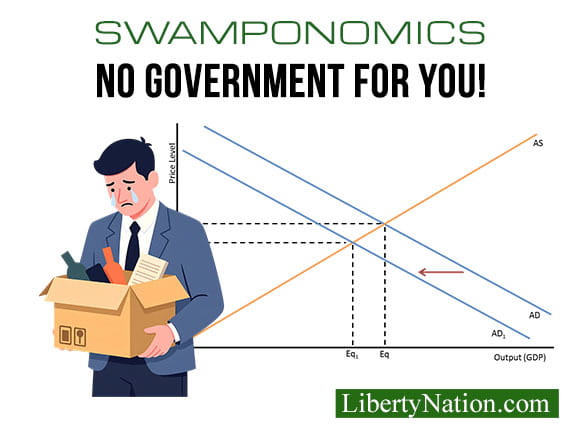
The federal workforce has shrunk to a multi-decade low, and that shift is reshaping how government works, where it spends money, and how taxpayers get services.
The number of federal government jobs is at a multi-decade low, and that change is not happening in a vacuum. It reflects years of policy choices, budget pressure, and an appetite for smaller, more focused national administration. For Republicans, a leaner federal payroll can signal better discipline so long as core duties stay covered.
A smaller federal headcount can be a sign of fiscal restraint and respect for taxpayers, but it also forces hard decisions about priorities. When staffing gets tight, agencies trim back on nonessential programs and postpone discretionary projects. That can be healthy if it weeds out waste, yet risky if it erodes capacity in key areas.
One clear result of fewer civil servants is more reliance on contractors and outside vendors to fill gaps. Outsourcing can deliver short-term flexibility, yet it shifts accountability away from elected officials and career staff. Republicans often warn that contracting without strict oversight invites cost overruns and weakens public control.
Technology is often presented as the fix for a smaller workforce, and digital tools do streamline many processes. Automation can speed routine tasks, cut paperwork, and reduce delays for citizens when applied thoughtfully. But tech is not a magic substitute for judgment, domain expertise, and human oversight that come from experienced employees.
National security, border operations, and law enforcement functions are areas where under-resourcing carries real risks. Fewer boots on the ground or analysts in offices can slow responses and create blind spots. From a Republican perspective, keeping these core functions strong matters more than ever when head counts drop elsewhere.
Regulatory enforcement and back-office functions like audits and inspections suffer quietly as staff shrinks. Reduced enforcement means rules exist on paper but lack teeth in practice, which can distort markets and shield bad actors. Republicans who favor limited government still insist on robust enforcement where it protects taxpayers and public safety.
Staff reductions also change the culture inside agencies, pushing toward short-term contracts and project-based work. That shift can erode institutional memory and the long-term thinking government needs to handle complex problems. Conservatives who value effective governance see a need to protect essential expertise even while trimming excess.
State and local governments often pick up duties when the federal workforce contracts, which reshapes intergovernmental relationships. That can empower decentralization and local control, ideas many Republicans support. At the same time, uneven local capacity means some communities get left behind without consistent federal support.
Budget choices behind fewer federal jobs reflect competing priorities: defense, entitlement spending, tax policy, and emergency funds all move dollars around. Republicans typically argue for prioritizing spending and halting growth in bureaucratic layers rather than expanding them. The question becomes how to balance restraint with responsibility.
Transparency and oversight take on added importance when the federal payroll shrinks and contractors fill gaps. Tight controls, audits, and clear performance metrics keep contractors honest and ensure taxpayer dollars are well spent. Republicans emphasize that accountability should rise as government complexity grows through outsourcing and interagency transfers.
A leaner federal workforce offers an opportunity to reset what Washington does and how it does it, not just to cut jobs for their own sake. If policymakers zero in on core missions, invest in critical skills, and enforce standards, a smaller government can be more effective. Failure to do that, though, risks degrading services citizens depend on.
Ultimately, the shift to a multi-decade low in federal employment is a test of priorities and leadership. Republicans tend to see it as a chance to tighten spending and demand results, while insisting that essential functions remain staffed and accountable. The debate now is whether Washington will use this moment to reform and refocus or whether gaps will quietly widen and weaken public service.

