

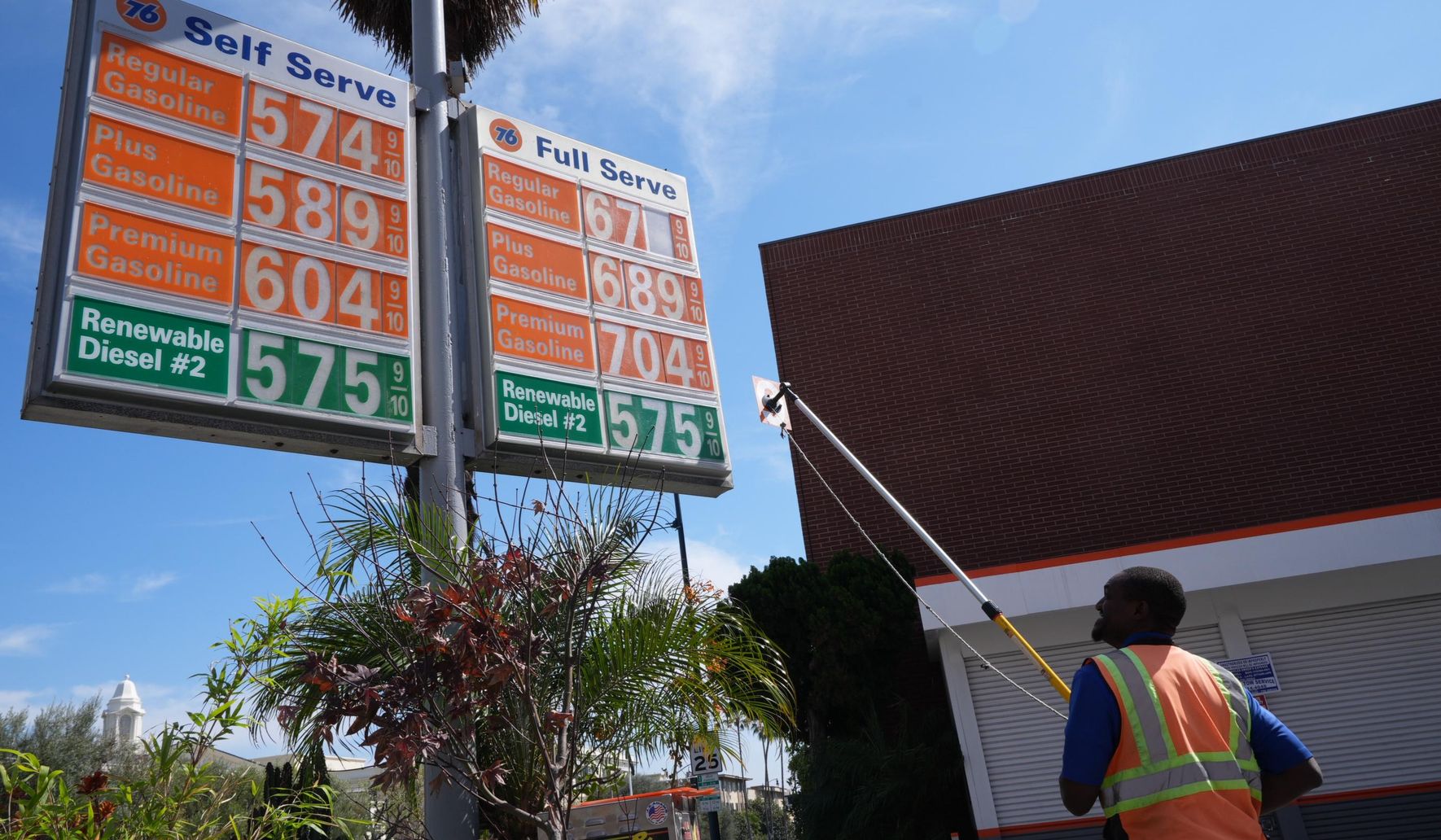
The price of oil surged higher and showed no signs of halting its rapid climb a week after the U.S. and Israel launched major attacks on Iran that escalated into a war in the Middle East.
Markets moved fast once the strikes began, and traders reacted to the new reality almost immediately. Crude climbed on fears of disrupted supply routes and a broader regional conflagration that could choke shipping lanes and production. Energy desks cited a mix of actual disruptions and the risk premium markets put on conflict, pushing benchmarks higher across the board.
These price moves matter at home because they filter through to consumers and businesses in short order. Retail gasoline and diesel costs tend to lag but follow crude closely, hitting budgets and operations alike. For states that already pay above-average fuel prices, even a modest uptick can have outsized effects on families and on logistics for farms and small businesses.
From a policy angle, the escalation underlines a persistent vulnerability: global markets will always respond to instability in key producing regions. That makes energy security a strategic issue as much as an economic one. Lawmakers on the right have long argued that reliance on volatile foreign supplies invites instability into American households and the freight networks that underpin the economy.
Market participants also adjust positions quickly when conflict starts. Hedge funds and commodity traders tilt portfolios toward oil and away from riskier assets, amplifying price moves beyond the immediate physical supply picture. The result is a feed-forward loop where fear begets buying, and buying begets higher prices, sometimes far beyond what fundamentals alone justify.
The current spike comes at a time when global inventories and spare capacity are tighter than they were a decade ago. That gives any shock, whether from a missile barrage or a sanctions regime, more punch. When spare barrels are few, modest disruptions translate into sharper price swings and more palpable impacts at the pump and on freight costs.
On the political front, the situation presents difficult trade-offs. Military actions may be necessary for national security, but they come with an economic bill that falls on ordinary Americans. The response from elected officials will shape how long elevated energy costs persist and whether steps are taken to shore up domestic resilience.
Energy policy choices now have immediate consequences and should be judged accordingly. One clear effect of higher oil prices is a renewed focus on domestic production capacity and strategic reserves. Debates in Washington will center on how to balance deterrence, readiness, and the economic fallout of conflict-triggered price runs.
Wall Street and Washington both watch how allies and adversaries respond, which can either dampen or deepen the crisis. If the confrontation widens, insurance costs for shipping and the willingness of firms to operate in the region could change markedly. That prospect is what keeps traders nervous and prices elevated until clarity returns.
For consumers, the headline is simple: when geopolitical risk spikes, energy costs rise and budgets tighten. For policymakers, the lesson is equally direct: strategic risks abroad have fast, measurable consequences at home. The coming weeks will reveal whether markets calm as diplomatic channels work or whether a protracted conflict prolongs the price surge and its ripple effects.

