

New York Mayor Zohran Mamdani used the 250th anniversary to deliver a confrontational address that blamed oligarchs, federal immigration agents, and systemic injustice for the city’s troubles while offering few concrete fixes.
Zohran Mamdani opened his Independence Day remarks with sweeping language about national self-examination, but he quickly shifted to a speech heavy on grievances and light on practical solutions. The address painted America as a place of hunger, unchecked wealth, and state violence, and it cast federal immigration agents as aggressors. For residents worried about crime, living costs, and services, the speech felt more rhetorical than helpful.
Mamdani described the U.S. as “a nation of contradictions” where “children go to sleep hungry while the world’s first trillionaire hungers for more.” He accused shadowy forces of monopoly, election-buying, and exploiting the sick, and framed federal immigration enforcement as an invasion of neighborhoods. That framing flips the usual law-and-order dynamic and sympathizes with those in the country illegally without addressing public safety concerns.
The mayor’s tone struck many as more ideological than managerial, and the city he runs has eight million residents who expect practical leadership. New Yorkers contend with stretched infrastructure, rising costs, and crime, and they want policies that deliver results. A speech that catalogues grievances but offers no clear remedies does little to reassure taxpayers and small business owners struggling to get by.
Mamdani told listeners that some Americans think the country “belongs only to those with the right accent or the right shade of skin,” then added this critique of his unnamed opponents:
“America, if you ask them, becomes less the more people it welcomes…. The rest of us, they insist, should be grateful for merely being allowed to visit. How small they are, how weak, how unoriginal.”
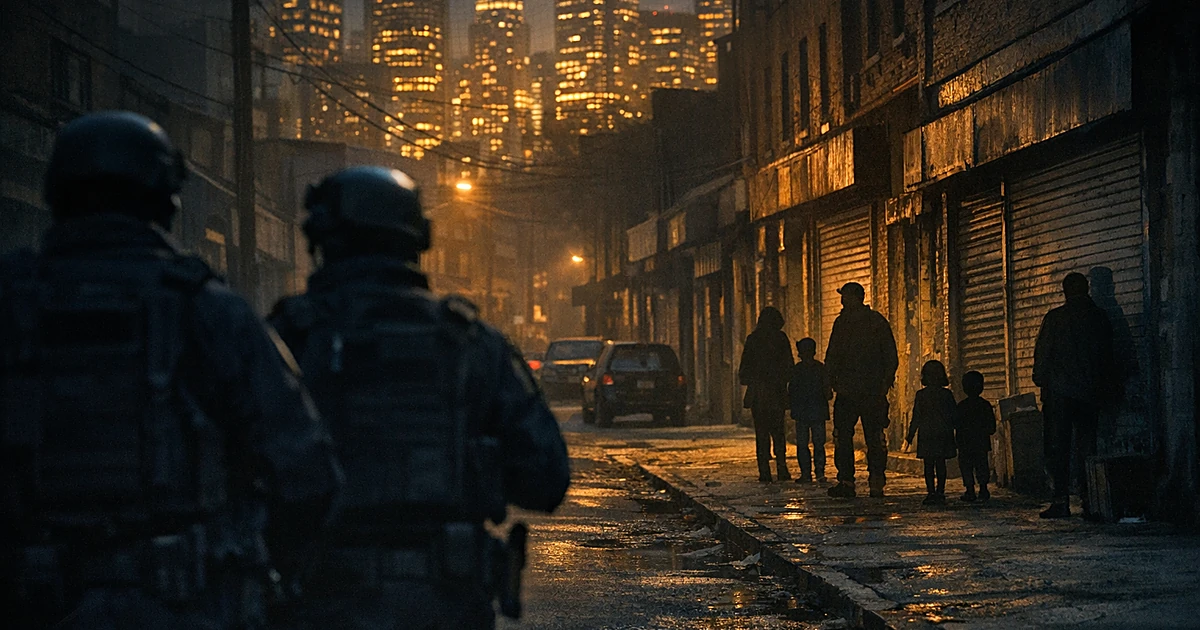
He also singled out federal immigration agents with harsh language in another passage that has drawn attention and police concern:
“We see masked agents terrorizing our streets, eating food cooked by our undocumented neighbors before spiriting them away in unmarked vans.”
Those lines contrast sharply with the federal role of removing illegal immigrants who have committed crimes, including violent offenses, from communities. Casting ICE as the villain while downplaying criminality risks alienating residents who expect enforcement of immigration laws passed by Congress and upheld in court. It also overlooks the victims of crimes tied to people in the country unlawfully.
The mayor has also clashed with federal rulings before, refusing to accept a Supreme Court decision on deportation protections for specific nationalities, a stance that treats constitutional order as negotiable when it conflicts with political priorities. At the same time, critics point to city management choices that undermine the mayor’s rhetoric, such as discussions about delaying payments to nonprofits that operate food banks and shelters. Those everyday providers are the ones who keep kids fed and families afloat when municipal budgets falter.
Mamdani employed classic class-war imagery, contrasting “callous dirt streaked hands” of workers with “the soft hands of a precious few” who control wealth. He accused health insurers of exploiting the sick, corporate landlords of negligence by design, and the government of spending on “bombs and bailouts.” The portraits are meant to move an audience, but they demand follow-through from city hall to be credible.
During a recent heat wave the mayor urged New Yorkers to set thermostats to 78 degrees to conserve power, while parts of the Bronx experienced power shutoffs meant to protect utility equipment. City Hall reportedly ran its own air conditioning below that threshold, creating a perception of one rule for officials and another for ordinary citizens. When the city keeps the lights and cool air on for celebrity events but residents in Riverdale sit humid and powerless, credibility takes a hit.
Mamdani closed by redefining patriotism as dissent, rejecting the “love it or leave it” line and insisting instead that:
“But patriotism has never been about pretending our nation is without flaws. Patriotism is every act of righteous dissent.”
There is room in American politics for pointed criticism, and dissent is part of our tradition of improvement. Still, critics say the mayor’s address offered a catalogue of charges without a single policy prescription, a concrete program, or any explicit gratitude for the freedoms that allow public dissent.
Observers note a pattern: symbolic gestures and public signaling often appear to take precedence over managerial fixes in Mamdani’s tenure. He skipped long-standing civic traditions like the annual Fifth Avenue parade and has repeatedly resisted federal immigration enforcement in public statements. Those moves read as political theater to some, not the steady work of solving the day-to-day problems New Yorkers face.
The speech overlooked several constituencies: the police who patrol city streets, small business owners who pay taxes and keep neighborhoods alive, legal immigrants who followed the rules, and crime victims harmed by people in the country unlawfully. It also failed to acknowledge that federal agents are employees executing laws passed by elected officials and enforced through the courts. Painting them as an occupying force dismisses that legal framework.
A mayor who spends a national anniversary attacking law enforcement while the city struggles with outages and basic service delivery risks confusing protest with governance. New Yorkers deserve leadership that delivers both civic voice and competent administration, not rhetoric that divides residents into perpetual victims and villains.

