

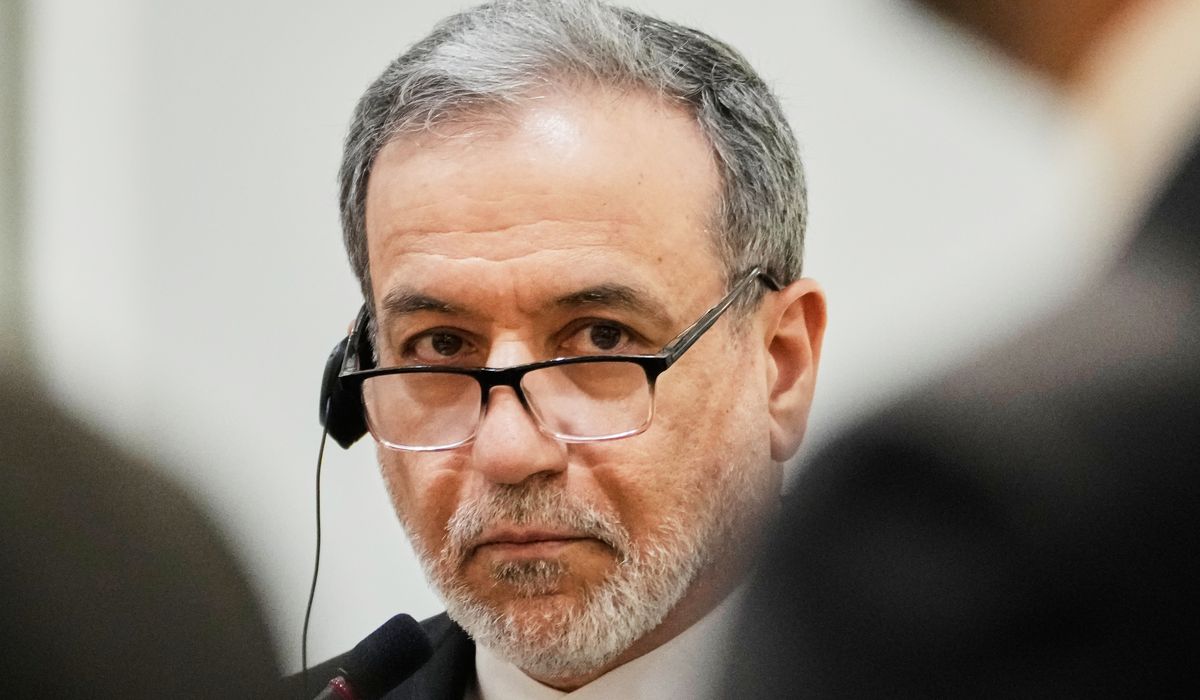
Iranian Foreign Minister Abbas Araghchi publicly laid out a regional war strategy in reply to his Jordanian counterpart, framing Tehran’s posture toward its Arab neighbors and signaling greater use of proxies and political pressure across the Middle East.
Abbas Araghchi’s comments arrived in a public exchange with Jordanian officials, and they were presented as a clear statement of how Iran intends to operate regionally. The message stressed a forward posture that mixes diplomatic messaging with support for allied groups across neighboring states. For anyone watching the region, it read as a deliberate blueprint rather than an offhand remark.
The basics of that blueprint are familiar: influence through proxies, strategic depth in Iraq and Syria, maritime harassment, and alignment with armed groups that can pressure Gulf and Levant capitals. Araghchi framed these moves as defensive and deterrent in nature, but the practical effect is to increase friction across Arab states and raise the risk of miscalculation. Jordan and other neighbors reacted with understandable alarm, seeing a plan that could destabilize their borders and economies.
From a Republican viewpoint, this is exactly the kind of asymmetric threat that requires a strong response rather than appeasement. Iran’s willingness to blend statecraft with proxy violence means the United States and regional partners must sharpen deterrence and tighten cooperation. That includes treating Iranian behavior as a strategic challenge across political, economic, and military dimensions instead of a series of isolated incidents.
One immediate consequence is heightened pressure on regional security arrangements. Gulf states and Jordan will need clearer security guarantees, better intelligence sharing, and more resilient civil defense planning to cope with cross-border threats. If Tehran’s strategy aims to divide Arab capitals or make them normalize risky behavior, the right answer is closer coordination, not backtracking from alliances.
Economic levers also matter. Iran relies on regional relationships to bypass sanctions and fund proxy networks, so tightening enforcement and closing loopholes will blunt the funding lines that underwrite militant activity. Republicans typically favor a hard-line approach that couples sanctions enforcement with targeted diplomacy that rewards genuine behavioral change rather than rhetoric. That mix forces Tehran to choose between costly regional adventurism and a path back to stable economic engagement.
Military posture is another piece of the puzzle. Iran’s strategy depends on plausible deniability and campaigns below the threshold of full-scale war, which makes flexible but firm responses essential. The U.S. and partners should preserve freedom of navigation, protect critical energy infrastructure, and make clear that attacks on partners will carry consequences calibrated to de-escalate rather than embolden. A credible deterrent reduces the likelihood that Tehran’s proxies will be unleashed without restraint.
Diplomacy still has a role, but it must be tied to outcomes and verified behavior, not vague promises. If regional states are offered security guarantees or incentives, those must be linked to verifiable steps that reduce proxy activity and interruption of shipping lanes. Republicans argue that diplomacy backed by power is effective; empty talks that ignore on-the-ground actions only encourage further provocations.
Intelligence and transparency are equally important for preventing surprises. Iran excels at ambiguity and misdirection, so improving surveillance, sharing timely information with Arab partners, and exposing covert networks will help cut off operations before they escalate. Publicizing evidence of bad-faith actions also strengthens the moral and legal case for sanctions and international pressure.
Finally, regional resilience must improve to blunt Tehran’s leverage over weak states. Economic development, secure borders, and capable local security forces reduce the appeal of external interference and limit the routes by which proxies can operate. The choice is stark: allow a regional strategy that raises the risk of conflict to proceed unchecked, or respond with coordinated power and policy that protects American interests and supports regional stability.

