

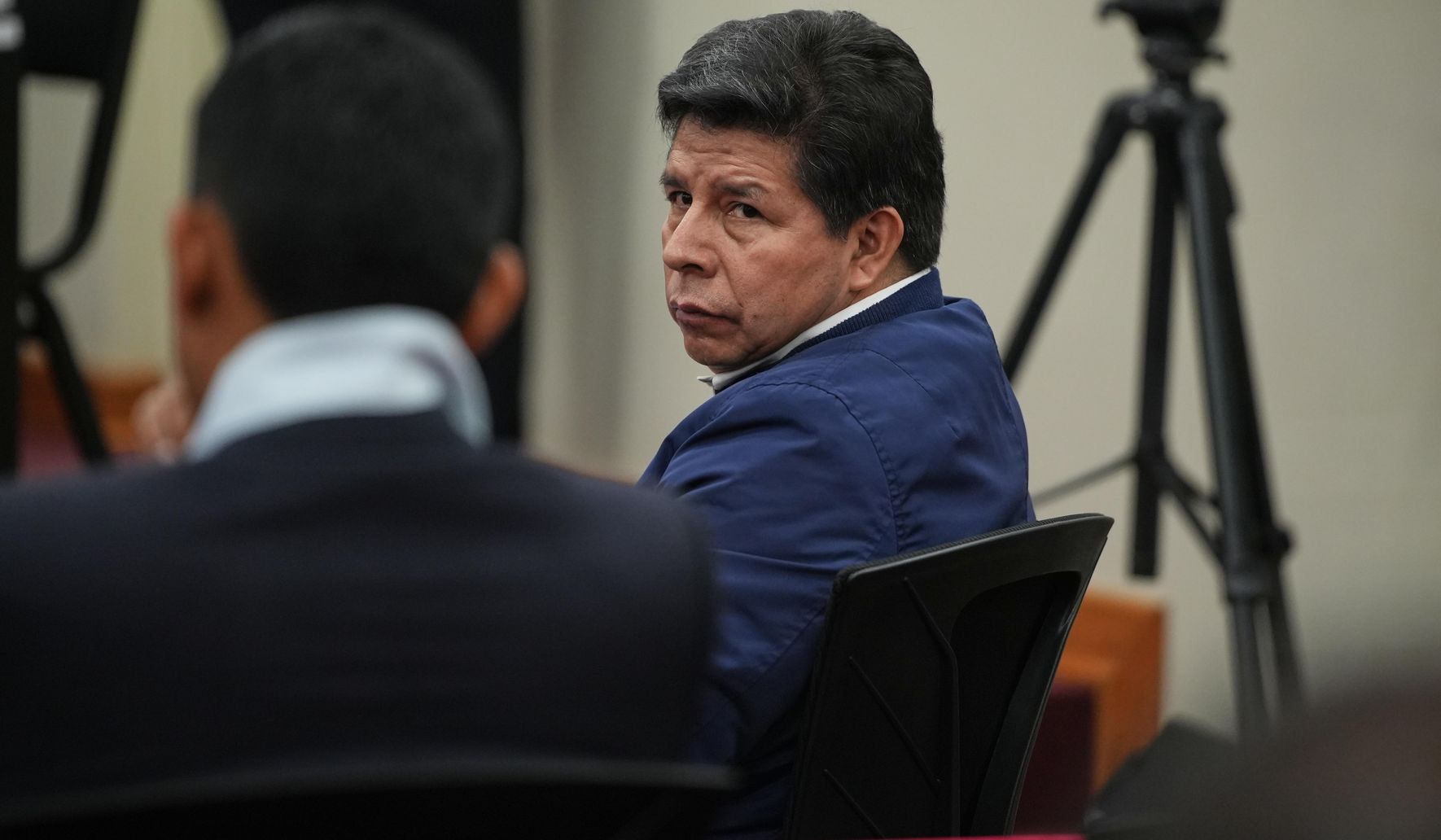
Peru’s Supreme Court has sentenced former President Pedro Castillo to 11.5 years in prison for conspiracy to commit a rebellion in 2022, after he attempted to dissolve Congress during a deep political clash.
Peru’s political scene has been volatile for several years, and this sentence marks another dramatic turn. Pedro Castillo, a former schoolteacher who rose quickly in national politics, tried to dissolve Congress in 2022 as lawmakers moved to remove him. The court found that act part of a conspiracy to commit a rebellion and imposed an 11.5 year prison term.
The case centers on a single chaotic episode that exploded into a constitutional crisis, with cameras catching scenes of street protests and rapid arrests. Castillo’s supporters framed his move as an emergency measure against a hostile legislature, while opponents called it an attempted power grab. The Supreme Court’s sentence now closes one chapter but leaves broader tensions unsettled across Peru.
From a conservative standpoint, the outcome underscores the need for clear limits on presidential power and a commitment to the rule of law. No one should dissolve democratic institutions on impulse, and the judiciary has to enforce constitutional boundaries when leaders cross them. At the same time, conservatives who care about order will watch how the sentence is applied, because stability depends on predictable, impartial justice.
The legal process itself drew attention. Prosecutors argued that Castillo coordinated actions intended to force a rupture in the constitutional order, while his defenders claimed he acted under extreme political pressure. The court’s decision rested on testimony, documentary evidence, and the context of his public statements and actions in the days around the attempted dissolution. That mix of political drama and legal reasoning is what made the trial both legally charged and politically explosive.
Politically, the sentence will reverberate through Peru’s parties and institutions. Lawmakers who supported impeachment felt vindicated, and critics warned that the ruling might deepen polarization. Many Peruvians, exhausted by years of instability and corruption scandals, want normal governance and reliable institutions more than partisan victories. That desire for steady government is a central piece of what’s at stake going forward.
International observers will also be tuning in. Democracies in the region have gone through similar tests where presidents push constitutional limits and courts respond. For those who favor limited government and respect for separation of powers, the takeaway is straightforward: constitutional lines matter and must be defended. At the same time, the international community will watch whether Peru’s institutions follow legal norms and avoid politicized prosecutions.
Looking ahead, Peru faces the practical task of rebuilding trust in its institutions and preventing future crises. That means clearer rules, stronger civic education, and leaders willing to work inside constitutional lanes rather than trying to override them. It also means the justice system must be transparent and consistent so citizens believe rulings are about law, not political retribution.
The sentence against Pedro Castillo is significant on its own terms: 11.5 years for conspiracy to commit a rebellion tied to an attempted dissolution of Congress in 2022. But beyond the number, the moment tests Peru’s capacity to recover from political ruptures and to reinforce a culture of constitutional restraint. For Republicans and others who favor stable governance, the priority is to ensure that the rule of law holds and that future leaders learn from this episode rather than repeat it.

