

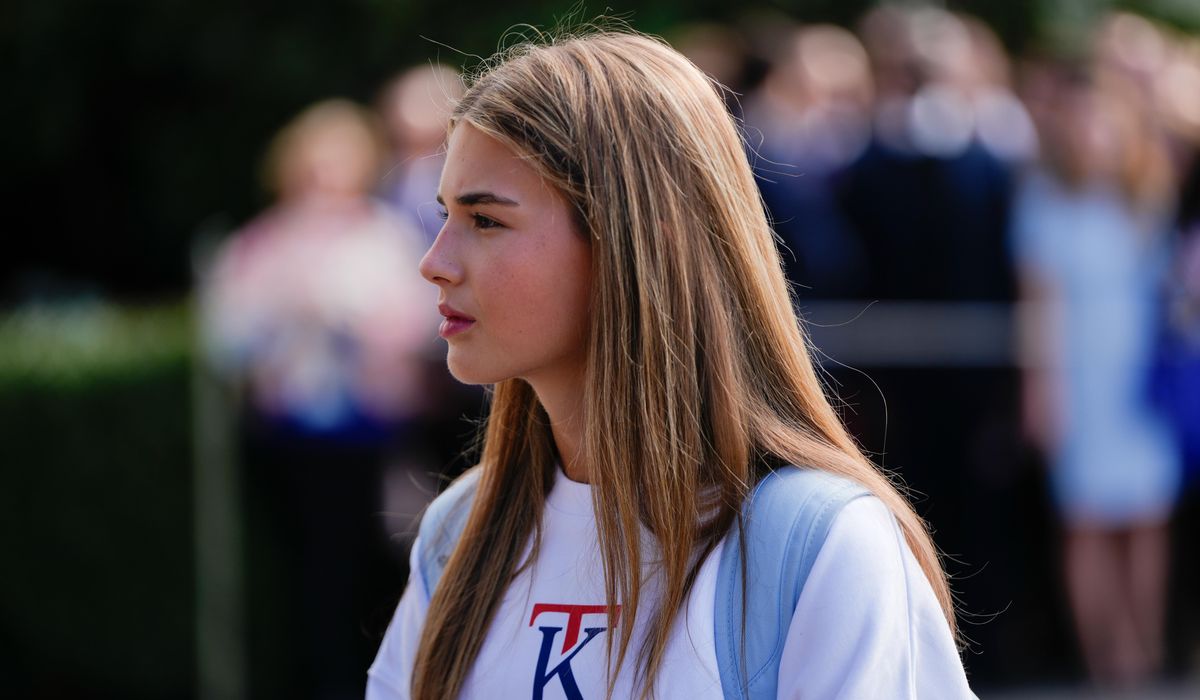
The LPGA Tour is adding some presidential flair. Kai Trump, the president’s 18-year-old granddaughter, will make her professional debut at The Annika event at Pelican Golf Club in Florida, and her arrival promises plenty of attention on and off the course. This piece looks at what her debut means for the tour, the scrutiny she’ll face, and why conservatives see this as a straightforward chance for a talented young athlete to earn her keep. Expect a discussion about performance, media reaction, and the instincts driving support for her move to the professional ranks.
Kai Trump arrives in the pro ranks at 18, an age when many top amateur players decide to test themselves against the best. Turning professional is a normal step for elite juniors and college stars, and the LPGA has long been a place where youth and skill meet opportunity. Her youth will be highlighted, but it is not unusual; the tour regularly features players who begin their careers as teenagers.
Placement at The Annika event, staged at Pelican Golf Club in Florida, gives her a recognizable stage for a first pro start. The tournament will bring experienced competitors and plenty of media attention, which will amplify every shot she hits. For any newcomer the pressure rises, but the structure of the event is the same for everyone who earns a spot and steps onto the tee.
Onlookers will inevitably link her family name to politics, but the course cares about results more than lineage. Professional golf is meritocratic in the simplest sense: score lower and you keep playing. That core reality is a good reminder that opportunities should be judged by performance rather than pedigree.
Some commentary will turn skeptical, predicting special treatment or unfair advantage because of who she is. Those voices are predictable and frequently loud, but the LPGA and tournament organizers operate under rules, tee times, and qualifying standards. If she earns her place, she stands alongside other rookies who have fought for a shot to compete.
From a conservative perspective, this is a moment to celebrate ambition, hard work, and the chance for a young person to build her own professional record. We tend to value grit and personal responsibility, and sports provide a straightforward arena where those traits matter. If Kai performs, she will do so under the same scoreboard that silences noise and rewards play.
Expect intense media coverage and social media scrutiny that will amplify any misstep and heroize any success. That environment can be brutal, but it also offers lessons about resilience and focus. For athletes, learning to play inside the moment while the world watches is part of becoming a professional.
Security and logistics will be a part of the week, as they are whenever a high-profile figure competes in a public setting. Event staff and local authorities will manage those details behind the scenes so the tournament can proceed. What matters for fans and critics alike is the golf, not the spectacle that can swirl around the edges.
Supporters will point to her years of practice and national-level exposure in junior events as evidence she belongs on a pro tee. Critics will look for confirmation of bias. Both perspectives come with assumptions, but the scoreboard remains the neutral adjudicator. Performance clears up speculation in a way commentary rarely does.
The larger takeaway for conservatives who follow this story is simple: we should welcome young Americans pursuing careers and earning chances to prove themselves. Sports are a clean test of ability where outcomes are clear and consequences immediate. That kind of merit-based progress is worth defending against attempts to turn every achievement into a political story.
Kai Trump’s debut will create headlines and talking points, but on the course she will face the same puts, chips, and long irons as any other pro. The reaction off the tee will be loud, but the fairway delivers a quieter verdict. If she wants to build a career, the path is clear: play well, improve, and let the results speak for themselves.

