

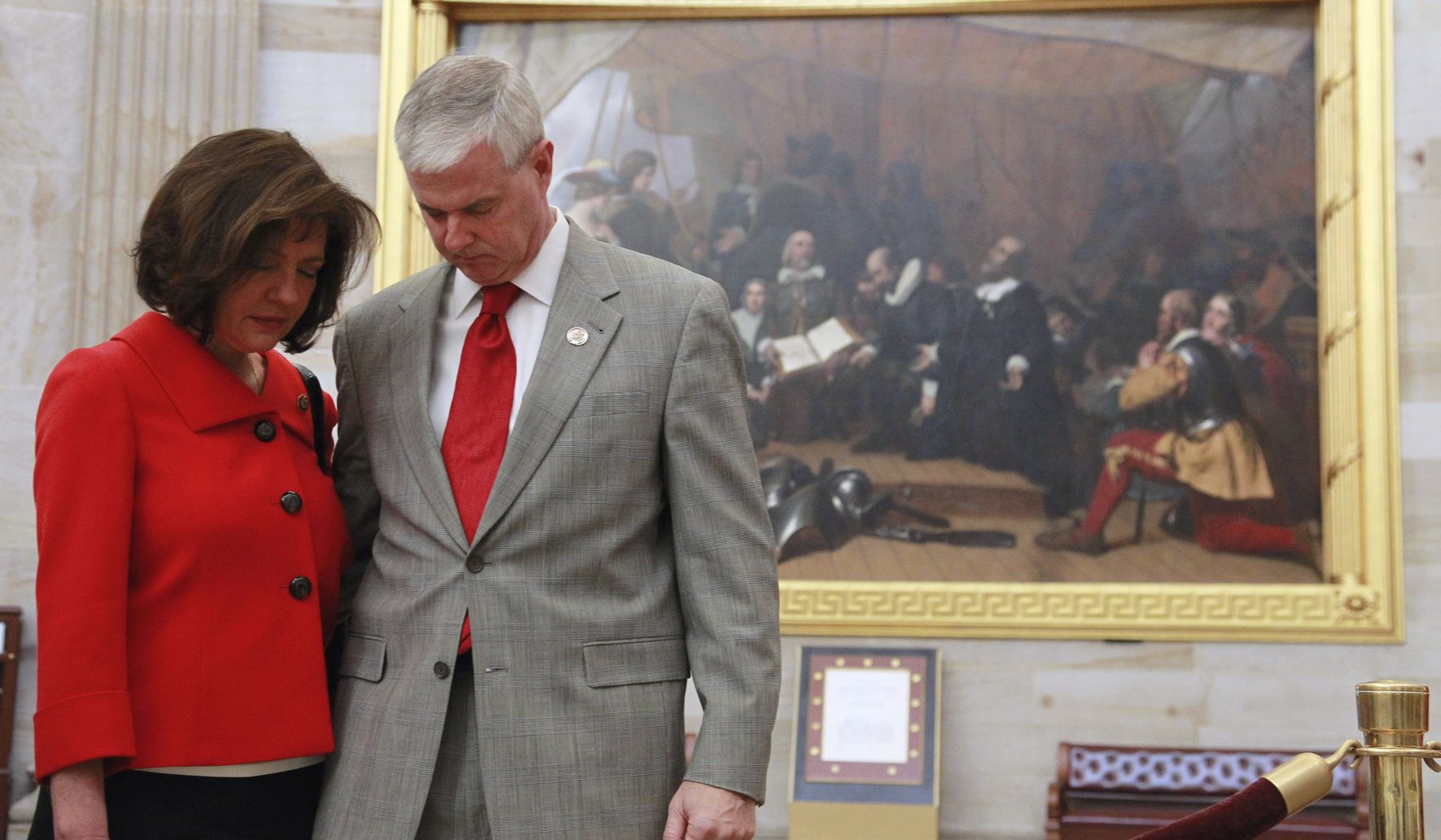
Rep. Steve Womack’s wife died Sunday, just three days after President Trump commuted their son’s prison sentence, leaving the family to navigate grief in the glare of public attention.
Arkansas Republican Rep. Steve Womack is facing a private family tragedy after his wife died Sunday, a loss that arrived only days after a presidential commutation affected their son. The timing — three days after President Trump’s action on their son’s sentence — ties a public act of clemency to an intensely private moment. That overlap has thrust a personal family ordeal into national conversation.
Womack serves a district where personal faith, service, and community ties matter to voters, and his role as a public official now collides with a moment of mourning. Public figures often must juggle duties and private grief, and that balance becomes more fragile when national headlines draw attention. Constituents and colleagues frequently watch closely, even when the family seeks quiet.
President Trump’s commutation came three days before the reported death, an executive move that shortened the son’s prison term but did not erase the family’s complex emotional landscape. A commutation spares someone from the remainder of a sentence, and those acts by a president carry both legal and human consequences. For a family under scrutiny, such a decision changes the public story even as private sorrow deepens.
The intersection of mercy and mourning is not lost on many Republicans, who tend to view clemency powers as a necessary tool for correcting injustice and offering second chances. At the same time, conservative values place weight on law, order, and accountability, creating a nuanced perspective when a lawmaker’s family is involved. That tension shapes how colleagues and supporters respond in public and in private.
In situations like this, community response typically centers on practical and emotional support: offers to help, prayers, and requests for privacy. Elected officials often step back from public business to tend to family affairs and to receive condolences from peers. That pull between duty and household needs is familiar to anyone who has held office while navigating personal loss.
Media coverage amplifies every detail, and the timing of the commutation means the story carries a political undertone even as it remains fundamentally a family tragedy. Republicans watching will likely frame the commutation as an act of mercy that should not be conflated with the family’s bereavement. The party’s message tends to defend the president’s authority to grant clemency while urging respect for grieving loved ones.
Colleagues in Congress commonly offer brief statements of sympathy and ask for space to allow families to process loss without constant scrutiny. Those gestures are simple but important, signaling respect across the aisle and within a member’s own party. For supporters back home, the emphasis is often on rallying around the family rather than making political capital out of the moment.
For Rep. Womack, practical steps will likely follow: handling personal affairs, attending to family and funeral needs, and determining what public duties can wait. When members of Congress step away, their offices usually handle constituent services and urgent business to minimize disruption. The expectation among many Republicans is to provide both institutional continuity and private compassion.
This episode highlights how public acts and private tragedies can collide, creating intense pressure on families and their representatives. The political lens will remain present in coverage and commentary, but many voices within the party will push for dignity and discretion as the family moves through its grief. Ultimately, what the family needs now is space and support from neighbors, colleagues, and constituents.

