

This article summarizes a report alleging that a coordinated group of Democratic state attorneys general secretly planned legal actions aimed at former President Trump, with details reportedly being withheld and prominent figures like California Attorney General Rob Bonta tied to the effort.
On Aug 28, 2026, a report landed that claims a network of Democratic attorneys general coordinated behind closed doors to target former President Trump. The document suggests strategy sessions, shared legal theories, and synchronized filings that read less like independent lawyering and more like a political campaign in legal clothing. That alleged coordination has raised questions about state power being used for partisan ends.
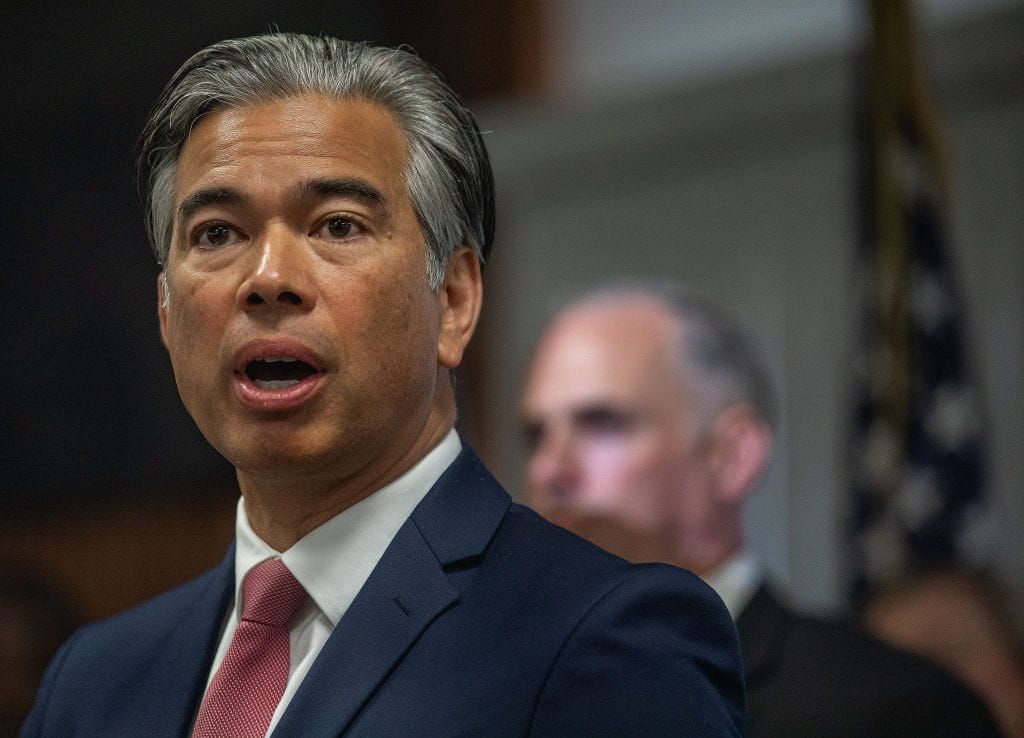
The report singled out high-profile state actors and mentioned California Attorney General Rob Bonta among those involved. Photos and public records show Bonta’s prominence in national AG discussions, and the coverage has highlighted his role as a visible voice in the Democratic AG community. Critics argue that when West Coast legal teams steer a multi-state approach, it blurs the line between legitimate enforcement and political targeting.
Those pushing the story point to internal emails, meeting notes, and shared litigation plans as evidence of a coordinated program. If true, that would mean multiple state offices traded ideas and tactics not merely for consistent law enforcement, but to amplify legal pressure on a single political figure. Observers from the right see this as weaponizing regulatory and prosecutorial tools to influence elections and timelines.
There’s one line in the coverage that captures the secrecy at the heart of the controversy: “The attorneys general are reportedly trying to keep the details hidden.” That sentence, printed exactly as reported, has been repeated in conservative circles as proof the files were deliberately shielded. Redactions and withheld documents have only deepened suspicions that the public is being kept in the dark while officials coordinate politically sensitive actions.
Supporters of the AG network say collaboration is standard practice when states face the same corporate or constitutional issues, and that shared strategy helps conserve resources and produce consistent outcomes. Even so, the optics of coordinated legal moves against a single political leader are explosive, especially when some of the participating offices are run by officials who openly oppose the individual targeted. Republicans argue that the rule of law must not become a tool for political warfare.
Legal experts interviewed by conservative outlets stress that coordination among prosecutors is not illegal in itself, but they warn about the dangers when partisan motives drive enforcement choices. Rules on recusal, conflict of interest, and prosecutorial discretion exist to protect against abuse, yet those safeguards depend on transparency and accountability. Without full disclosure, citizens can’t judge whether actions were grounded in law or politics.
On the political side, the story feeds a larger narrative about unequal treatment and selective enforcement. Republican elected officials and commentators have seized on the report to argue that Democrats are using state power to silence or punish political opponents. That argument resonates with voters who worry that legal institutions are being stretched into political instruments rather than impartial arbiters of justice.
What remains clear is that the alleged plot and the effort to keep its details hidden have hardened partisan lines instead of calming them. With Aug 28, 2026 now marked as the day the report circulated widely, the debate will likely continue in courts, statehouses, and on Capitol Hill. Expect further document fights, subpoenas, and heated hearings as both sides press their versions of whether this was coordination for the public good or a partisan operation cloaked in legal language.

