

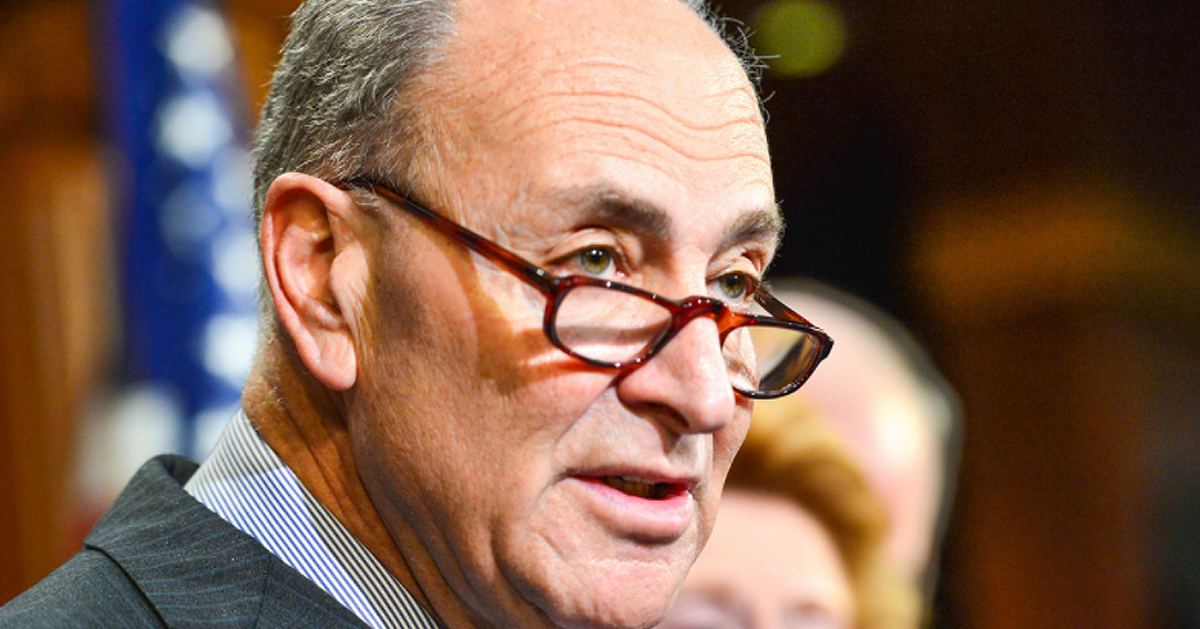
Senate Minority Leader Chuck Schumer is again raising the threat of a government shutdown over expired COVID-era health insurance subsidies, pressing for a three-year extension while sparring with House and Senate Republicans.
Chuck Schumer drove the talking points on CNN’s The Lead this week, turning the lapse of pandemic-era subsidies into a fresh political showdown. He wants a three-year extension pushed through by Thursday via a discharge petition and is pressing both House and Senate leaders to fall in line. This is raw political theater with real consequences for families watching premiums climb.
Millions of Americans now face higher insurance bills because subsidies that capped costs during the pandemic have ended, and families are feeling the pinch at their kitchen tables. The optics of threats to shut the government over this are ugly to taxpayers who expect elected officials to solve problems, not score points. From a conservative perspective, the real outrage is that leadership from both parties has failed to produce a durable, bipartisan fix.
History matters here: last year Democrats shut down the government for 43 days to press this exact issue, and that hardline tactic left many people scrambling. Team Schumer now wants to repeat the playbook but on a longer timeline, pushing what they call a three-year plan. Republicans counter that automatic extensions without offsets or reforms just paper over the underlying issues that drove premiums up in the first place.
On CNN, host Jake Tapper asked a blunt question that should echo across Capitol Hill: “Democrats shut down the government for 43 days last year in an effort to extend COVID-era health insurance subsidies. Those have now, obviously, expired.” He followed up with a practical push, saying, “Millions of Americans are going to see their insurance costs rise this month. Do Democrats have a plan to address that — 1. A plan that could actually pass Congress, get Republican support? And are you willing to rule out another shutdown over that issue?” Those exact words demand a straight answer from leaders who keep threatening brinkmanship.
Schumer’s immediate response was equally pointed and must be preserved verbatim: “Look, the best way to get this done is for the House on Thursday to pass the three-year extension that Rep. Hakeem Jeffries (D-NY) put together in a discharge petition, and then to have Sen. John Thune (R-SD) put it on the floor, and it will pass.” He doubled down with another direct line: “That’s the only way to get this done. We’re not going to get healthcare done if the Republicans stay in shambles.” Those quotes explain his strategy and his framing of Republican opposition.
Republican leaders like Sen. John Thune and Speaker Mike Johnson have pushed back, refusing to extend benefits for even a day without additional reforms or budget offsets. That resistance reflects a conservative insistence that any subsidy extension should be paired with accountability measures, spending discipline, and steps to address long-term affordability. Voters who worry about national debt and inflation expect their representatives to resist open-ended spending that lacks clear enforcement.
The political theater around shutdown threats distracts from workable policy options that could stabilize premiums without opening the federal budget to years of open-ended commitments. Congress could pursue targeted, short-term relief while negotiating structural reforms to health-care markets and subsidy design. Yet what we actually see is posturing from Democrats and a refusal by some Republicans to negotiate in good faith, which leaves families stuck in the middle.
Meanwhile, ordinary Americans are left with a future of uncertainty: higher monthly bills, fewer choices, and the real possibility that Capitol Hill fights will dictate medical choices. The current impasse shows how broken incentives on both sides allow headline-grabbing standoffs to take priority over patient-centered solutions. That’s why Americans frustrated by Washington want both fiscal responsibility and common-sense policy that keeps health care affordable.
Lawmakers can still choose a pragmatic path forward that protects consumers without sacrificing fiscal sanity, but it will require clear, honest bargaining instead of ultimatums. The last thing families need is another shutdown used as leverage; the last thing taxpayers need is yet another multi-year commitment shoved through without scrutiny. If Congress wants to stop rate shock and restore stability, it should do so with durable, fiscally responsible measures that earn bipartisan support rather than theatrical threats that risk everything.

