

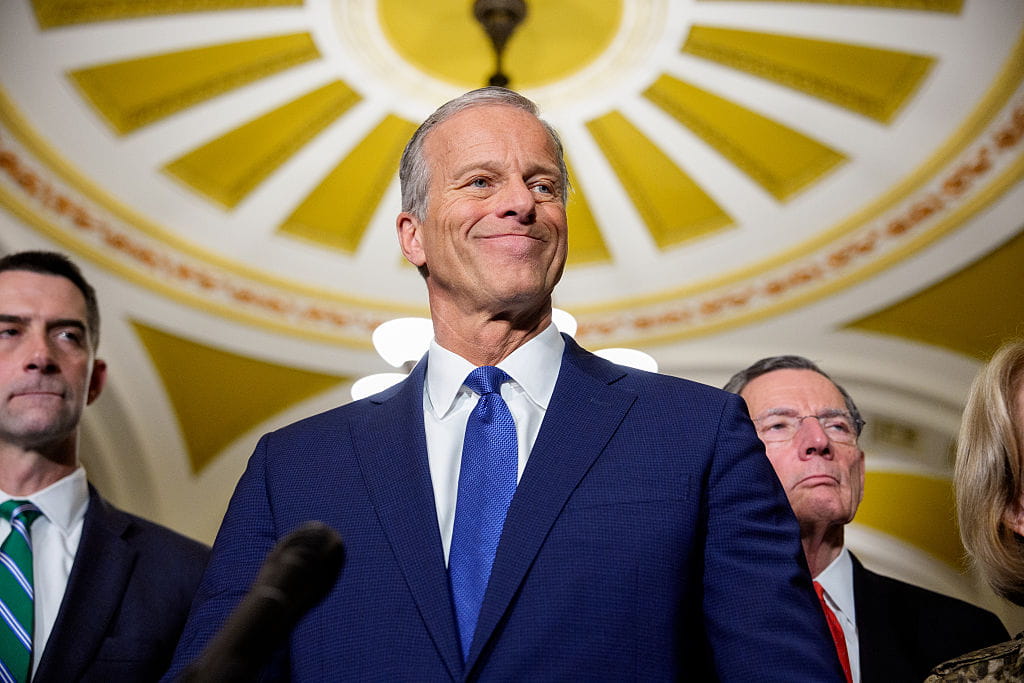
The Senate approved emergency funding for the Department of Homeland Security in a late-night, unanimous vote, but lawmakers left specific appropriations for Immigration and Customs Enforcement and parts of Customs and Border Protection off the bill, creating a fresh flashpoint over border enforcement and agency priorities.
The funding measure cleared the Senate during a small-hours session that caught many by surprise, and it omitted earmarks for ICE and certain CBP functions. That omission has immediate policy and political consequences, since those programs are central to enforcing immigration laws and managing the border. The mood in Washington is tense because the move shifts the debate from routine appropriations to core questions about who gets supported to secure the country.
President Donald Trump’s public comments earlier in the week signaled he would support TSA funding, which likely helped smooth passage of parts of the package. Republicans who prioritize security will welcome steady resources for transportation safeguards, while still worrying that enforcement agencies were sidelined. The split funding picture highlights differing priorities inside government and among lawmakers on Capitol Hill. It also sets up another fight over how to balance security, legal immigration, and humanitarian obligations.
Leaving ICE and chunks of CBP without specific funding raises practical concerns about arrests, removals, and border patrol operations. These agencies carry out day-to-day enforcement that keeps criminal networks in check and manages migrant flows at ports of entry and between them. Without guaranteed lines in an appropriations bill, those functions could face uncertainty just when the nation needs predictability in enforcement. That uncertainty matters to frontline personnel who plan operations, allocate overtime, and coordinate with state and local partners.
The unanimous Senate vote gives the package a veneer of broad support, but unanimity can obscure sharp divisions on priorities inside the bill. Many Republicans see funding the TSA and core DHS missions as non-negotiable, yet they also want to ensure ICE and CBP are fully resourced to do their jobs. Democrats who pushed back on ICE funding argue for reforms and oversight, while Republicans insist that cutting enforcement capacity is the wrong response to policy disagreements. The result is a fragile truce that could unravel as budget negotiations continue.
Operationally, the split funding approach complicates planning across DHS components that routinely coordinate on investigations and border security. Separating line items for aviation security from immigration enforcement creates administrative friction and can slow response times when agencies must act together. That friction is easy to underestimate until an emergency or large-scale migration event tests the system. Republicans argue that combined, well-funded operations are more effective and keep communities safer.
The optics matter politically, too. Voters who prioritize law and order will view the absence of specific ICE and CBP funding as a soft spot that could encourage lax enforcement. Conservative lawmakers are likely to press for clear appropriations that restore full operational certainty for enforcement personnel. Meanwhile, Democrats are likely to frame the omission as progress toward accountability and protections, setting up a messaging clash that will play out in both committee rooms and campaign ads.
Congress now faces pressure to reconcile competing views without undermining core homeland security functions. Lawmakers will need to decide whether to return to the Senate floor quickly to fix omissions or let the measure stand and address gaps in follow-up bills. For Republicans, the priority is straightforward: make sure TSA, ICE, and CBP have what they need to protect the country and enforce the law. That position will guide negotiations and shape public commentary in the coming days.
Beyond the immediate budget mechanics, the episode underscores a larger political reality: funding choices reflect priorities, and leaving enforcement off a major DHS bill signals a shift in those priorities. That shift could have downstream effects on deterrence at the border, cooperation with international partners, and the morale of officers who execute immigration laws. Republicans will argue that durable, predictable funding for enforcement is essential to sustain border security and public safety.
Members of both parties will now test how much the unanimous vote really means when tough decisions return to the floor. Expect aggressive bargaining over targeted language, oversight triggers, and funding timelines as lawmakers try to square operational needs with political demands. The next moves in Congress will reveal whether this late-night vote was a temporary accommodation or the first step toward a longer realignment of homeland security spending priorities.

