

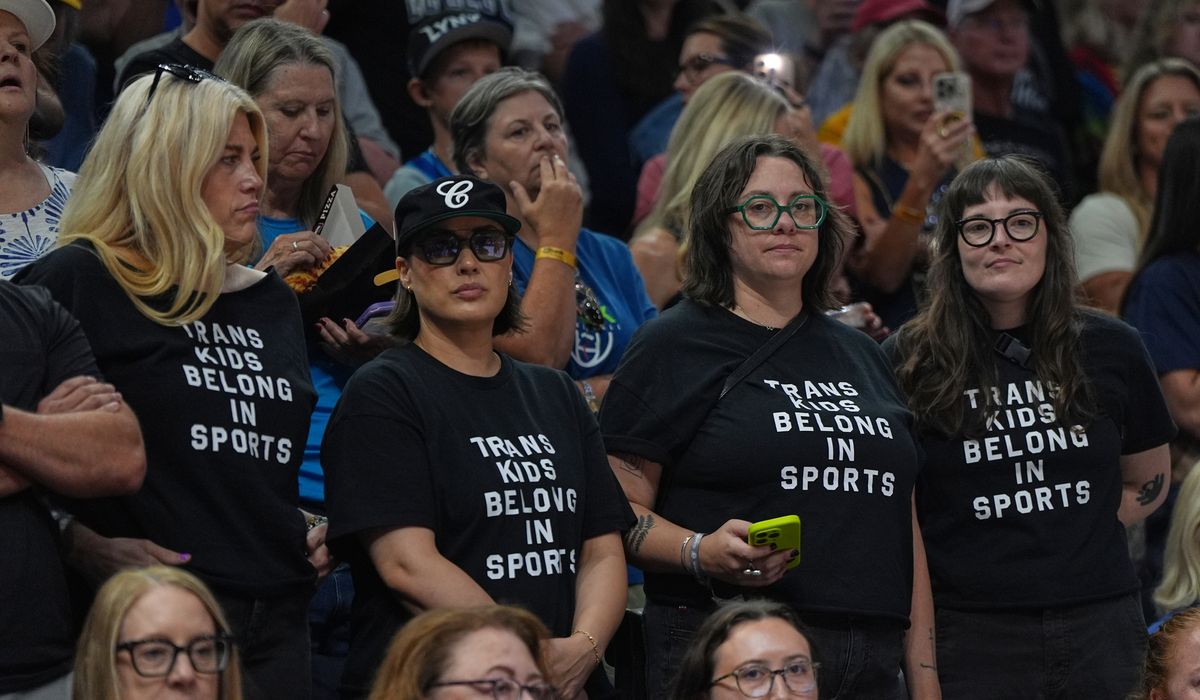
A crowd of critics and supporters of Indiana guard Sophie Cunningham gathered inside and around the Target Center on Sunday following her public stance on transgender participation in women’s sports.
The scene at the Target Center felt charged and disciplined at the same time, with people on both sides making their presence known. Fans, demonstrators and curious onlookers filled lobbies and concourses, talking loudly but mostly staying orderly. Security staff managed entrances and movement without major incident.
Sophie Cunningham, identified as an Indiana guard, has become a focal point in an ongoing cultural and sports debate about who should compete in women’s athletics. Her comments touched a nerve for many who see fairness in competition as nonnegotiable. Supporters praised her for speaking up, while critics argued that her stance excluded people who deserve inclusion.
The debate over transgender participation in women’s sports is not new, but events like this make it feel immediate and unavoidable. For Republicans and many concerned parents, the core argument is simple: protect opportunities that were established for biological women. That viewpoint stresses that preserving competitive equity is essential to the integrity of women’s leagues and scholarships.
Those who disagree frame the matter around inclusion and individual dignity, insisting sports should accommodate transgender athletes. That argument has strong emotional pull and has widened the split between cultural priorities and rule-making. Both sides brought posters, chants and banners, though interactions were largely peaceful.
At its heart, the fight is about rules that govern competition and the institutions charged with setting them. The WNBA and other organizations have policies, but critics say those rules are inconsistent and evolving in ways that leave athletes uncertain. Republicans pushing for clearer, biologically based standards argue that policy should protect female athletes at all levels, from high school to the pros.
Cunningham’s visibility amplifies the conversation because she plays in a league watched by millions and because athletes carry influence beyond the court. For conservatives, athletes speaking up is a welcome development; it forces institutions and lawmakers to stop ignoring the consequences of policy choices. That pressure has prompted legislative action in several states aimed at preserving sex-separated competition.
The crowd at the Target Center reflected that legislative energy, with activists distributing information and encouraging attendees to contact elected officials. Supporters of Cunningham said they were defending fairness and the future of women’s sports. Opponents said they were defending civil rights and the ability of every person to participate without discrimination.
Media coverage amplified both sides, but nothing substitutes for being on site where the intensity and nuance are visible. Conversations ranged from legal questions to personal stories about training and opportunity. Many attendees left more convinced of their own position than when they arrived, which is hardly surprising given how personal the topic is.
This is a debate where values, biology and policy collide, and the stakes are high for athletes whose careers depend on clear rules. Republicans argue that transparent, consistent standards are the only fair path forward for women’s sports. They say protecting competitive fairness does not mean denying dignity, but it does mean recognizing biological differences when they matter for competition.
As the discussion continues, events like the gathering at the Target Center will keep appearing wherever elite athletes, organized sports and public policy intersect. Fans and lawmakers will keep pushing for clarity, and athletes will keep using their platforms. Whoever sets the rules will shape the future of the game and who gets to play on equal footing.

