

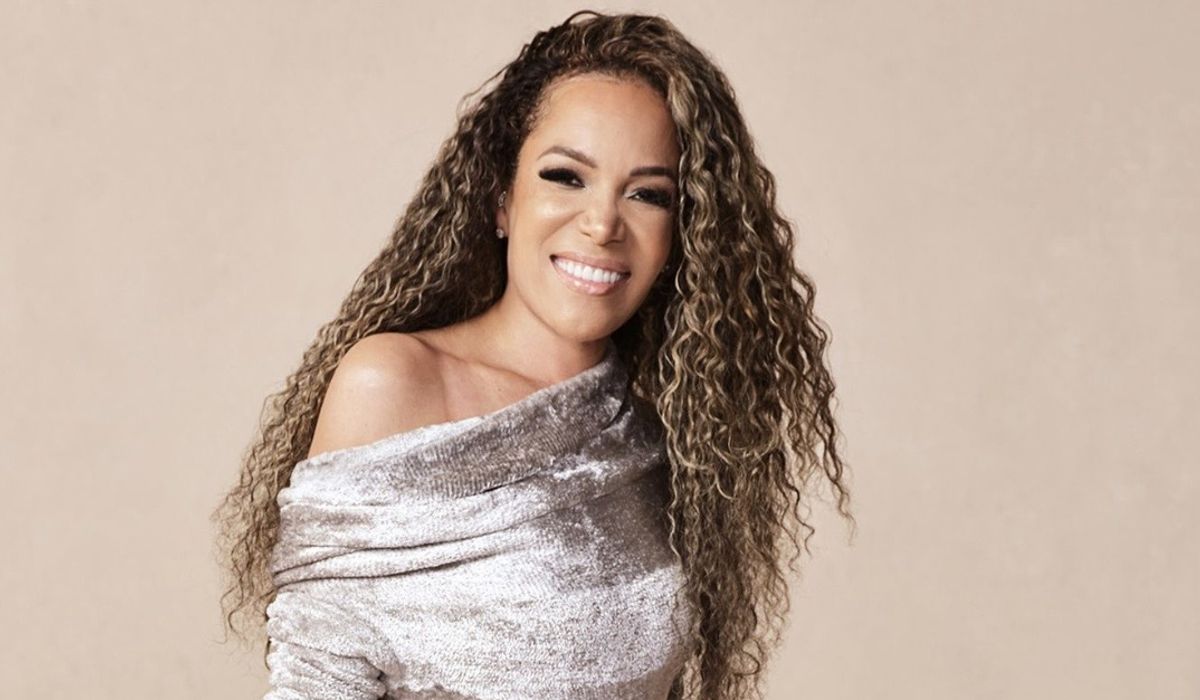
Sunny Hostin, a co-host of “The View,” has entered an agreement that lets an artificial intelligence studio called Fountain 0 use her name and likeness to help bring her novels to the screen, a move that mixes traditional author branding with emerging AI tools.
Sunny Hostin has licensed her name and likeness to Fountain 0 to assist in producing film and television adaptations of her novels. That basic fact stands without added detail on timing or contract terms, so the public facing announcement is straightforward and concise.
Hostin is widely known as a co-host of “The View,” and she also writes fiction, which is now the subject of this new arrangement. By attaching her personal brand and image to production efforts, she is signaling a direct role in how her written work might translate to visual media.
Fountain 0 identifies itself as an artificial intelligence studio, and the licensing deal is explicitly tied to leveraging that capacity for adaptation work. The language used in the notice emphasizes the studio’s role “to help produce” film and television versions rather than claiming full creative authorship from the outset.
That framing raises a mix of practical and philosophical questions about the line between human creators and machine-assisted production. When a living author licenses their likeness for AI use, discussions about creative control, consent, and fair compensation naturally follow, and those are part of the background here even if the announcement itself did not unpack them.
At the same time, the arrangement opens clear opportunities for faster, more scalable adaptation pipelines. Using AI to draft scripts, explore casting permutations, or prototype scenes could let creators iterate in ways that were previously slow and expensive, potentially increasing the chances a novel becomes a produced project.
There are also important safeguards that studios and talent typically consider, from approvals on scripts and performances to precise contractual limits on how a likeness can be reproduced. Those mechanisms help preserve an author’s voice and reputation, and they will likely be central to any successful partnership between a writer and an AI-focused production company.
The entertainment industry is watching these experiments closely, as more authors, actors, and creators weigh the tradeoffs of licensing likenesses for AI-driven projects. Some see new revenue streams and creative control; others worry about dilution of craft or loss of traditional jobs when automation expands its role on set and in preproduction.
Public reaction can vary widely, but the immediate impact of this specific deal will come down to how Fountain 0 and Hostin set boundaries and involve human collaborators. For now the announcement is a clear example of how contemporary storytellers are testing new tools to turn books into on-screen projects, while the finer points of oversight and execution remain to be seen.

